Exploring Cannabis Strains: Indica vs Sativa vs Hybrid
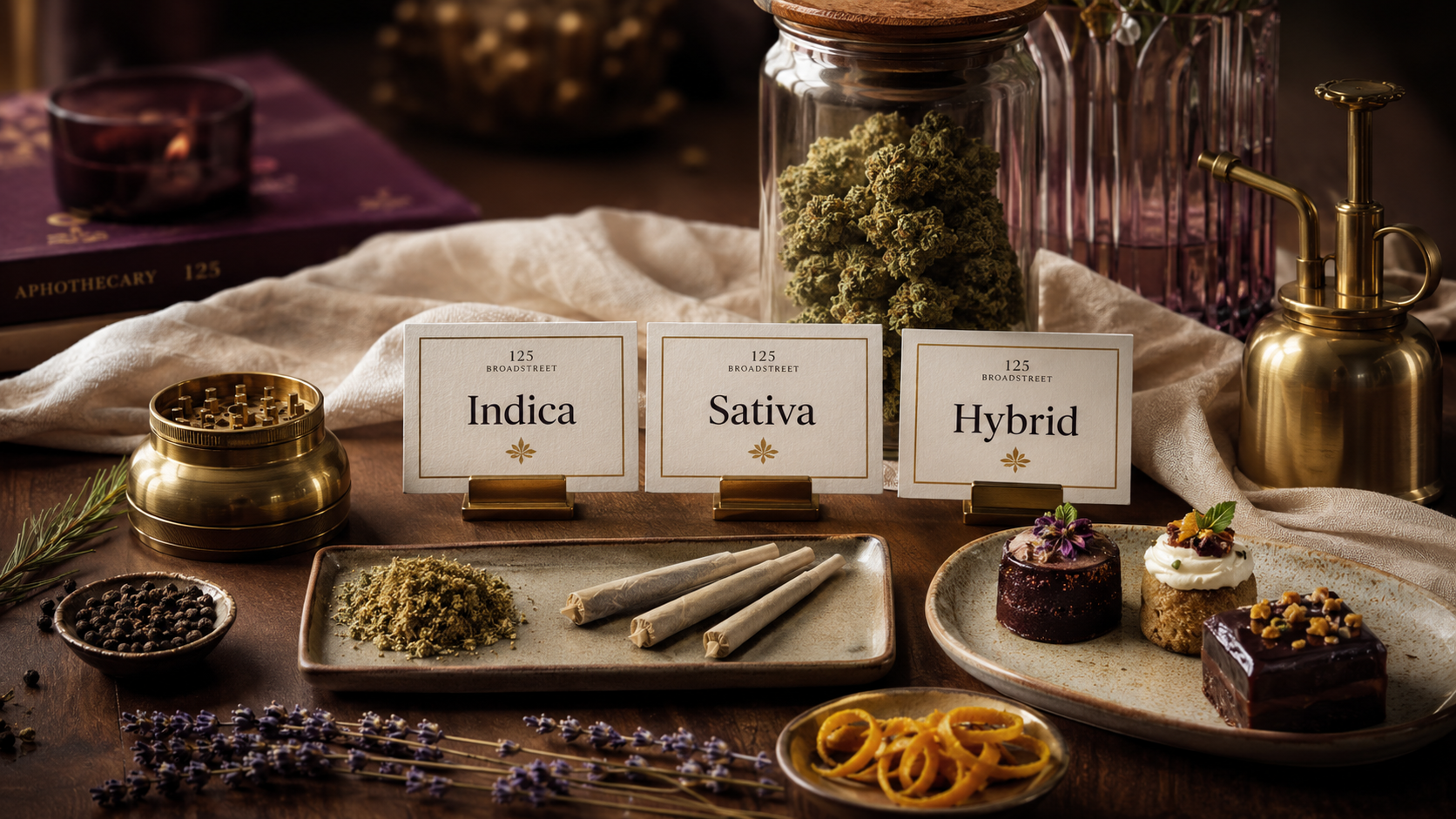
The Flower Files · 125 Broadstreet
You've heard the labels a thousand times. But do you actually know what they mean — and more importantly, what they mean for you?
But here's the thing — the cannabis conversation has evolved, and the old "Indica = couch lock, Sativa = energy" script? It's only part of the story. At 125 Broadstreet, we're all about you making informed choices, whether that's what you're putting in your body or what you're putting on your plate. So let's get into it.
First — A Little History
The terms Indica and Sativa were originally botanical classifications. Cannabis sativa plants are tall, thin, and tend to grow in equatorial climates — think Colombia, Southeast Asia, East Africa. Cannabis indica plants are shorter, bushier, and originated in the Hindu Kush region. Ruderalis is the third, lesser-talked-about cousin — low THC, auto-flowering, mostly used in breeding.
Over time, growers started crossbreeding everything. Like, everything everything. Which means almost every strain on the market today is technically a hybrid to some degree. The labels stuck around though — because they're useful shorthand, even if they're not the full picture.
So What Do the Labels Actually Tell You?
Indica strains are generally associated with a heavier, more body-centered experience. Think: relaxation, physical ease, that "I'm not getting off this couch and I'm at peace with that" energy. These are the ones people typically reach for at night, after a long day, or when pain management is the goal.
Sativa strains are generally associated with a more uplifting, cerebral experience. Creativity, focus, social energy. These are the daytime picks — the "I want to feel good but I still need to function" flower.
Hybrids are everything in between, deliberately bred to deliver specific combinations of both. Some hybrids lean Indica-dominant, some Sativa-dominant, and some are balanced right down the middle.
Enter: Terpenes
If you really want to level up your cannabis literacy, start paying attention to terpenes. These are the aromatic compounds in cannabis (and plants in general) that contribute to flavor, scent, and — research suggests — effect. They're why one strain smells like blueberries and another smells like a pine forest.
Myrcene — earthy, musky, found in mangoes. Associated with sedative, relaxing effects. Common in Indica-leaning strains.
Limonene — citrusy, bright. Associated with mood elevation and stress relief. Common in Sativa-leaning strains.
Linalool — floral, lavender-forward. Associated with calming effects. Often found in strains used for anxiety.
Pinene — pine, sharp, fresh. Associated with alertness and memory retention.
Caryophyllene — spicy, peppery. The only terpene known to interact directly with CB2 receptors. Associated with anti-inflammatory properties.
Next time you're at the dispensary, ask about the terpene profile. A knowledgeable budtender can tell you a lot more from that than from the strain category alone.
And Then There's THC vs CBD
You already know these two, but let's be clear about what they're doing. THC (tetrahydrocannabinol) is the primary psychoactive compound — the one that gets you high. CBD (cannabidiol) is non-intoxicating and is associated with relaxation, inflammation reduction, and anxiety relief.
The ratio of THC to CBD in a strain matters enormously. High-THC, low-CBD strains will hit very differently than a 1:1 balanced strain. If you're newer to cannabis, or sensitive to THC's effects, starting with something that has a meaningful CBD presence can make the experience way more comfortable and controlled.
This is especially important when we're talking about edibles and infused products — which is our world here at 125 Broadstreet. When cannabis is consumed versus inhaled, the onset is slower and the effects tend to be more intense and longer-lasting. Knowing your ratio matters even more in that context.
Choosing What's Right for You
There's no universal "best" strain. There's only the best strain for you, right now, for this moment. Here's a loose guide:
You want to unwind after a hard week? Reach for an Indica or Indica-dominant hybrid with high myrcene content. Pair it with something warm, something sweet, something slow.
You want to get creative or social? A Sativa or Sativa-dominant hybrid with limonene or pinene might be your move. Keep the environment relaxed and the vibes right.
You want a balanced experience — present but not overwhelmed? A balanced hybrid with a moderate THC:CBD ratio is probably your best entry point. Especially if you're newer to the experience.
You're dealing with something specific — pain, anxiety, sleep, inflammation? Talk to a cannabis professional or your healthcare provider. The plant has a lot to offer, and you deserve guidance that's actually tailored to you.
The Bottom Line
Indica. Sativa. Hybrid. These labels are a starting point — not the whole conversation. The more you know about terpenes, cannabinoid ratios, and your own body, the more intentional and enjoyable your cannabis experience becomes. And that's what we're here for at 125 Broadstreet — elevating the experience, from the flower to the table.
Cannabis is culture. It's community. It's culinary art. And you deserve to move through it with confidence.
Stay curious, bestie. We'll keep the education coming. 🌿
Want to experience cannabis culinary done right? Explore our curated boxes and infused pastry offerings at 125broadstreet.com. Follow us @125Broadstreet on TikTok, Facebook, and RedNote, and @125_Broadstreet on Instagram for weekly content, live sessions, and everything in between.