
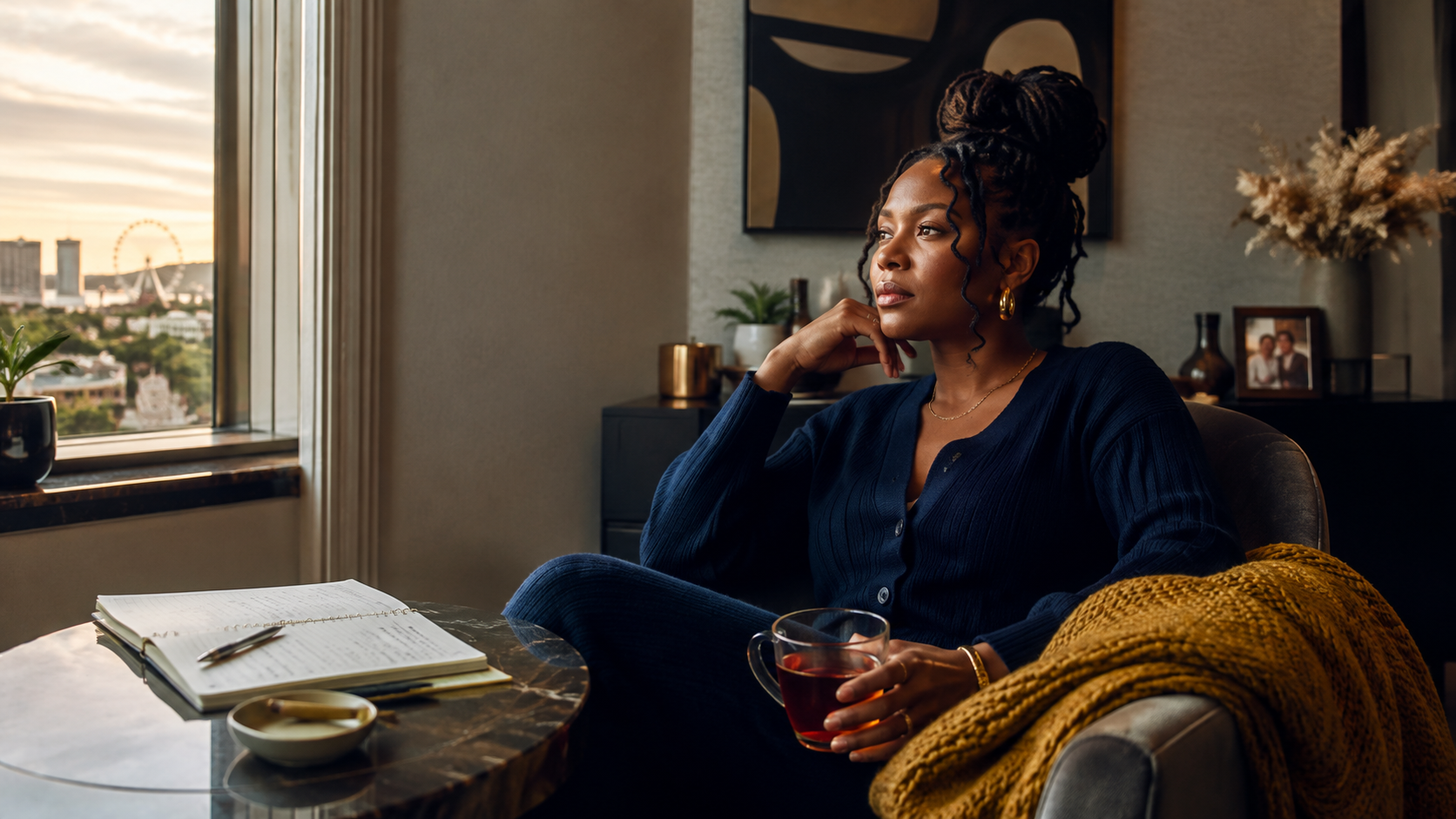
Lazy Was Never an Option — Until I Made It One
I grew up believing rest had to be earned, not taken. This is what the plant actually taught me — about guilt that produces nothing, about a childhood with no room to fail, and why I'm done explaining myself for smoking and still getting it all done.
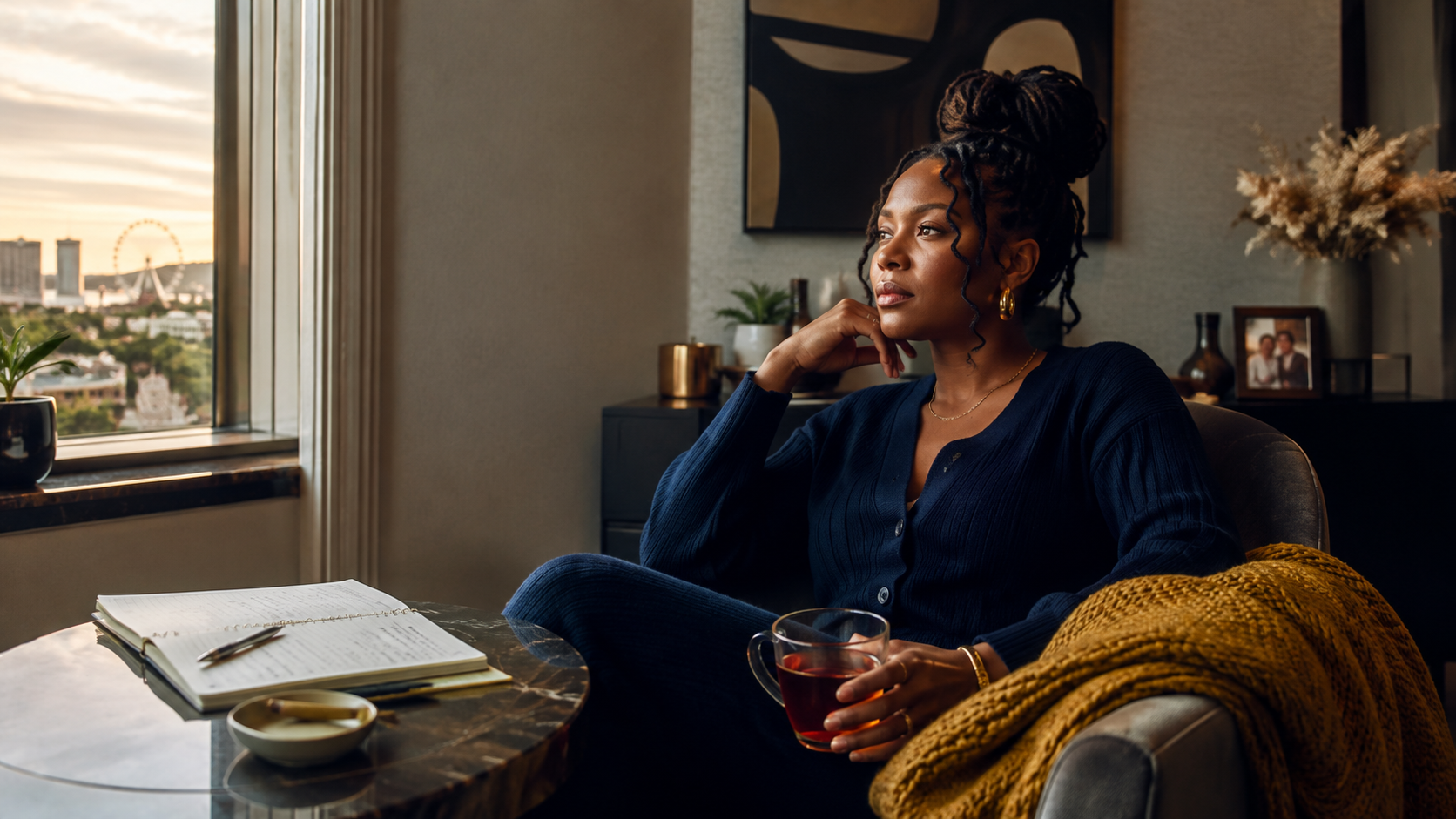
The guilt doesn't produce output. It just steals the rest and gives nothing back.
Programming
Looks Like
Let's start here: I never thought weed made you lazy. That was never my story with it, even though it's everybody else's. Cartoons, D.A.R.E., the whole "you're gonna end up on the couch eating chips" script — that's what I was handed before I ever touched it myself. So when I finally did smoke for the first time, I was waiting for the sleepy part. The slow part. The part where I supposedly stop functioning. It never came. What came instead was happy. Laughing. Giggly. In college I'd get a body high and I was never tired — I was alive in my skin. Somebody could touch my arm and it felt like a thousand tiny sparks going off, tingles and electricity moving through me like my whole body had been plugged back in. That was my first real relationship with this plant, and it had nothing to do with laziness. It had everything to do with feeling. So when people act like rest and cannabis are the same lazy sin, I already know that's a lie, because I lived the opposite of it.
I didn't grow up with rest as a concept, though. I grew up with Saturday at 7am and a house that needed cleaning — every week, no exceptions — and once a month, a deep clean on top of that. Grades worked the same way. There was no room to not be good. No room for failure. No room to just be average and call it a day. So somewhere in me, rest got filed under "the thing you do when you've already earned it" — and the bar for earning it kept moving.
These days, taking rest back looks like a nap. Quiet, with nobody calling my name from the other room. It looks like working out — which sounds like the opposite of rest, but for me it's where my body actually resets. It looks like sitting in a chair getting my nails done, or getting my hair done, and not being needed by a single person for that stretch of time. None of that is laziness. That's maintenance. That's a woman making sure there's something left in the tank to give.
The guilt doesn't even produce output. It just steals the rest and gives nothing back.
I won't pretend the guilt doesn't show up, because it does. I'll be resting and think, I could be doing more — and then I don't even know what "more" is. I just know I should be doing it. And then I'm not resting anymore, I'm sitting there spiraling about what I'm supposed to be doing instead of actually doing anything.
This is usually where the plant is supposed to step in and quiet all of that down — and to be fair, it still does, just not the way it used to. Since moving to Vegas, I haven't found weed that does what the weed in Georgia used to do for me. What I had access to there — that was the good-good. It made me laugh. It gave me that tingle all over. It let me chill all the way out, get creative, and actually sit still long enough to hear myself — my real thoughts, my higher self, whatever you want to call it. Vegas hasn't given me that yet, and I'll be honest about that instead of pretending every session is a spiritual experience. But even on the average stuff, the lesson is the same: the plant slows me down enough to hear the parts of myself that hustle culture trained me to talk over. It's not the weed doing the resting for me. It's the weed getting me quiet enough to let the rest actually land.
We're still living in a world where religion gets treated like the only measuring stick for morality, and cannabis carries a stigma that comes straight out of that — the idea that if you smoke, you're somehow less than, less moral, less put-together. I think it matters for people to see actual normal people getting actual normal life done while this plant is part of that life. Not a stereotype. Not a cautionary tale. Just a mom, a founder, a regular person, living a regular day — same as everyone else.
I get up, I take care of my kids, I run a business, I rest when I need to — and cannabis has been woven into that whole picture the entire time.
And here's the line I won't cross back over: the idea that weed is bad, that I'm a bad mom for smoking it, that there's something immoral about me because of it. I've heard that message my whole life in one form or another, and I believed a version of it for a long time. Not anymore. That's not a confession. That's just my life.
The plant taught me that rest is not laziness. And I am not taking it back.
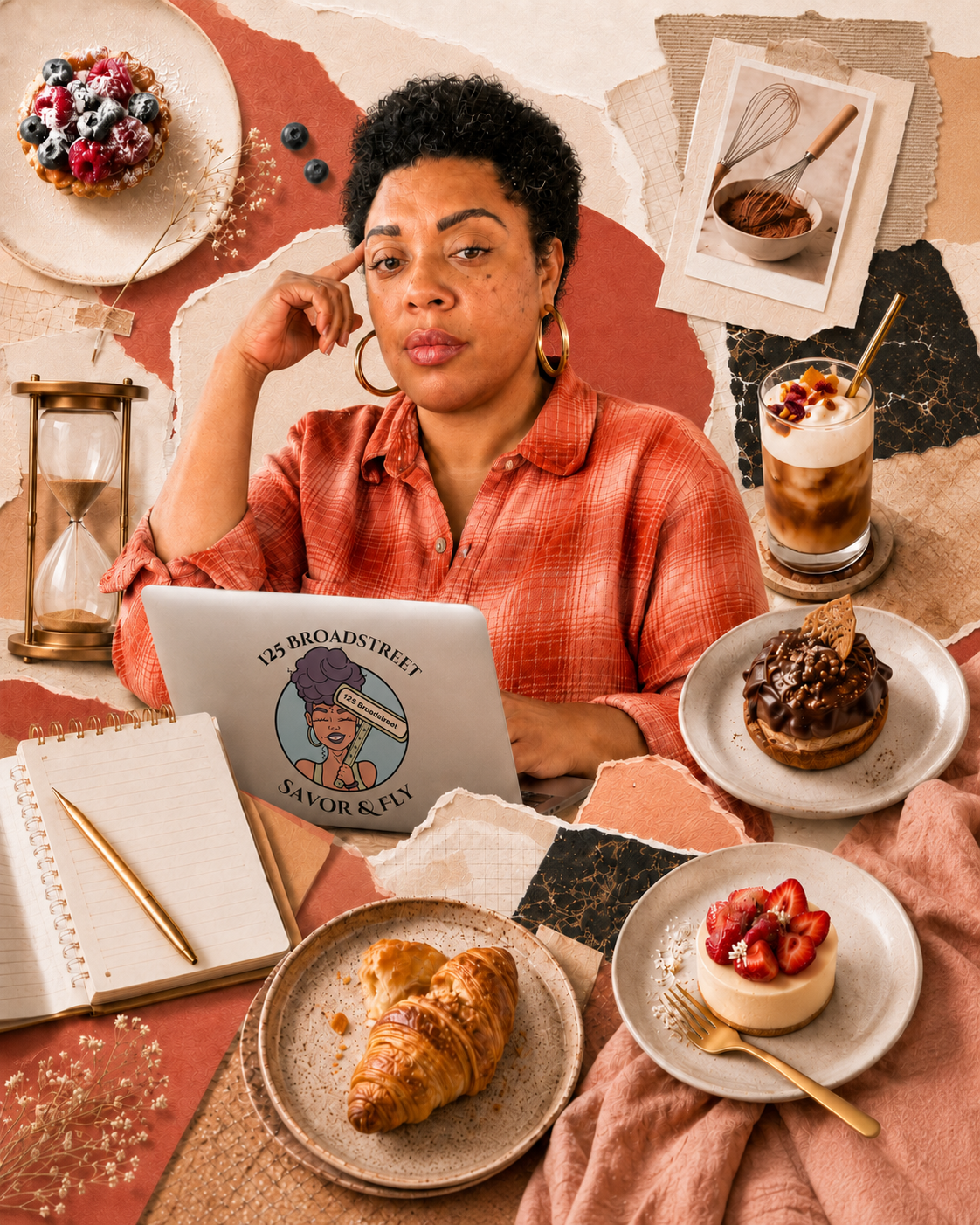
The Fall Menu Is Coming: From Dreams to the Table
A first look at what's coming for fall — sweet potato, fig, and pear butter are all in the mix, still taking shape from a dream, a conversation, a taste I can't shake. No spoilers, just vibes until the menu drops.
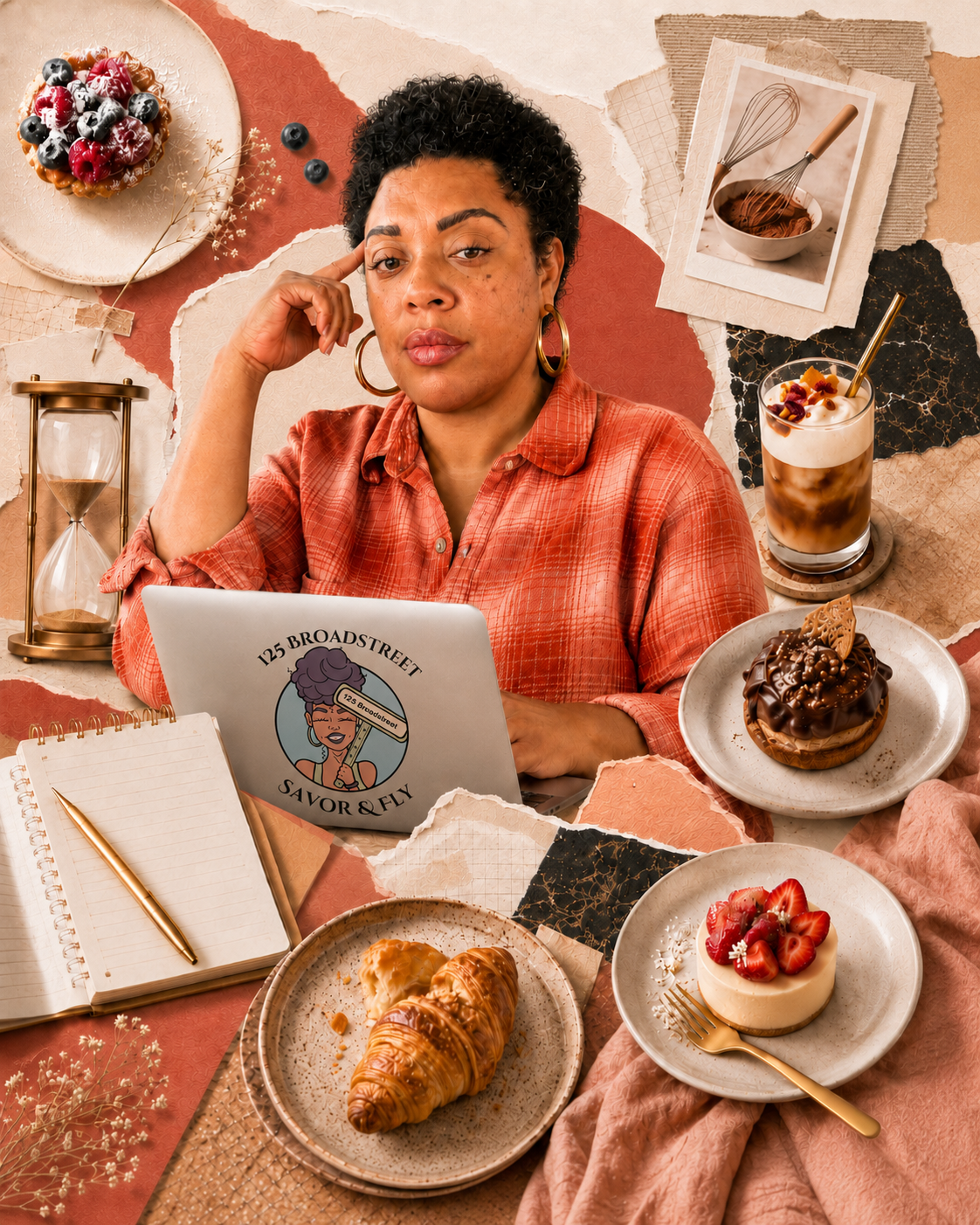
Something's been shifting. The AC's still running, Vegas is still Vegas, but the ideas have started arriving the way they always do for fall — not from a whiteboard, but from a dream I had, a conversation that stuck, something someone said in passing that I couldn't shake. Sweet potato, fig, and pear butter have been showing up in my head before they've shown up on a plate.
That's how a cannabis-infused menu gets built here. It's never one clean idea — it's an amalgamation. A song lyric. A taste I had somewhere and couldn't stop thinking about. A moment with someone that turned into a flavor without me fully deciding it. By the time it lands on the fall edibles menu, it's carrying all of that.
Sweet potato keeps showing up in more than one form in my head. Savory. Sweet. One direction I already know works, one I haven't let myself finish thinking through yet. Fig arrived as both a filling and a glaze idea, and honestly the glaze might be the one that ends up somewhere you weren't expecting. And pear butter has been the slow one — the kind of idea that sits with me for weeks, gets revisited, and deepens every time it comes back around.
That's it. That's all you're getting. Not the plating, not the pairings, not which of these ends up infused versus which one stays zero-proof. That part's still living in my head, the way it always does before it's ready.
I don't drop a menu because a calendar told me to. I drop it when I feel it — when enough of these dreams and conversations and half-remembered tastes have piled up into something whole. That, and when the produce tells me the season's actually changed. Both have to line up.
You don't have to wait for the drop to be part of it. Tell us what fall flavor you're hoping shows up — savory, sweet, infused, or straight zero-proof. We're reading everything, and more than one thing on this list started as a comment or a DM. Drop your guess for what pairs with pear butter, too. I already have an answer. I'm curious if you land anywhere close.
We've said it before — the kitchen is part of the brand, not just where the brand gets made. Letting you see it forming, the half-finished thoughts, the "this one didn't make it but here's why" moments, is more us than a clean reveal ever could be. Fall menu drops when it's ready. Until then, catch it coming together in real time on the Wednesday lives and in the weekly recap — that's where sweet potato, fig, and pear butter are actually earning their spot on the final lineup.
Your good sis with a spliff
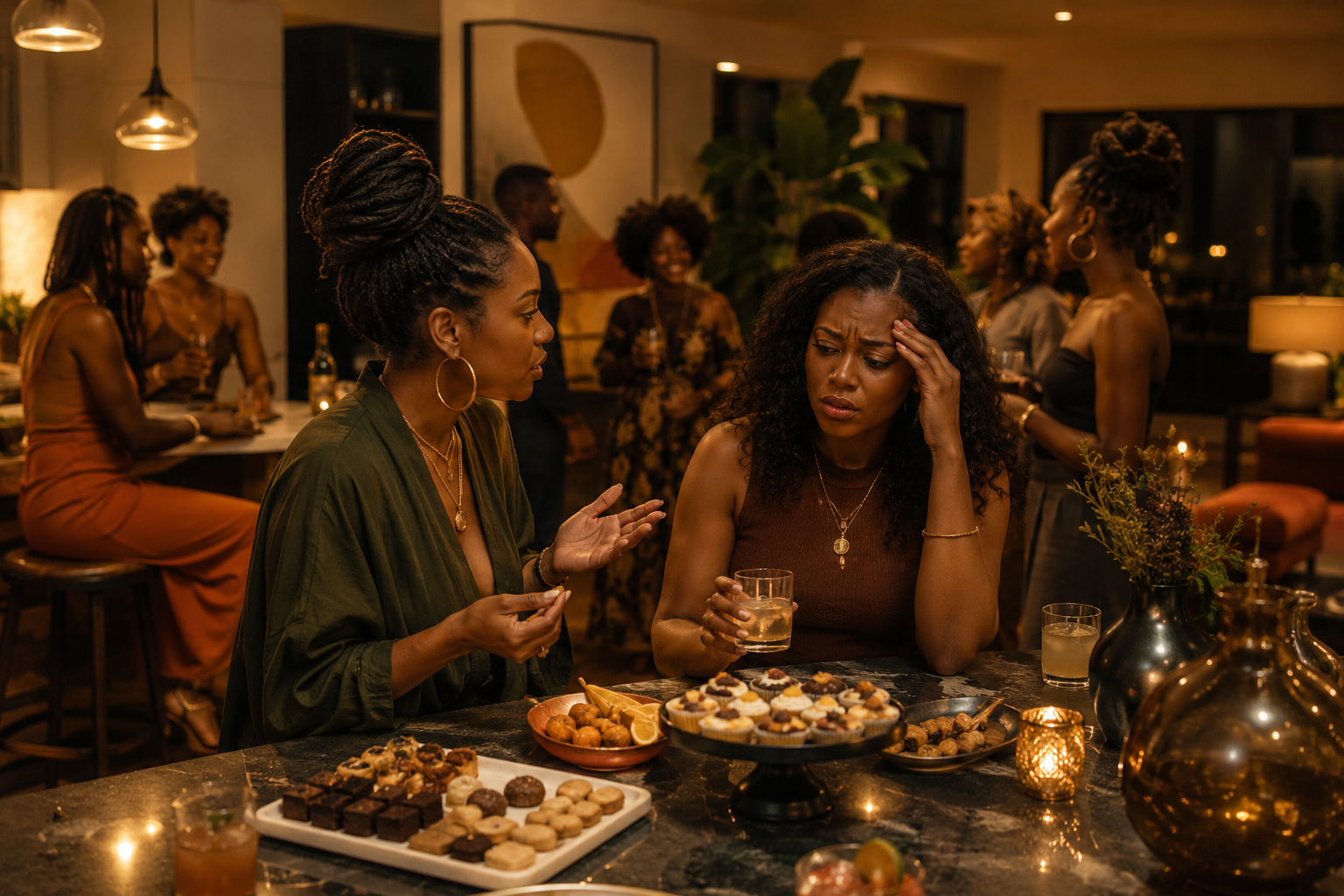
We Need to Talk About What People Call a 'Bad High' — Because Most of the Time It Wasn't the Weed
You didn't get "hit with some bad weed." Nine times out of ten, the flower was fine — it was your stomach, your water intake, your patience, or your room. Here's what's actually going on.
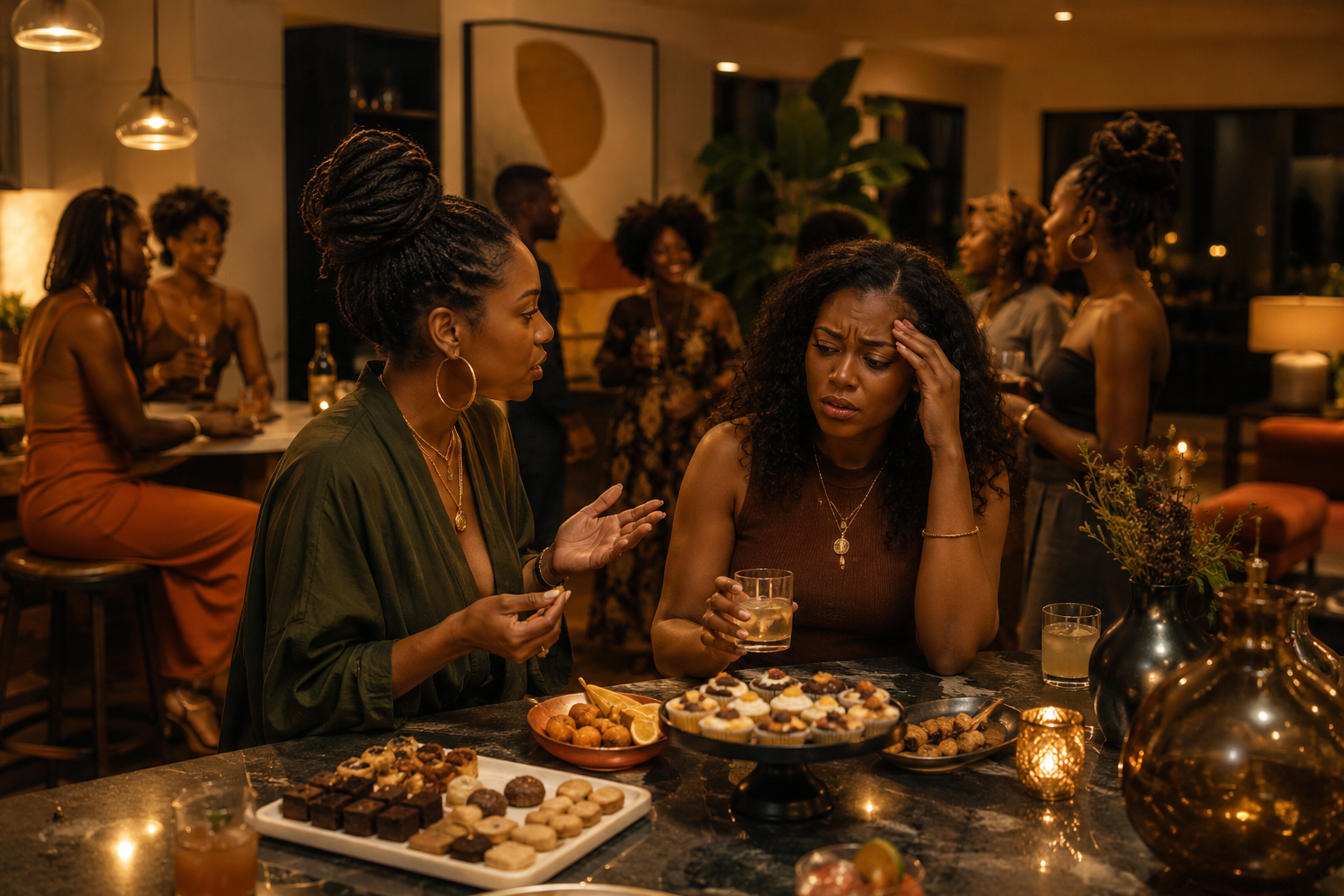
You didn't get "hit with some bad weed." Nine times out of ten, the flower was fine. Let's talk about what actually happened to you.
Okay, so… — somebody in your group chat has a "this one time I smoked and thought I was dying" story, and they will tell it like the weed personally came for them. It didn't. I promise you, it didn't.
I've been in this game for over a decade—cooking with it, serving it up, watching folks' faces light up or bug out after one bite of my food. And let me tell you, I can count on one hand the times the weed was actually the problem. Most of the time? The flower's just catching strays for stuff that's really about your body, your timing, your energy, or you not doing the math.
So before you swear off edibles forever just because of one rough Tuesday, let's get real about what actually went down. "Bad high" ain't a real diagnosis. Most times, it's one—or three—of these four things ganging up on you at the same time.
What Was Actually Happening To Your Body
Empty Stomach
Nothing in your system to slow it down. You gave that weed a green light, and it hit you like a city bus with no brakes.
Dehydration
Cottonmouth is real, but so is that jittery, heart-thumping feeling that tags along. Water ain't optional; it's mandatory.
Too Much, Too Fast
You didn't wait. You hit the "top off" button before the first round even clocked in. Classic move, honestly.
Wrong Setting
Your body clocked the stress, the noise, or a room full of folks you don't even vibe with forreal forreal, and your high just bounced that energy right back at you.
Let's break each one down
You smoked or ate on an empty stomach
This is the number one thing folks leave out of the story. THC moves way quicker when your stomach's empty, so the high comes in hot and heavy before your brain even knows what hit it. Edibles? Even wilder, because your body flips THC into a supercharged version that lasts longer, and an empty stomach just hits the gas. You didn't get "bad weed." You gave it a nonstop flight.
You were already dehydrated
THC can dry you out — that's the cottonmouth everybody jokes about. But dehydration also drops your blood pressure and can make you feel lightheaded, shaky, and low-key panicked, and your brain doesn't know how to separate "I'm dehydrated" from "the weed is doing this to me." So it blames the weed. Every time. Drink your water before, during, and after — this one's genuinely that simple.
You didn't wait for it to actually kick in
Edibles can take anywhere from 30 minutes to 2 hours to hit, depending on your body, your metabolism, and what you ate that day. If you don't feel anything at 20 minutes and take "just a little more," and then a little more after that — you haven't taken a small dose three times, you've taken a big dose once, on a delay. The high you get an hour later is the sum of everything, arriving all at once. That's not a bad batch. That's bad math, and we've all done it.
The room wasn't right
Set and setting is not a hippie concept, it's just true. THC tends to amplify whatever's already in the room — if you're anxious, around people who make you uncomfortable, or somewhere unfamiliar, cannabis can turn that low hum of stress into something much louder. Smoke in a place you actually feel good in, with people you actually trust, and watch how differently the exact same amount of weed treats you.
Before your next session, do this instead
Eat something first. Doesn't need to be a whole meal — a snack with some fat or protein slows absorption and softens the come-up.
Have water within arm's reach. Sip through the whole experience, not just when your mouth goes dry.
Start low, then actually wait. Give edibles a full two hours before you even think about more. Set a timer if you have to — I'm not judging.
Choose your room on purpose. Comfortable space, people you trust, nothing you need to be "on" for. Your high will thank you.
None of this means a bad reaction can't happen — it can, and if something ever feels genuinely medically wrong, that's not a "ride it out" situation, that's a "call for help" situation. But the garden-variety "bad high" most people describe? That's usually your body asking for water, food, patience, or a better room. Not a referendum on the plant.
Next time it happens, before you swear off the flower for good — run the checklist. Then come back and tell me I was right.
Your good sis with a spliff
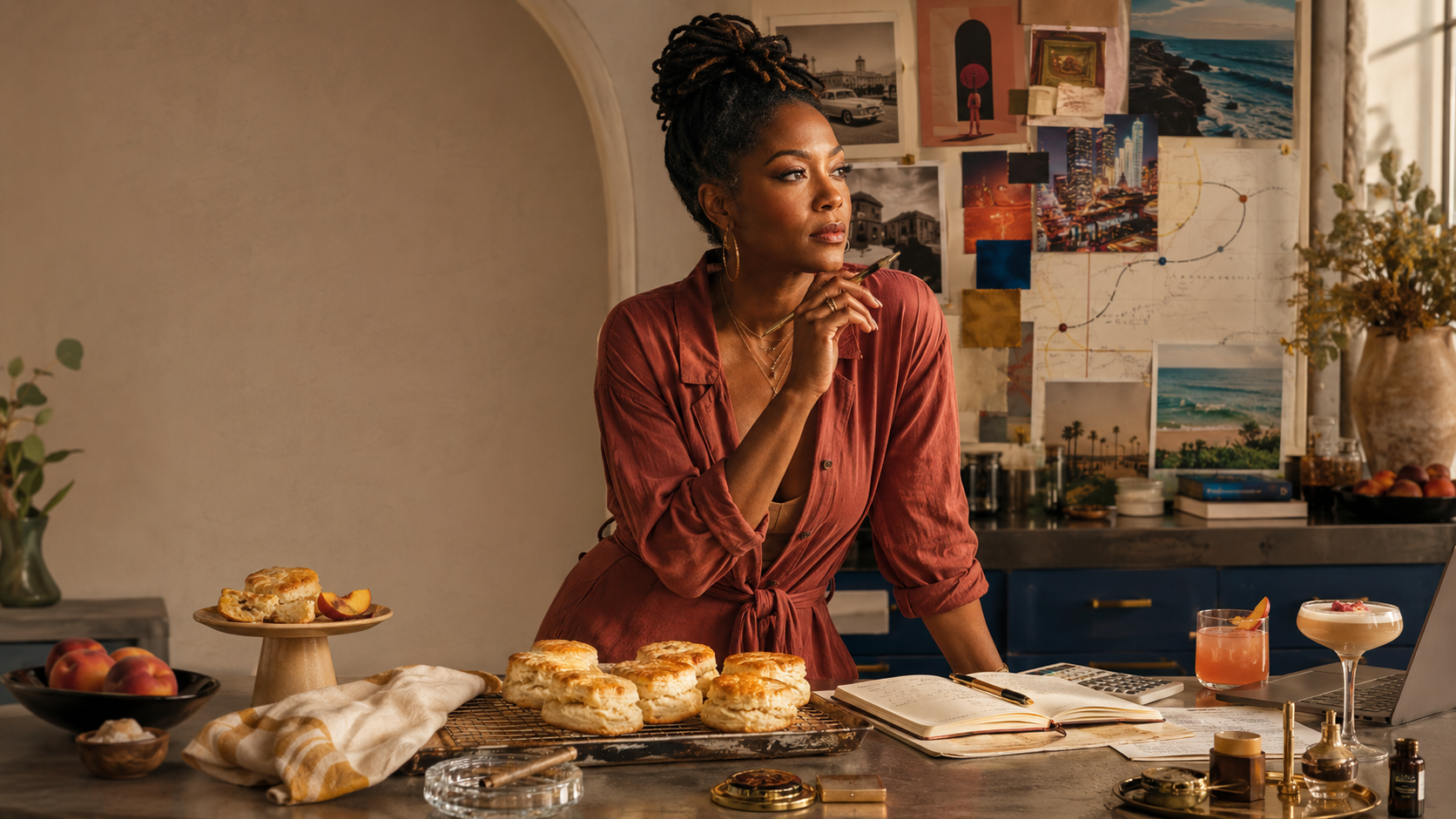
From Detroit to Las Vegas to California:
Nobody shows you the timeline between the peach biscuits and the licensed lounge. This is the real story behind 125 Broadstreet — Detroit roots, an Atlanta pandemic pivot, years of home-based catering in Las Vegas, and the groundwork being laid for a California cannabis lounge. No highlight reel, just the actual build.
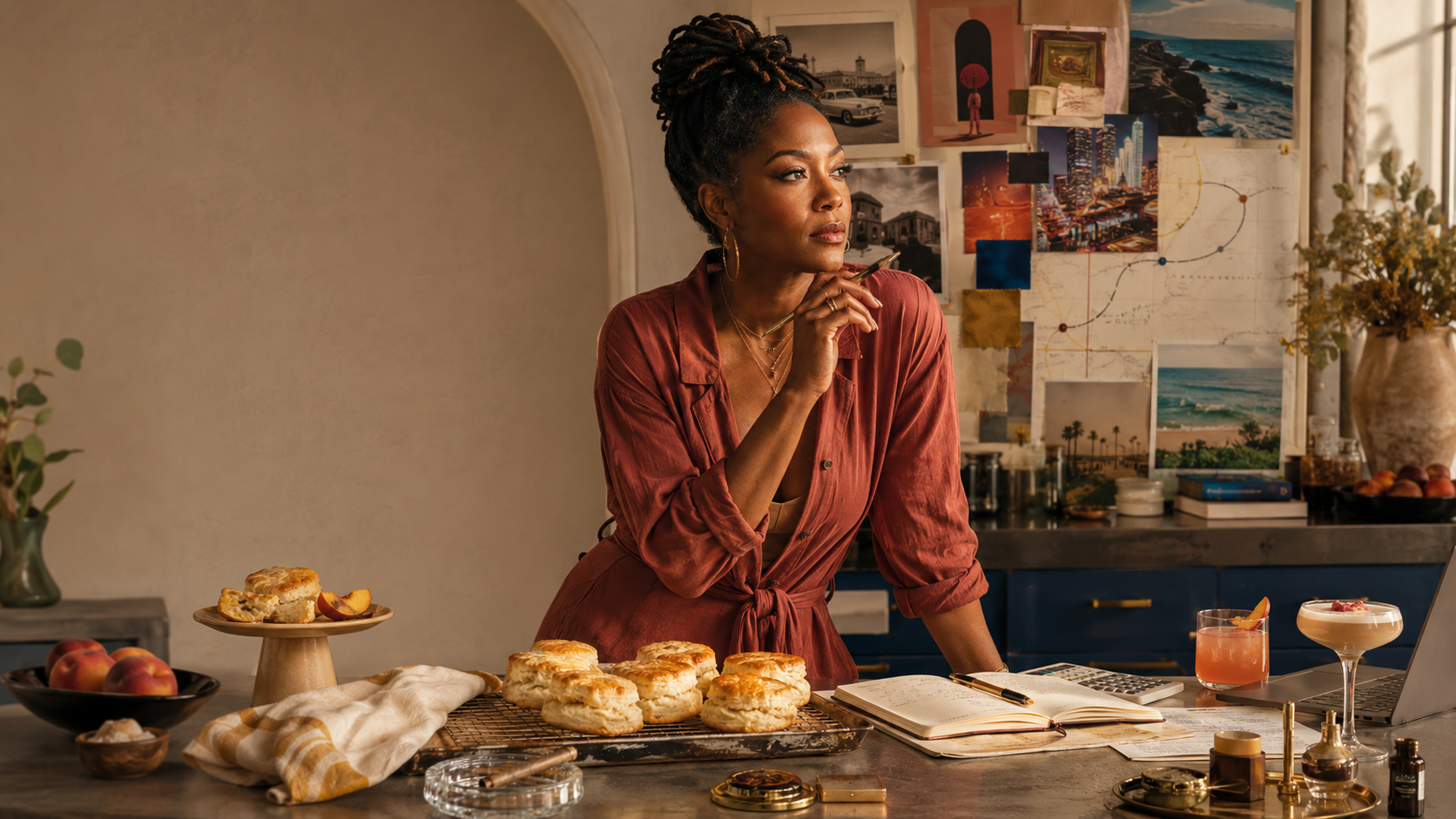
The Origin Issue
From Detroit to Las Vegas to California:
The Real Timeline Nobody Shows You
People love a good "overnight success" story. Mine isn't one, and I'm not interested in pretending it is.
125 Broadstreet was born in Atlanta, in the middle of a pandemic that had the whole world sitting still. I wasn't sitting still. I was in my kitchen, testing recipes, watching a batch of peach biscuits come out of the oven exactly right — and that was the moment. Not some grand business plan. A biscuit. A feeling. The realization that food and cannabis together could hold space for people the way hospitality always had for me.
The name itself comes from Detroit — an old home address, a piece of where I'm from that I carry into everything I build. Thirteen-plus years behind a bar, nineteen years in HR, watching people at their best and their most human — that's the foundation this brand sits on. Not a trend. Not a gimmick. A career's worth of understanding what it means to take care of people.
From Atlanta, the brand followed me to Las Vegas, where 125 Broadstreet operates today as a home-based, made-to-order cannabis-infused culinary and mocktail experience. Every dessert, every mocktail, every infused bite is made with the same care I'd want to receive myself — dialed-in dosing, real flavor, no shortcuts. This isn't a side hustle. It's a discipline I've been sharpening since 2020, recipe by recipe, batch by batch.
But Las Vegas was never the final stop. It's the proving ground.
The real destination is California — a licensed cannabis consumption lounge and café, built around the same values that started this whole thing: feed people, smoke with people, have a good time.
I'm working toward opening in Hawthorne or unincorporated LA County. It's a three-year roadmap, and 2026 is early in that build — the raise, the banking partnerships, the entity structure, the pieces most people never see because they only show up for the ribbon-cutting. This is the groundwork, not the grand opening.
And California isn't the end of the map either. This was never just about one city or one license — it's about proving that cannabis hospitality can be built with the same rigor, warmth, and culture as any great restaurant or bar, wherever that takes root next.
Nobody shows you the timeline between the peach biscuits and the licensed lounge. The years of testing infusion ratios in a home kitchen. The spreadsheets. Selling my product out of my own house. The small caterings that taught me what people actually want. The recipes that didn't work before the ones that did. That's the part I want to be honest about, because if you're building something of your own, you deserve the real timeline — not the highlight reel.
Detroit gave me my roots. Las Vegas gave me my proving ground. California is where 125 Broadstreet becomes what it was always meant to be.
Your good sis with a spliff.
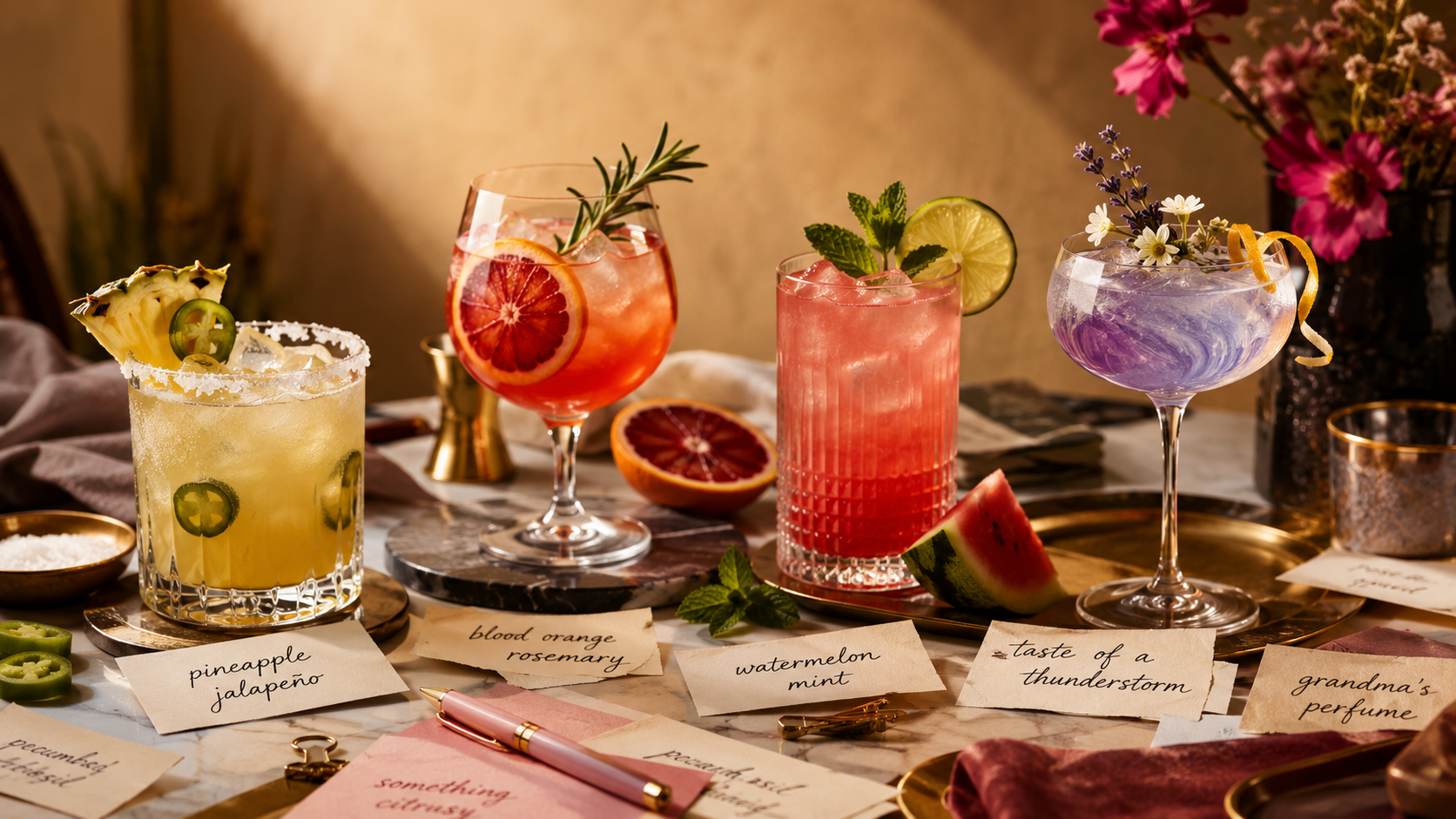
I Asked My Followers to Name flavor profiles they would like to see in a Mocktail…. And yall are wild
We asked our followers what flavor they'd want in a mocktail. Some answers were genius. Some were unhinged. All of them are fueling our next Las Vegas cannabis mocktail drop.
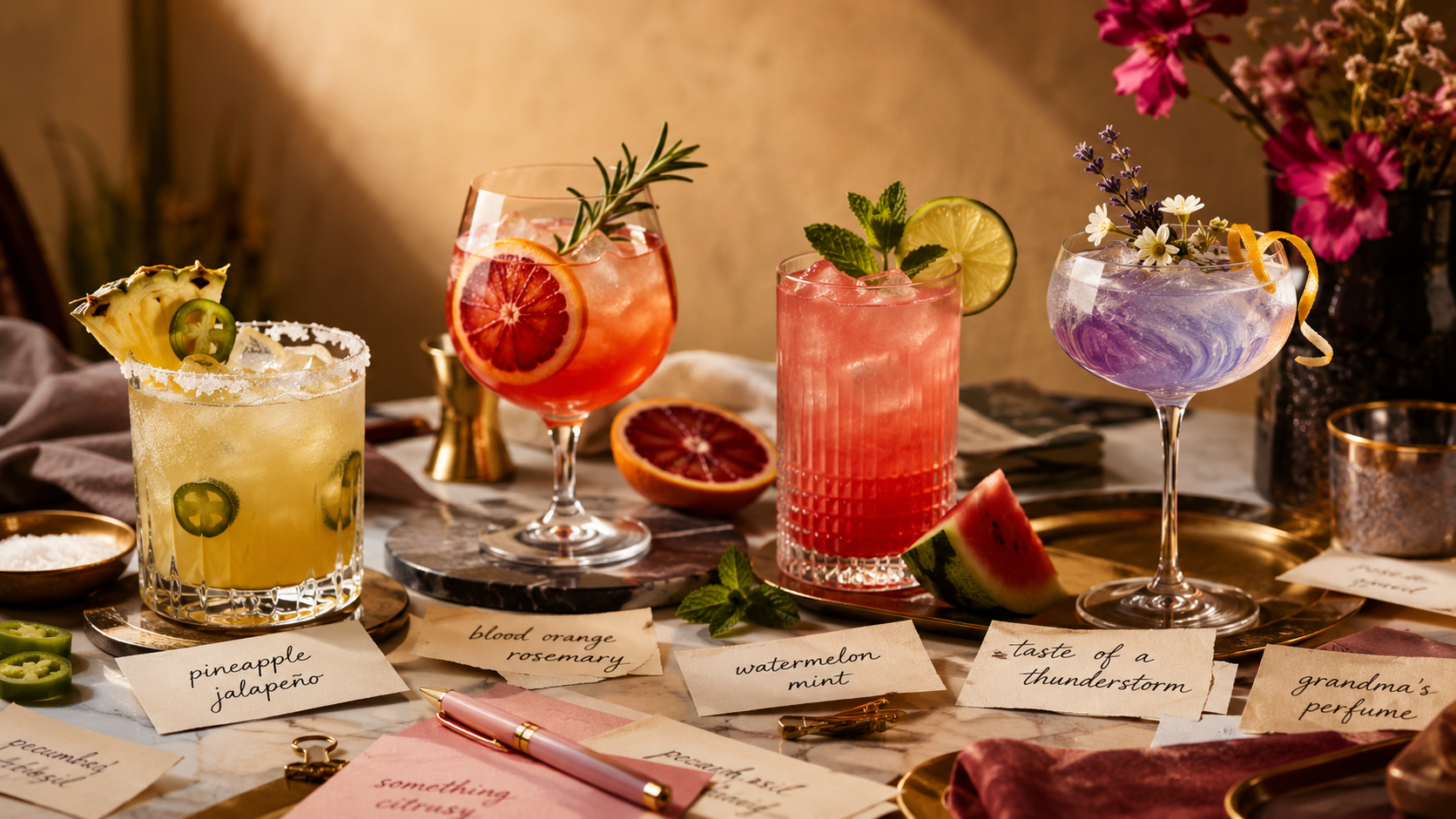
I asked my followers what flavor they'd want in a mocktail. Some said pineapple jalapeño. One said "the taste of a thunderstorm." We regret nothing.
You all know I love a little crowd-sourced chaos. So a while back, I jumped on TikTok and asked a simple question: "If I made you a mocktail right now, what flavor profile would you want?"
I expected the usual answers: mango, hibiscus, maybe some lavender lemonade. Instead, I got a wild mix of flavors for a Las Vegas cannabis mocktail menu, and honestly, I'm still recovering.
Let's start with the softballs, because some of y'all really did show up with good taste:
- Pineapple jalapeño with a salt rim
- Blood orange and rosemary
- Watermelon mint with a splash of lime
- Peach and ginger
These are all things I could build tomorrow. Balanced, seasonal, a little heat, a little sweet. Chef's kiss. Predictable, but respectfully so.
Then someone suggested "birthday cake but make it savory," and I had to pause for a moment.
The suggestions only got wilder from there:
- Hot Cheeto rim with a mango base (this one actually might work, don't @ me)
- Ranch-adjacent herbaceous something (I need you to use your words, sis)
- Fruity Pebbles milk, but a mocktail
- "Whatever a thunderstorm tastes like"
- Grandma's perfume, but drinkable. (I immediately thought of White Diamond or Red Door.)
Someone even asked for a flavor profile called "Unbothered." Not a fruit, not a spice — just a vibe. Honestly, I get it. I understood what they meant, even if I couldn't tell you what would actually be in the glass.
Here's the thing about flavor development — the wild requests are usually where the good stuff lives. My whole process starts with the Flavor Bible and a lot of mental pairing before anything ever touches a shaker, and half the artisan mocktails on my menu right now started as a "that shouldn't work, but what if it did" thought. Pillow Thoughts wasn't an obvious pairing on paper either. Neither was the milk-clarified ginger tea situation happening when I created 30th and McGraw, an ode to Judy. Somebody has to be willing to ask the unhinged question before the balanced answer shows up.
So don't let anyone tell you your taste is "too much." Some of the best artisan drinks, cannabis-infused or not, start right where common sense stops — and that's exactly the spirit behind every drop that comes out of 125 Broadstreet.
Out of all the ideas you sent, a few are actually being developed:
If your flavor made the list, I appreciate you. If you suggested "grandma's perfume," please DM me and explain, because I have questions — and honestly, I think I might know what you mean.
Keep sending me your wildest ideas. That's how the best drinks get created.
Check the Shop for what's already available, or reach out to book a custom mocktail box for your next event.
— Your good sis with a spliff.

The $750K Question: How We're Funding 125 Broadstreet Before It Opens
I'm not asking investors to fund the whole thing. Here's the real math behind the $1.5M raise — and why I'm putting up $750K of my own money first.

People often ask me, "So how are you actually paying for this?" when it comes to the California lounge. Some think there's a silent investor, or, as I sometimes hear, that I'm "just going to figure it out." That's not the case. I created a real pro forma with actual numbers, and I'm going to explain it just as I would to an investor. No vague answers, no "TBD." Just real numbers.
The Total: $1,523,892
That's what it takes to open a 1,200–2,000-square-foot cannabis consumption lounge and infused café in Hawthorne or unincorporated LA County, fully built out, fully licensed, fully staffed, and cushioned by a real operating reserve instead of hope. That number isn't padded and it isn't guessed — it's built bottom-up across build-out, licensing, an 18-person team, and nine months of runway, because I watched what happened to operators who skipped that last part.
| Use of Funds | Amount |
|---|---|
| Capital assets — kitchen, FOH, FF&E, IT, security, tenant improvements, ADA, deposits | $390,500 |
| Working capital, pre-opening, marketing launch, licensing & legal | $215,000 |
| 9-month operating reserve (fixed costs + labor) | $719,623 |
| 15% contingency | $198,768 |
| Total | $1,523,892 |
I won't apologize for being careful with the reserve line. Take the Original Cannabis Café in West Hollywood, for example. It was the first cannabis restaurant in the country, had a chef-driven menu, and real buzz, but it still closed less than a year after opening during the pandemic. I don't know everything that happened behind the scenes, and I won't pretend I do. But I've seen this pattern in the industry: even great concepts can fail after one bad quarter if there's no financial cushion. Having nine months of reserve means that delays in licensing, slow banking, or a slow first quarter won't put us out of business.
My Half of the Question: $750,000
Most founders don't talk about this part. I'm not asking investors to cover the full $1.52 million. I'm taking on $750,000 of it myself, using my own bootstrapping, cannabis-focused loans, and grant programs like Los Angeles Social Equity and CA CORE, which are designed for operators like me. This is the part I control and don't need anyone else's approval for.
That leaves a real, fundable, much smaller ask for outside capital:
| Source | Amount |
|---|---|
| Founder-raised (bootstrapping, cannabis-specialty lending, social equity & CORE grants) | $750,000 |
| Angel investor equity (the open ask) | $773,892 |
| Total Capital Raise | $1,523,892 |
The real amount I'm asking from investors is $773,892, not the full $1.5 million. In return, investors get 35% equity at a $2.83 million pre-money valuation, so I keep 65% of the company I started from a peach biscuit and a friend's reaction to it. Simply put, if the business is ever sold, investors get their money back first before profit-sharing starts, but they don't get extra upside beyond their ownership share. After 36 months, I have the option to buy back their shares if I want to bring full ownership back.
Why I'm Putting My Own Money In First
For me, having skin in the game isn't just a phrase — it's how this raise is set up. Every dollar of the $750,000 I'm responsible for shows investors something a pitch deck can't: I believe in the numbers enough to risk my own money and credit before asking anyone else to join in. It also means the angel round is smaller, quicker to close, and easier to underwrite, since no one is being asked to fund a first-time brick-and-mortar business alone.
Here's why I'm comfortable putting my own money in first. We expect about 140 guests a day, each spending around $48. To break even and cover all our costs, we only need 113 guests daily. That gives us a cushion — we can be almost 20% below our target and still not lose money. By the end of our first year, we expect about $3 million in revenue, with about 24 cents of every dollar left as profit after expenses. This isn't just wishful thinking. It's math that any investor can check and trust.
What This Doesn't Change
The two-entity structure that protects us from 280E is staying as planned: one entity handles the THC and CBD-infused menu, and a separate hospitality entity covers the café, lease, and brand. We're already talking with North Bay Credit Union, Safe Harbor Financial, and Herring Bank about banking, and with Mosaic, MFE, and Dynamic Underwriters about insurance. The $750,000 doesn't change the business itself — it just changes how much I'm asking others to believe in before I've proven it.
This is the side of building a cannabis hospitality brand that no one glamorizes: the spreadsheets, the use-of-funds tables, and the line items that never make it into a highlight reel. But this is what decides whether 125 Broadstreet opens as a fully funded, well-prepared business or just becomes another lounge that almost made it. I'd rather show you the real number than a nicer-looking one.
Your good sis with a spliff
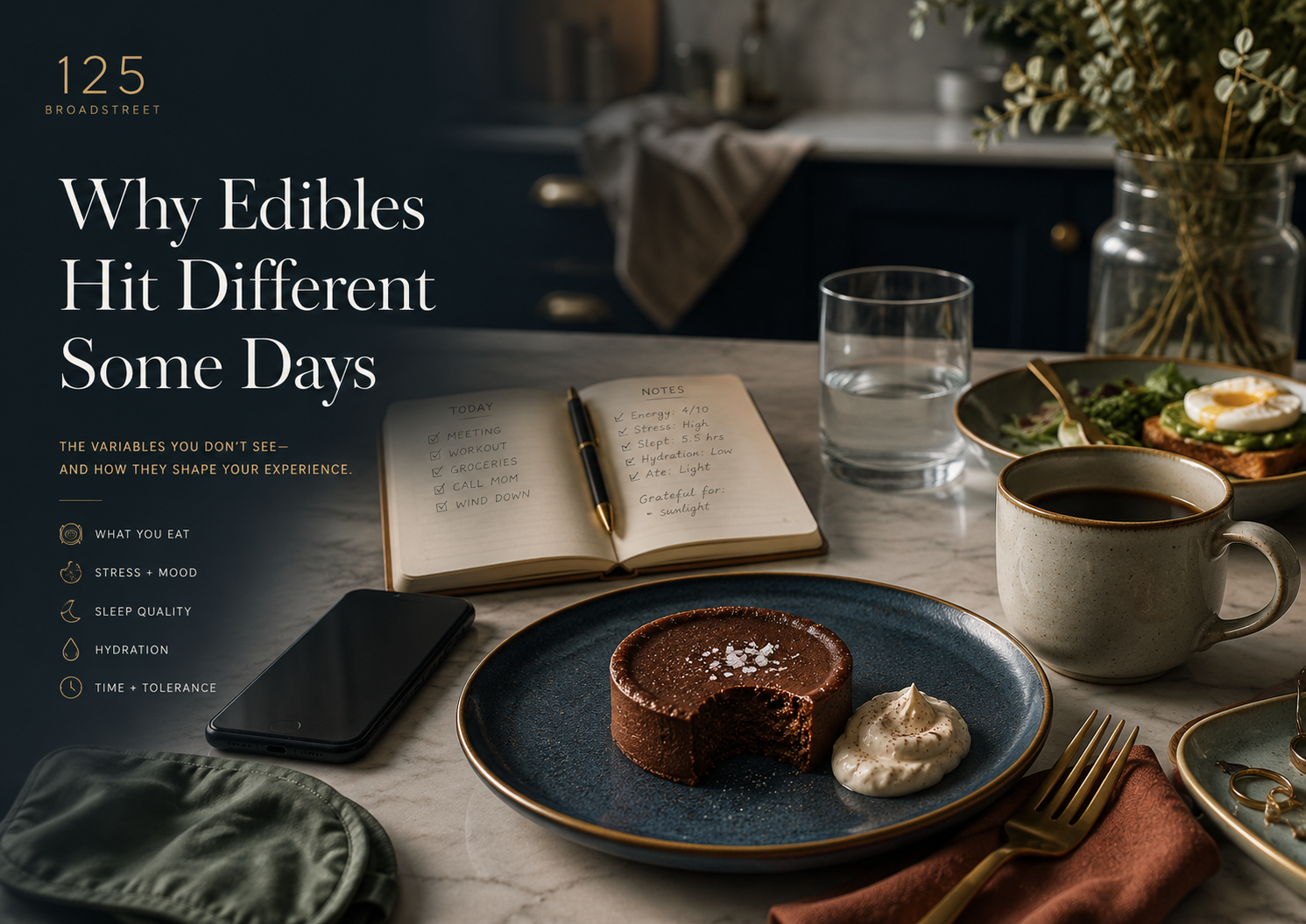
Why Some Edibles Hit Different on Different Days (And It's Not Just Tolerance)
Same edible, same batch, totally different effects — it's rarely tolerance. Metabolism, stomach contents, stress, and sleep are the real reasons cannabis edibles hit different.
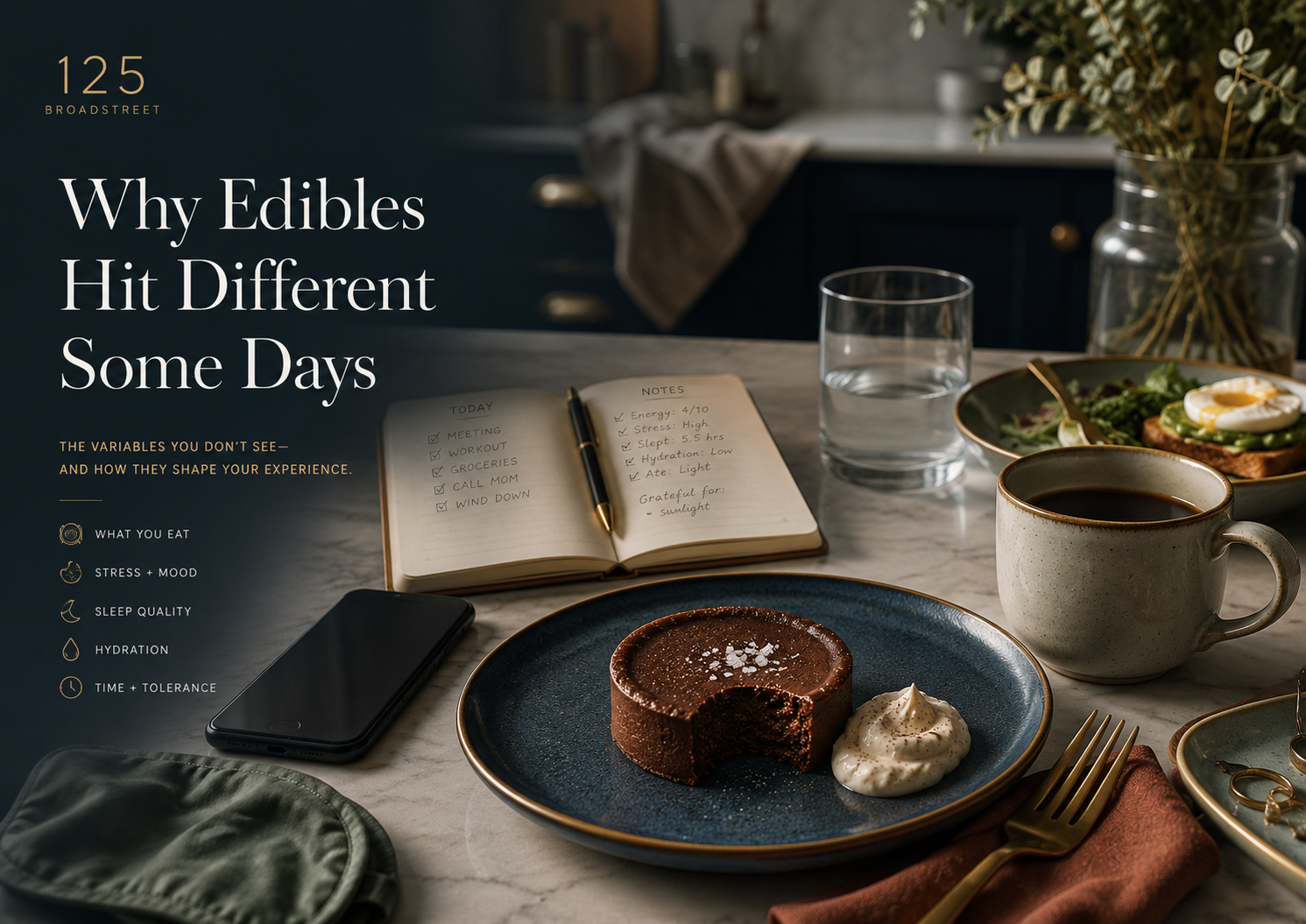
Cannabis Science · Edible Education · Behind the Brand
"This batch is stronger" is the most common thing we hear when someone has the exact same cannabis edible, from the exact same batch, and feels completely different two days apart. It's almost never the product. It's everything happening in your body before the edible ever shows up. Tolerance gets blamed for all of it, and tolerance is honestly the least interesting variable in the room.
Your metabolism isn't a fixed setting
How fast your liver processes THC into 11-hydroxy-THC -- the more potent compound your body actually feels -- changes day to day based on hydration, what you ate that week, hormones, and even genetics. A faster metabolism can mean a quicker, sharper onset. A sluggish one can mean a delayed hit that suddenly feels like "too much" an hour after you'd written it off. Same dose, different chemistry, different experience.
What's already in your stomach matters more than people think
We talk about fat content helping absorption, but the bigger overlooked factor is simply how full your stomach already is. A cannabis edible eaten on a completely empty stomach gets absorbed faster and can hit harder and sooner than the same edible eaten after a full meal, where digestion is already slower and more gradual. Same product, opposite experience, depending on what your stomach was doing first.
Stress changes how your body receives it
Cortisol and THC interact with your nervous system in overlapping ways. A high-stress day can make the same dose feel more intense, more anxious, or harder to settle into -- not because the edible changed, but because your baseline nervous system arousal was already elevated before anything kicked in. A calm day gives THC a quieter system to work with, which often reads as a "smoother" or "better" high, even though nothing about the product changed.
Sleep debt shows up in the high
Poor sleep affects the same receptor systems and stress hormones that influence how cannabis feels. Running on four hours of sleep doesn't just make you tired -- it can make a normally mellow edible feel foggier, heavier, or less predictable, because your baseline state was already compromised before you took anything.
So what do you actually do with this?
Stop asking "is this batch different" and start asking "what's different about today." Did you eat? Did you sleep? Is it a stressful week? These questions explain almost every inconsistent edible experience people assume is about potency. The product is usually the most consistent part of the equation -- you're the variable.
This is also exactly why we tell people to treat every session like its own thing, regardless of how many times they've had that same infused dessert before. Your body isn't the same body it was last Tuesday. Respecting that is the difference between a good experience and a confusing one.
Your good sis with a spliff
125 Broadstreet · Cannabis Culinary & Mocktail Studio · Las Vegas, NV
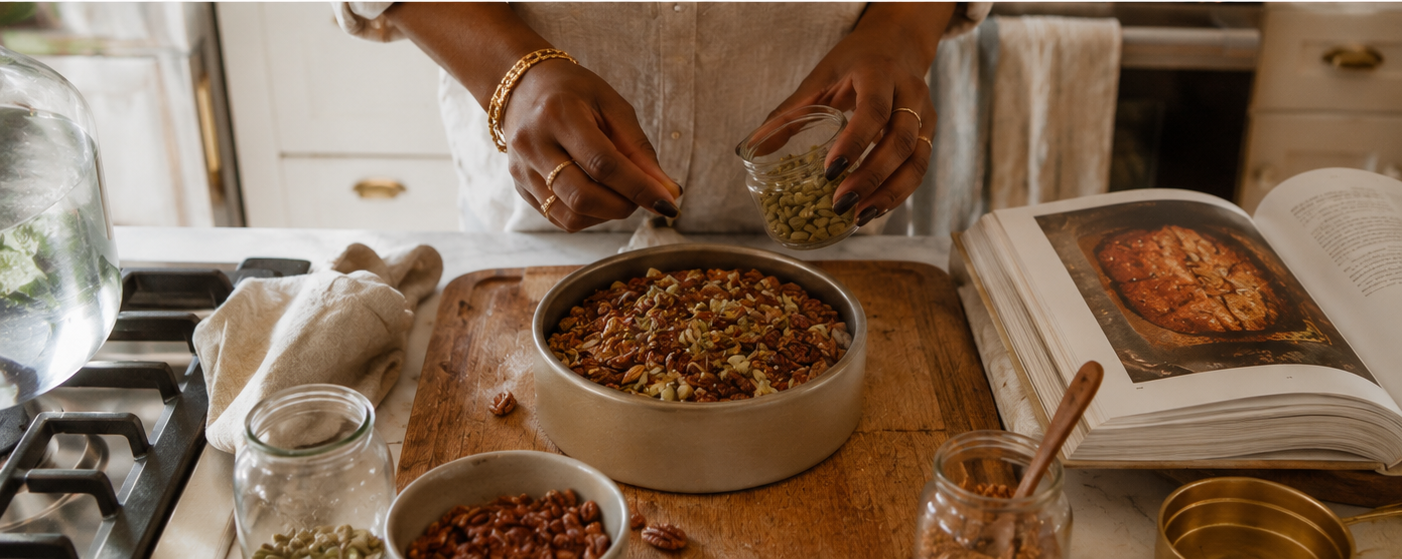
THE WEDNESDAY NIGHT R&D DIARIES: WINS, FAILS, AND ONE MISTAKE THAT CHANGED MY WHOLE POPCORN RECIPE
Wednesday nights at 125 Broadstreet are where the real work happens. I don't test recipes before I go live — I develop them mentally, work through flavor combinations with my Flavor Bible, and let the kitchen tell me if I got it right. This is the story of a cardamom butter pecan popcorn that didn't work on camera, a mistake made off-camera during the remake, and the brittle that happened during cooling that I never planned for. Cannabis culinary development isn't always clean. Sometimes the best discoveries find you.
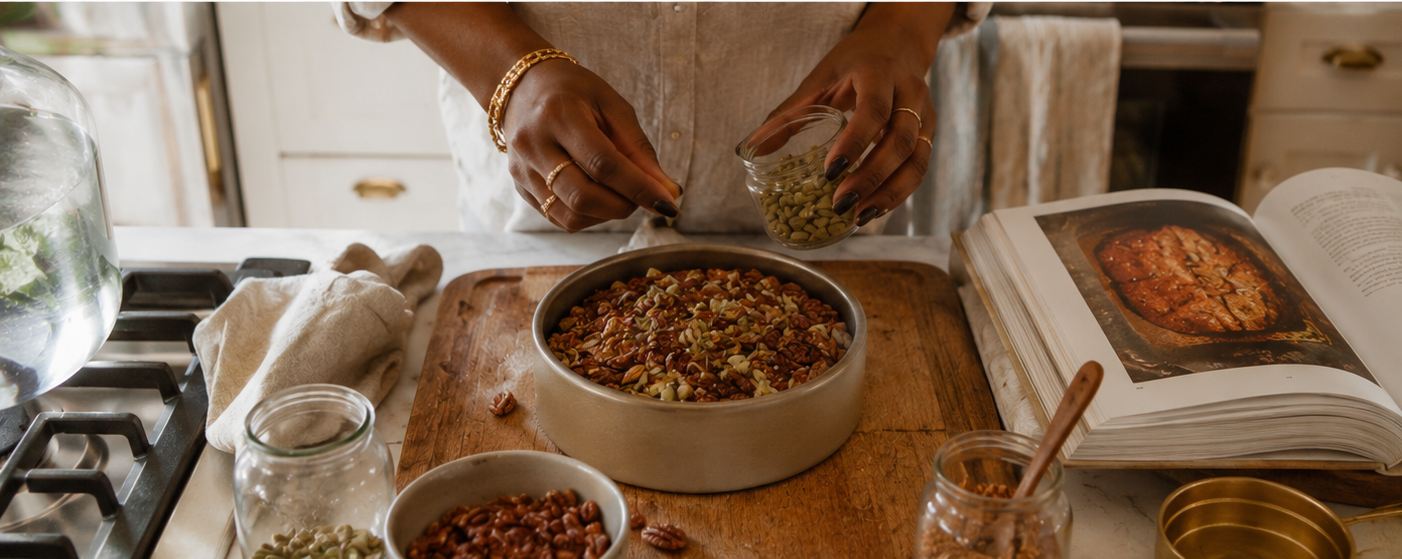
Wednesday nights are me, my kitchen, whatever's in season, and a live camera watching me figure it out in real time. That's the deal. That's always been the deal.
Last Wednesday was a mocktail night.
That's how I work — I develop everything mentally first, working through flavor combinations with my Flavor Bible until I know the concept is right, and then I go live. The kitchen is where I find out if what I built in my head actually translates. That's the test. Wednesday was the test for a new mocktail I'd been sitting with, built around brightness — something that could hold its own next to fat and salt without disappearing. The balance landed the way I heard it in my head. More on her soon.
But while I had the kitchen going, my mind kept drifting back to the popcorn.
I did a live on it a while back. The inspiration was simple — I love butter pecan ice cream, and I wanted to chase that flavor into a popcorn. Cardamom, butter, pecan. I worked through the combination the same way I always do, and I knew the flavors were right. I just didn't know what form I wanted the popcorn to take yet. Not every recipe starts with a finished picture. Sometimes you know the flavors before you know the form.
The live didn't come out the way I wanted. I couldn't fully explain why — I just knew it wasn't it yet.
So I went back off-camera to try again. Made a mistake, added an ingredient too soon, kept going anyway. Set it aside. And then it started cooling — and that's when I saw it.
The texture had shifted into something I never planned for. A brittle. Cardamom butter pecan, broken into pieces, sitting in the bowl alongside the popcorn so every handful catches a shard of it. I wasn't looking for that. The mistake found it for me.
It's not on the menu yet — right now I'm putting them in front of customers as samples, letting real feedback guide where it goes from here — but it's one of those discoveries that makes you trust the process a little more. You don't always know what you're building until it shows you.
That's what these Wednesday nights are really for. Not perfect execution — honest iteration. The cannabis consumption lounge I'm building toward, the infused menu I'm developing, none of it gets there through flawless takes. It gets there through nights like this one, where something doesn't work and you come back to it until it reveals itself.
I film these nights because I want you inside the process, not just the finished product. When we open those doors in California, everything on that menu will have a story behind it. A real one.
See you next week.
— Your good sis with a spliff
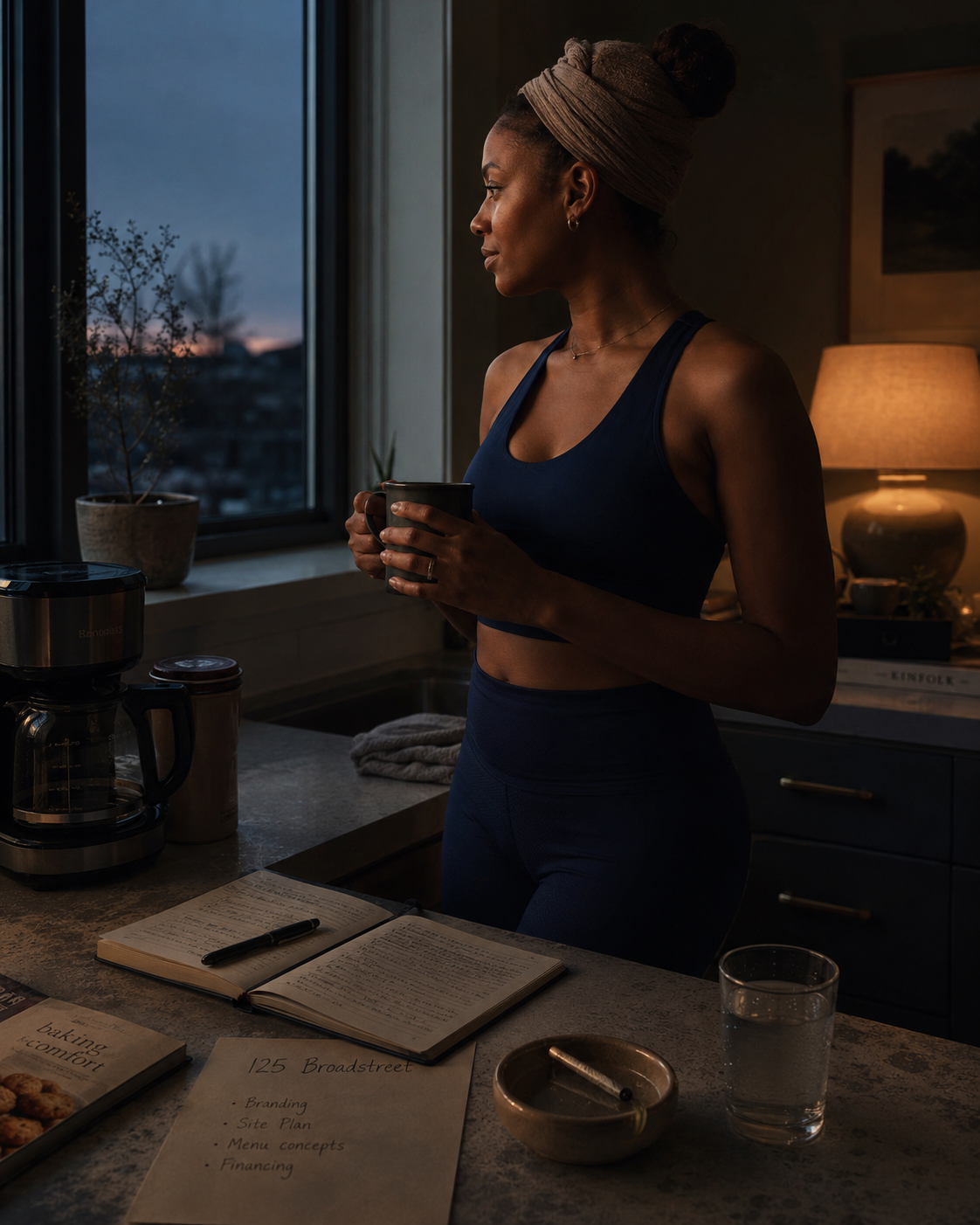
What My Morning Routine Actually Looks Like (Coffee, Kids, and Cannabis)
Before we get into it — this is not a "rise and shine" post. No lemon water. No golden hour journaling. This is real life, my real life, and cannabis is woven all the way through it.
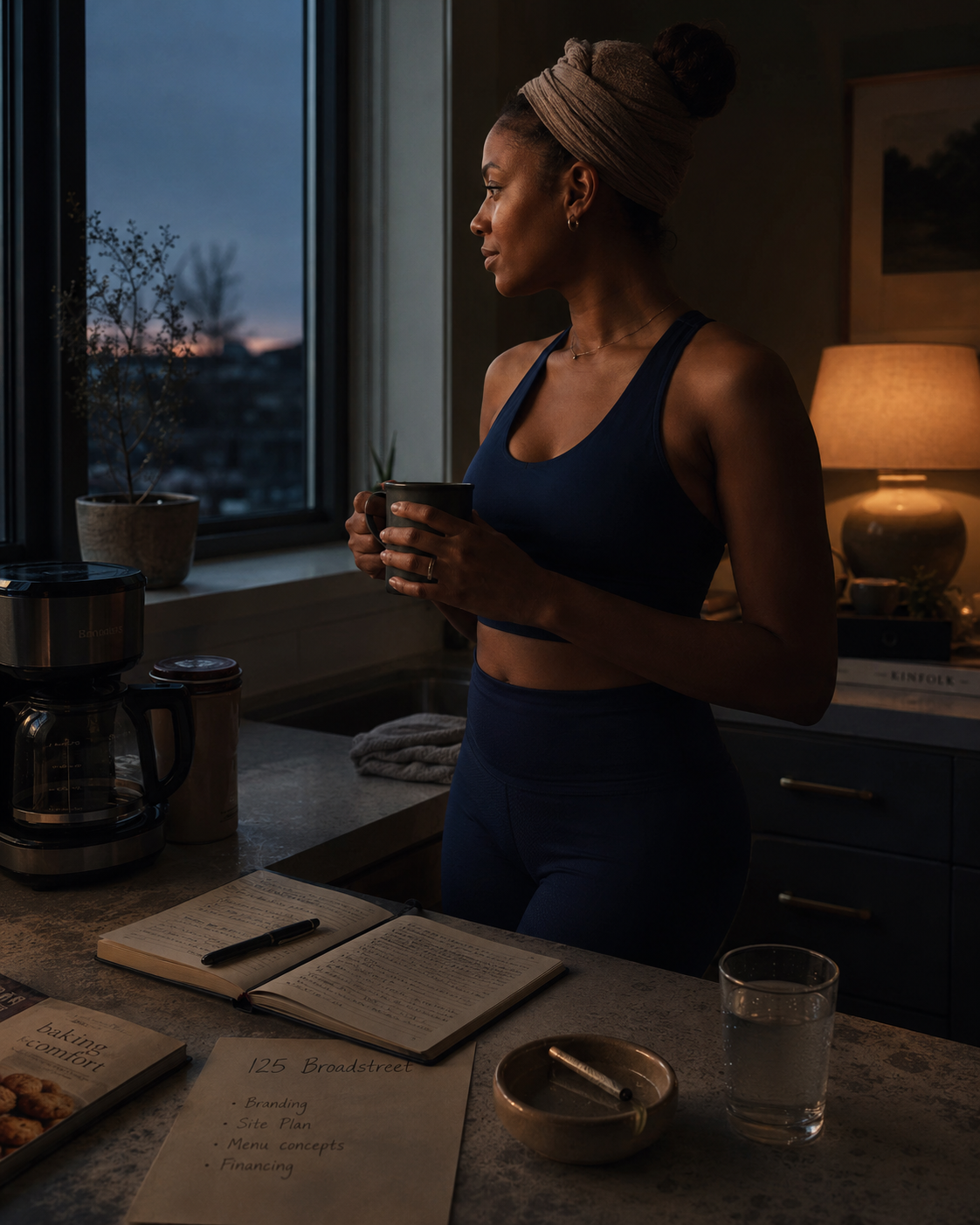
Before we get into it — this is not a "rise and shine" post. There's no lemon water. No golden hour journaling. No 47-step ritual before the sun has even decided to show up. This is real life. My real life. And if you've ever tried to build something from scratch while keeping tiny humans alive and emotionally regulated, you already know that "morning routine" is generous language for what actually happens.
My alarm goes off between five and five-thirty, and for a beat, the world is completely still. No one needs a snack. No one's looking for a shoe or asking me to find something that's been missing since last Thursday. It's just me and the quiet, and I protect that quiet the way I protect everything I've built — intentionally, and without apology.
Before I do anything else, I light up. Not because I need to, but because it's the signal I've learned to give myself that this time — right now, in this stillness — belongs to me. Cannabis is how I move from sleep into intention. It quiets the noise in my head before the noise in my house begins. Some people meditate. Some people pray. Some people sit with a slow cup of tea and their thoughts. I do that too — and I smoke. And then I work out. Before the workout, during it, and after. Every time. Because that's what works for me, and I stopped pretending otherwise a long time ago.
I've heard all the jokes. I've read all the headlines. And still, every morning, I lace up and I move — focused, present, and fully in my body in a way that took years to figure out. Before the workout, cannabis gets me out of my head. I'm not running through my inbox or calculating what's still on the to-do list from Tuesday. I'm just there, in it, moving. During, it keeps me anchored. After, it's the reset — my body is warm, my mind is clear, and whatever I woke up carrying has been sweated out and exhaled. That sequence — light, move, breathe — didn't come from a wellness blog or a podcast recommendation. It came from years of learning what actually helps me show up. To my workouts, to my work, to my kids, to everything I'm building.
Cannabis isn't what I do when the kids are asleep and I can finally exhale. It's woven into how I show up — to my workouts, to my work, to myself.
Once my oldest is out the door and my youngest is settled into his morning, the day officially starts. Coffee happens. Real thinking happens. The business — 125 Broadstreet — gets activated. Sometimes another smoke happens too, because running a business, managing a household, and planning to open a brick and mortar in California in three years is a lot, and I'm not going to perform calm for anyone.
I want to be really clear about something: I'm a mom and an entrepreneur — and too, not in alternating shifts. 125 Broadstreet didn't get built in the quiet pockets around my family. It got built inside my real life, on mornings exactly like this one. In the in-between moments. Through the chaos and through it. The routine I'm describing isn't a luxury I created when things slowed down. It's the structure that held me together while I was building something from nothing, in a city that was never home, in an industry that was never designed to see me coming.
Because here's the thing — Black women, especially Black moms, don't get to exist in wellness conversations on our own terms very often. We're either written out of the picture entirely, or squeezed into a version of self-care that was never designed with us in mind. Nobody's making space for the woman who's up at five AM, smokes before her workout and after, gets her kids sorted, and then sits down to build something real. Nobody's telling that story like it's normal — because in most rooms, it isn't. But in ours, it is.
125 Broadstreet has always been about feeding people, smoking with people, and having a good time. But at its root, it's about showing up as your full self in a space where that's not just tolerated — it's celebrated. Cannabis isn't a personality. It's a tool. It's a ritual. It's part of how some of us take care of ourselves. And if you're up before the sun trying to steal a little peace before the day finds you, I want you to know — you're not alone in it, and this brand was built for you specifically.
125 Broadstreet is a cannabis culinary and hospitality brand built on good food, good flower, and real community. Follow us at 125broadstreet.com, TikTok @125Broadstreet — and tell us what your morning actually looks like.
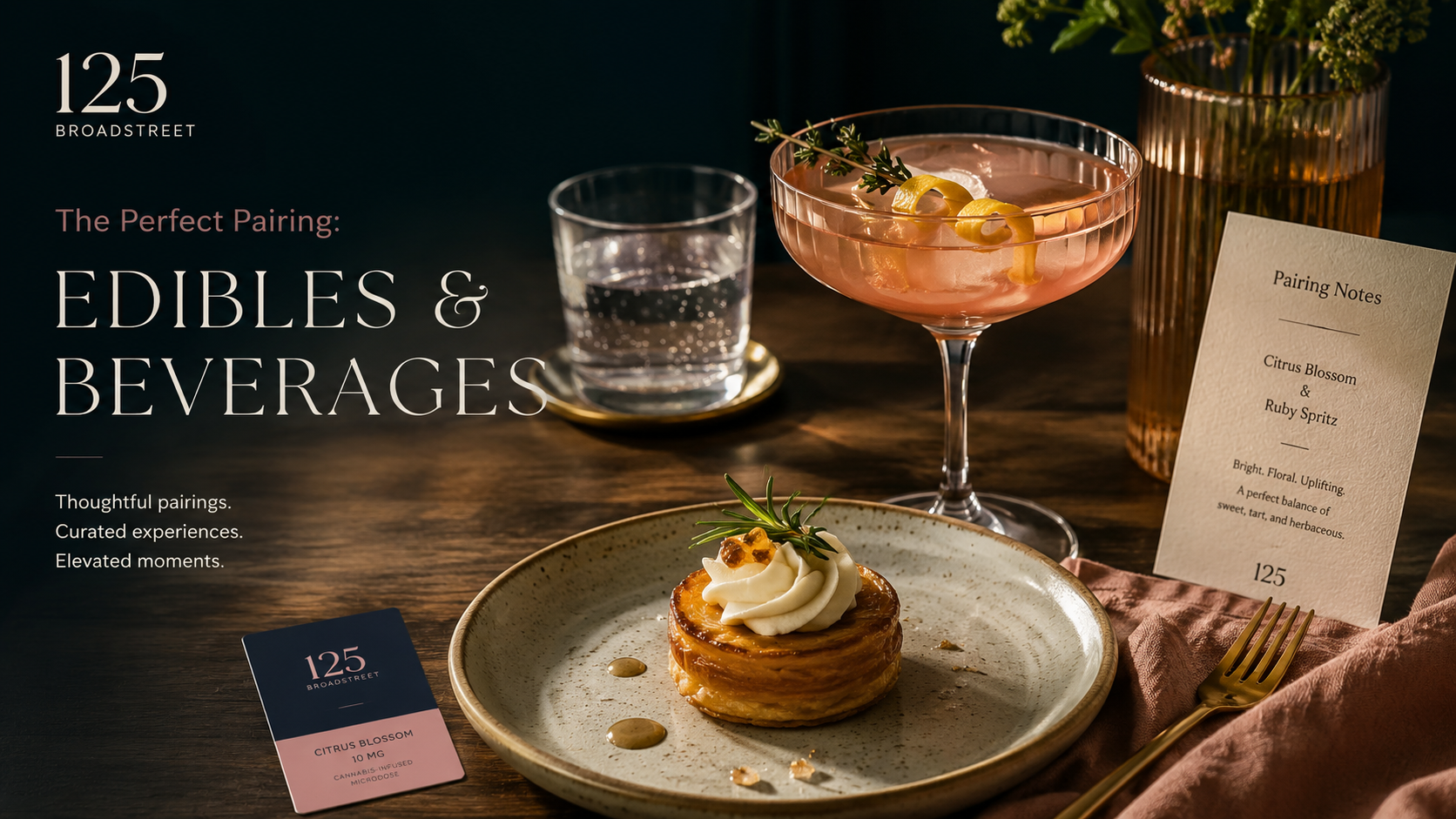
The Perfect Pairing: Edibles and Beverages'
You poured up something good. Now let’s make it intentional. This is your full guide to pairing cannabis edibles with the right beverage — zero-proof mocktails, infused drinks, the alcohol conversation, and how to host like you actually know what you’re doing.
If you've ever eaten an edible, poured up something good, and just vibed — you already know. Now imagine doing that intentionally. That's what we're here for.
Pairing edibles with beverages is one of those things that sounds fancy until you realize it's just about being thoughtful with your pleasure. Food and drink have always gone together — that's not new. But when cannabis enters the picture, the combination becomes a full sensory conversation. What you sip can complement or clash with flavor, shift how quickly things come on, and shape the whole arc of the session — so it's worth being intentional about it.
We're not here to scare you. We're here to help you sip smarter, eat better, and set the table like you know what you're doing. Whether you're going zero-proof, infused, or yeah — a little of both — here's the full breakdown.
First: Know What You're Working With
Before you pour anything, take a second with your edible. Not just the dosage — the profile. Cannabis has terpenes the same way wine has flavor notes, and those terpenes actually shift what tastes good next to them.
A chocolate brownie with myrcene-heavy, indica vibes is going to call for something completely different than a citrus sativa gummy. One wants depth and contrast. The other wants something that matches its brightness and doesn't flatten the experience. Think like a chef: what's the weight of this dish, and what does it need?
"Heavy edibles need something that cuts. Light edibles need something that lifts. The rule is simple: don't stack richness on richness."
Zero-Proof Pairings: The Mocktail Match-Up
Mocktails and cannabis edibles are genuinely one of the best combinations going right now — and not just because it's trending. When you're consuming cannabis, keeping your beverage alcohol-free gives you full control of the experience. No compounding variables. Just flavor doing its job.
This is the bread and butter of what we do at 125 Broadstreet. Every mocktail we build is designed to pair — to be the sip that makes the next bite better, and the bite that makes the next sip worth taking.
The Zero-Proof Pairings
Chocolate Edible → Citrus Mocktail
Rich chocolate wants brightness. Think fresh-squeezed lemon, grapefruit, or a blood orange shrub. The acid cuts the fat, lifts the palate, and keeps the sweetness from going flat. Our Desert Mirage plays exactly in this lane — tart, citrusy, a little smoky on the finish.
Fruit Gummy or Citrus Edible → Hibiscus or Berry Mocktail
Like with like, but layered. A tart hibiscus mocktail with a honey float plays off fruit-forward edibles without competing. Add a tajin or salted rim and you've built something. The salt bridges sweet and tart — it's a tiny detail that does a lot of work.
Earthy or Herbal Edible → Sparkling Green Tea or Cucumber Mint Mocktail
Earthy terpene profiles — myrcene, caryophyllene — love something clean and slightly astringent. A sparkling green tea with cucumber and lime keeps the experience grounded and fresh. Good for day sessions, creative work, low-key hangs.
Brown Butter or Vanilla Pastry → Spiced Chai Mocktail
Warm on warm. Cardamom, cinnamon, a little black pepper, and a touch of oat milk make a brown butter cookie taste like a whole experience. This is a comfort pairing. Sunset energy. Slow exhale. You know the feeling.
Caramel or Toffee Edible → Shrub Mocktail (Apple Cider Vinegar Base)
A shrub — fruit-infused drinking vinegar — sounds wild, but it's the move here. That slight acidic funk is exactly what a sticky-sweet caramel edible needs. Apple, pear, or tamarind bases all work. Add sparkling water and a rosemary sprig. Done.
Sip your mocktail after your edible, not before. Taste the edible first — that's the star. The beverage is the bridge. This also helps you stay conscious of how much you've consumed, which matters when your onset window is still open.
Infused Beverages: When Both Are in the Game
Here's where things get interesting — and where intention becomes non-negotiable. When both your edible and your beverage are infused, you're managing two onset windows, two dose variables, and two effect profiles at the same time. This isn't a warning. It's just math.
Cannabis beverages typically hit in 30–45 minutes. Edibles take 45–90 minutes, sometimes more depending on your metabolism and what else you've eaten. If you start both at the same time, the drink arrives first. The edible shows up to the party later. Plan for it.
The move: keep your infused beverage at 2.5–5mg if you're pairing it with an infused edible. Let the beverage be the opener, not the co-headliner. Know your total mg before the session starts — not halfway through.
Infused Pairing Picks
Infused Pastry + Low-Dose Cannabis Matcha Latte (2.5mg)
The bitterness of matcha cuts pastry sweetness and adds mental clarity to a mellow body session. Keep the latte light — oat milk, a little honey — and let the pastry do the heavy lifting on flavor.
Infused Chocolate Treat + Cannabis Mint Tea (2.5–5mg)
Chocolate and mint is a classic for a reason. When both are lightly infused, the refreshing contrast keeps your palate clean during the onset window — which, honestly, is the gap where most people make the "maybe I'll have a little more" mistake.
Infused Citrus Cookie or Tart + Cannabis Lemonade (2.5mg)
Citrus on citrus, infused throughout. This is a high-energy pairing — sativa profiles play well here. Keep it cold, keep it bright, and keep the dose conservative since the flavor will make you want more than you need.
Okay, Let's Talk About Alcohol
We're not going to pretend nobody's mixing their edibles with a glass of wine or a cocktail. That would be dishonest — and honestly, a little patronizing. So let's talk about it like adults.
Alcohol accelerates THC absorption and significantly amplifies effects. This isn't a rumor — it's pharmacology. A glass of wine with a 5mg edible is a fundamentally different experience than a glass of wine alone or a 5mg edible alone. The crossfade is real, and for some people it's exactly what they're going for. For others, it's the thing that made them swear off edibles forever (it wasn't the edible's fault).
If you're pairing: go low on both sides. One drink. Low-dose edible. Know your own tolerance. And please — if you're hosting — make zero-proof the default option on the table. Not everybody wants to crossfade, and making it easy to opt out is just good hospitality.
"Alcohol at the table isn't the problem. Not reading the room is."
Hosting? Here's the Play.
House Party Energy · Hosting Edition
When you're hosting a cannabis-friendly gathering, your job is to make everyone feel taken care of — whether they're consuming or not, whether they're dosing high or low. Set up a beverage station with clearly labeled options: zero-proof (no cannabis), infused (dose noted), and alcoholic (no cannabis). Put out sparkling water and juice as defaults. Make the non-cannabis option just as beautiful as everything else on the table — nobody should feel like the mocktail is the consolation prize. And if you're serving edibles, put the dose on a little card next to each item. That one detail will save you a whole situation later in the night.
5 Rules for Pairing Like You Know What You're Doing
- 01 Lead with flavor, not effects. Pair based on taste profile first. A great pairing enhances the experience before the cannabis even kicks in. If it tastes bad, you'll notice that before you notice anything else.
- 02 Know your onset window. Edibles are slow. Cannabis beverages are faster. If you're doing both, sequence with intention — and build in time before you assess whether you need more of anything.
- 03 Contrast richness, match lightness. Heavy, fatty, sweet edibles need something that cuts — acid, bubbles, bitterness. Light, fruity edibles can handle something equally bright.
- 04 Hydrate between everything. Plain water between bites and sips resets your palate and keeps your body in the experience. Don't underestimate it. It's not boring — it's smart.
- 05 Know your total dose before you start. If your pastry is 10mg and your beverage is 5mg, you're at 15mg for the session. That's fine — if you planned for it. Math first, vibes after.
This Is What We Build At 125 Broadstreet
Every product in our lineup was designed with pairing in mind — because we don't just want you to eat something good, we want you to have an experience worth remembering.
Infused-free. Built for everyone at the table. Our zero-proof pastries and mocktails that stand completely on their own.
Curated infused boxes with intentional dose ranges. Built for sessions with intention — where the edible is the event.
You tell us what you need, we build the box. Perfect for hosting, gifting, or when you want the full pairing experience without doing the work yourself.
The mission has always been simple: feed people, smoke with people, have a good time. Everything on the table, everything in the box — it's all built around that. Come through.
Build Your Pairing.
Zero-proof, infused, or mix-and-match — we've got a box for the vibe you're creating.
Shop 125 Broadstreet →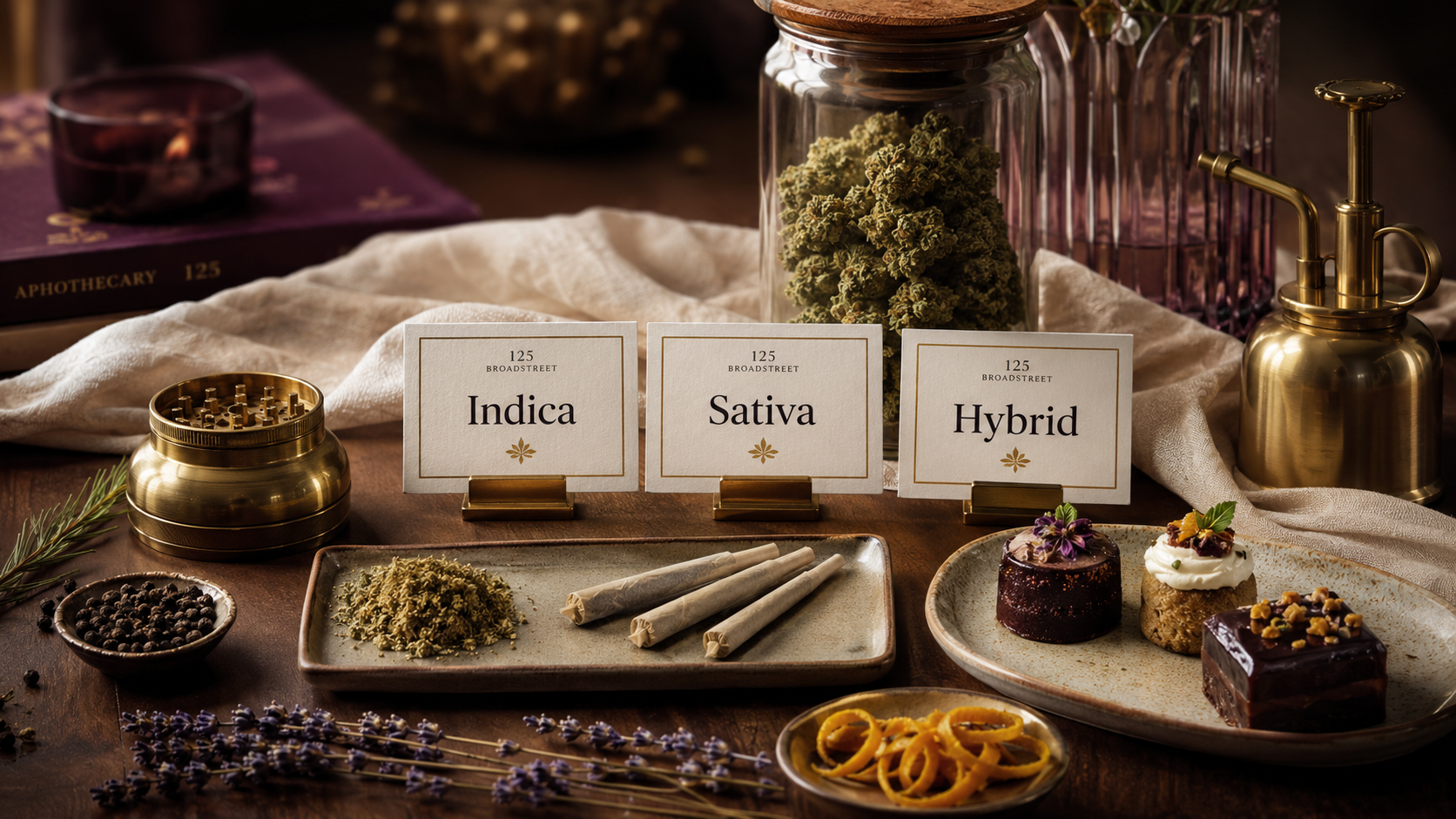
Exploring Cannabis Strains: Indica vs Sativa vs Hybrid
The "Indica = couch lock, Sativa = energy" script is only part of the story. We're breaking down what those labels actually mean, why terpenes matter more than you think, and how to choose the right strain for your moment — intentionally.
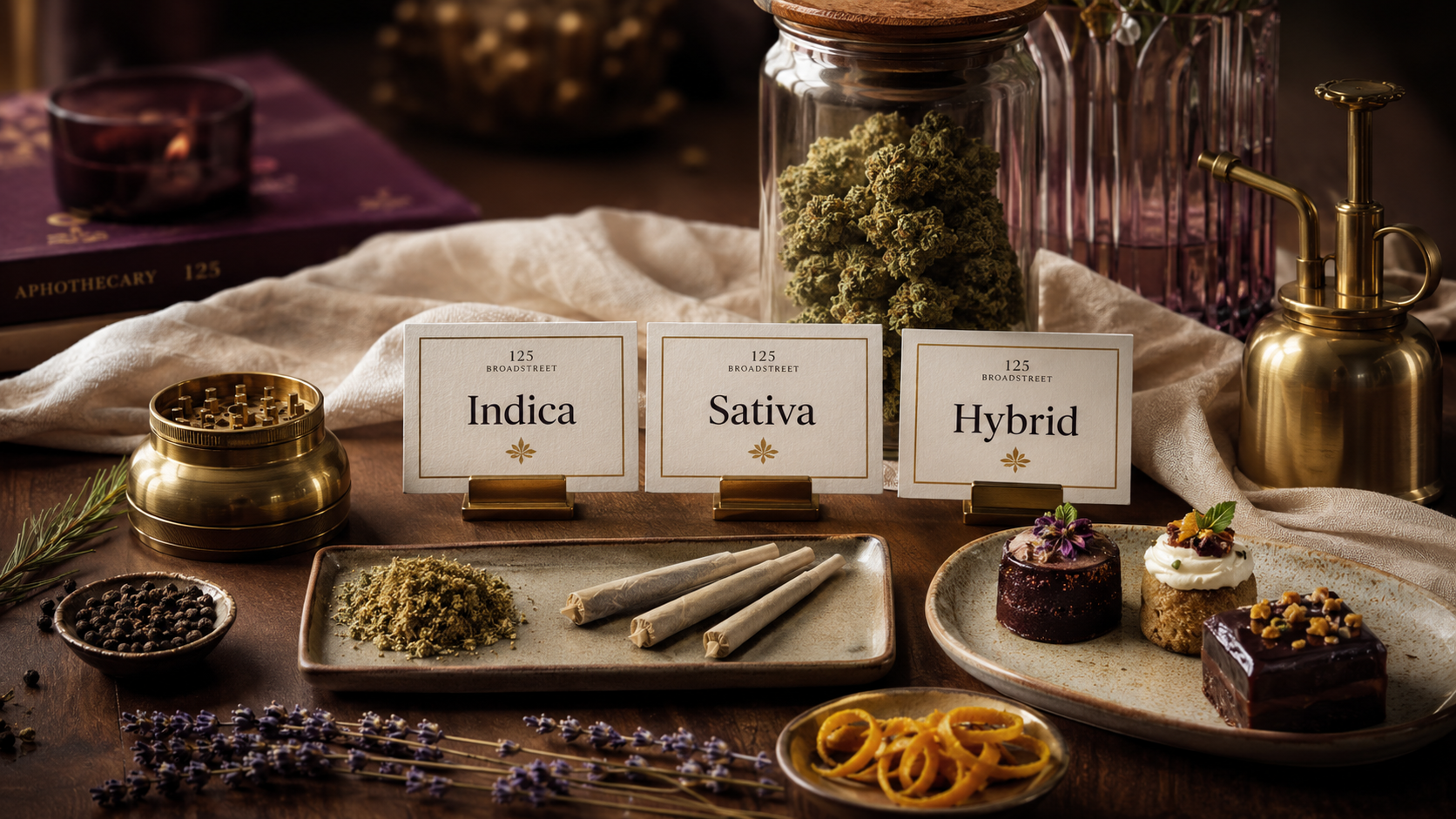
The Flower Files · 125 Broadstreet
You've heard the labels a thousand times. But do you actually know what they mean — and more importantly, what they mean for you?
But here's the thing — the cannabis conversation has evolved, and the old "Indica = couch lock, Sativa = energy" script? It's only part of the story. At 125 Broadstreet, we're all about you making informed choices, whether that's what you're putting in your body or what you're putting on your plate. So let's get into it.
First — A Little History
The terms Indica and Sativa were originally botanical classifications. Cannabis sativa plants are tall, thin, and tend to grow in equatorial climates — think Colombia, Southeast Asia, East Africa. Cannabis indica plants are shorter, bushier, and originated in the Hindu Kush region. Ruderalis is the third, lesser-talked-about cousin — low THC, auto-flowering, mostly used in breeding.
Over time, growers started crossbreeding everything. Like, everything everything. Which means almost every strain on the market today is technically a hybrid to some degree. The labels stuck around though — because they're useful shorthand, even if they're not the full picture.
So What Do the Labels Actually Tell You?
Indica strains are generally associated with a heavier, more body-centered experience. Think: relaxation, physical ease, that "I'm not getting off this couch and I'm at peace with that" energy. These are the ones people typically reach for at night, after a long day, or when pain management is the goal.
Sativa strains are generally associated with a more uplifting, cerebral experience. Creativity, focus, social energy. These are the daytime picks — the "I want to feel good but I still need to function" flower.
Hybrids are everything in between, deliberately bred to deliver specific combinations of both. Some hybrids lean Indica-dominant, some Sativa-dominant, and some are balanced right down the middle.
Enter: Terpenes
If you really want to level up your cannabis literacy, start paying attention to terpenes. These are the aromatic compounds in cannabis (and plants in general) that contribute to flavor, scent, and — research suggests — effect. They're why one strain smells like blueberries and another smells like a pine forest.
Myrcene — earthy, musky, found in mangoes. Associated with sedative, relaxing effects. Common in Indica-leaning strains.
Limonene — citrusy, bright. Associated with mood elevation and stress relief. Common in Sativa-leaning strains.
Linalool — floral, lavender-forward. Associated with calming effects. Often found in strains used for anxiety.
Pinene — pine, sharp, fresh. Associated with alertness and memory retention.
Caryophyllene — spicy, peppery. The only terpene known to interact directly with CB2 receptors. Associated with anti-inflammatory properties.
Next time you're at the dispensary, ask about the terpene profile. A knowledgeable budtender can tell you a lot more from that than from the strain category alone.
And Then There's THC vs CBD
You already know these two, but let's be clear about what they're doing. THC (tetrahydrocannabinol) is the primary psychoactive compound — the one that gets you high. CBD (cannabidiol) is non-intoxicating and is associated with relaxation, inflammation reduction, and anxiety relief.
The ratio of THC to CBD in a strain matters enormously. High-THC, low-CBD strains will hit very differently than a 1:1 balanced strain. If you're newer to cannabis, or sensitive to THC's effects, starting with something that has a meaningful CBD presence can make the experience way more comfortable and controlled.
This is especially important when we're talking about edibles and infused products — which is our world here at 125 Broadstreet. When cannabis is consumed versus inhaled, the onset is slower and the effects tend to be more intense and longer-lasting. Knowing your ratio matters even more in that context.
Choosing What's Right for You
There's no universal "best" strain. There's only the best strain for you, right now, for this moment. Here's a loose guide:
You want to unwind after a hard week? Reach for an Indica or Indica-dominant hybrid with high myrcene content. Pair it with something warm, something sweet, something slow.
You want to get creative or social? A Sativa or Sativa-dominant hybrid with limonene or pinene might be your move. Keep the environment relaxed and the vibes right.
You want a balanced experience — present but not overwhelmed? A balanced hybrid with a moderate THC:CBD ratio is probably your best entry point. Especially if you're newer to the experience.
You're dealing with something specific — pain, anxiety, sleep, inflammation? Talk to a cannabis professional or your healthcare provider. The plant has a lot to offer, and you deserve guidance that's actually tailored to you.
The Bottom Line
Indica. Sativa. Hybrid. These labels are a starting point — not the whole conversation. The more you know about terpenes, cannabinoid ratios, and your own body, the more intentional and enjoyable your cannabis experience becomes. And that's what we're here for at 125 Broadstreet — elevating the experience, from the flower to the table.
Cannabis is culture. It's community. It's culinary art. And you deserve to move through it with confidence.
Stay curious, bestie. We'll keep the education coming. 🌿
Want to experience cannabis culinary done right? Explore our curated boxes and infused pastry offerings at 125broadstreet.com. Follow us @125Broadstreet on TikTok, Facebook, and RedNote, and @125_Broadstreet on Instagram for weekly content, live sessions, and everything in between.
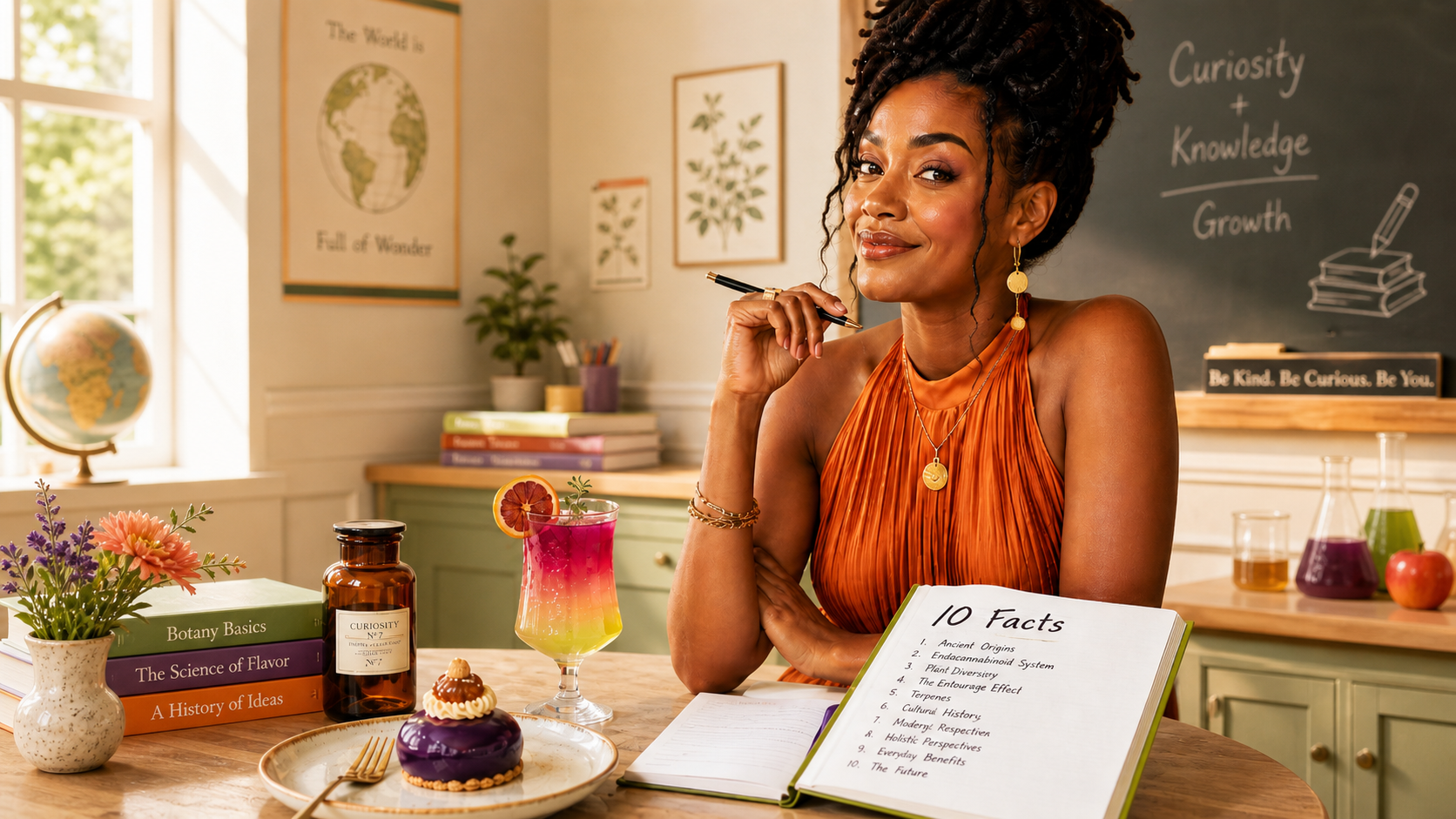
Cannabis Trivia: 10 Surprising Facts'
You think you know cannabis. But do you know it took over 12,000 years for science to finally sequence its full genome? Or that the government once legally required farmers to grow it? We're breaking down 10 facts about this plant that might just stop you mid-scroll — the history, the science, and all the things the conversation usually leaves out.
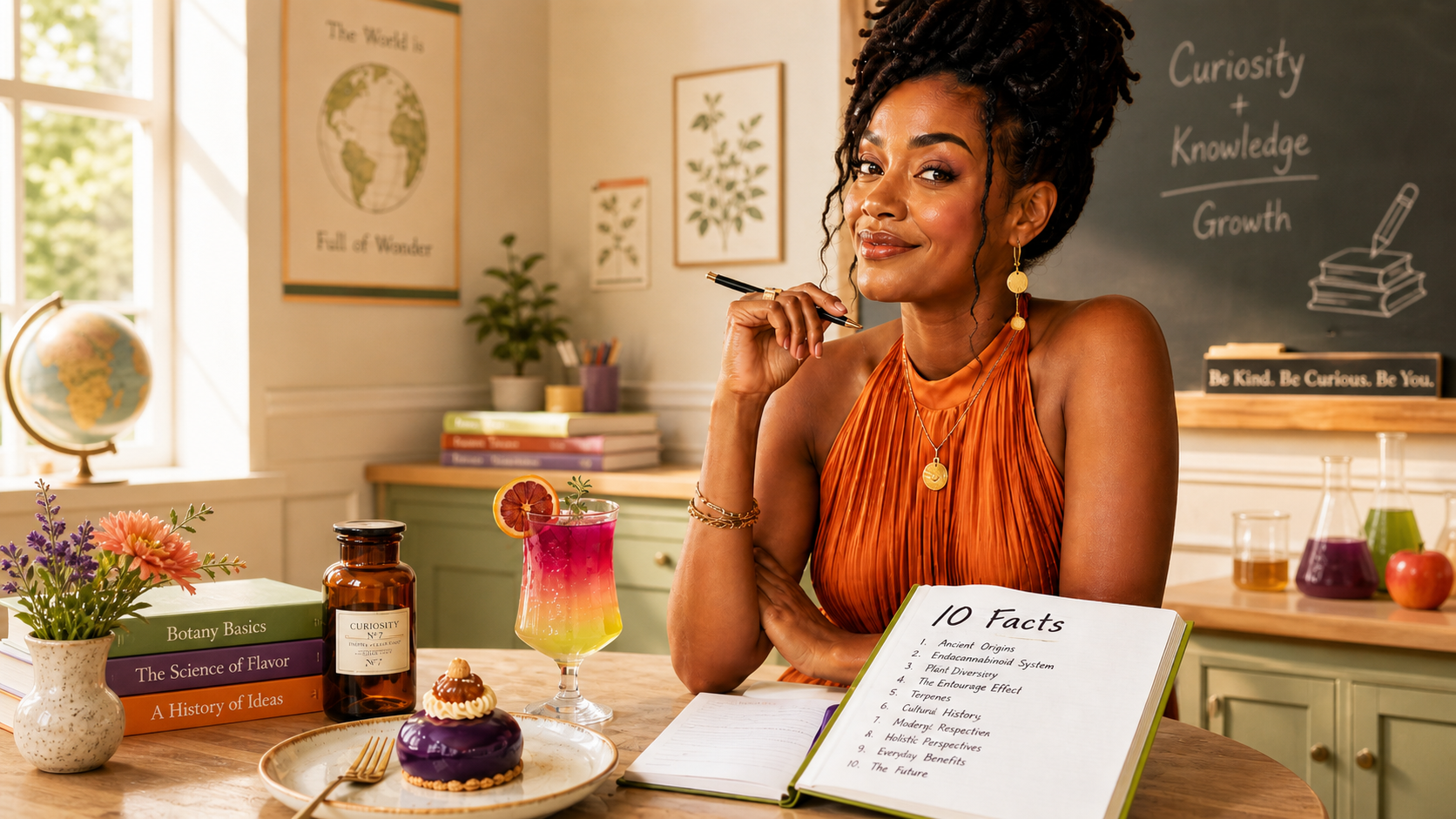
You think you know this plant. Let's revisit that.
We talk about cannabis a lot around here. The flavors, the effects, the culture, the people building something real inside this industry. But every now and then, it's fun to just stop and appreciate how genuinely wild and wonderful this plant actually is.
Because cannabis isn't just a product. It's a living, layered, historically rich organism that humans have been in relationship with for thousands of years — long before dispensary menus and curated product boxes existed. Some of what you're about to read might confirm what you already knew. Some of it might genuinely stop you mid-scroll.
Either way — grab your drink, get comfortable, and let's get into it.
Cannabis Has Been Here for Thousands of Years
The oldest recorded use of cannabis dates back over 12,000 years — making it one of the earliest cultivated plants in human history. Ancient China used it for food, fiber, and medicine. Ancient India wove it into spiritual practice. Egypt, Greece, the Arab world — they all had their relationship with this plant long before prohibition invented a reason to fear it.
The "war on drugs" wasn't the beginning of this story. It was an interruption.
Science Finally Decoded the Plant
Cannabis is one of the few plants to have its full genome sequenced — and what scientists found was genuinely humbling. The cannabis genome is massive and complex, containing roughly 800 megabases of DNA with thousands of genes responsible for producing cannabinoids, terpenes, and flavonoids. Researchers identified the specific gene clusters responsible for THC and CBD production, which opened the door to understanding why different strains express so differently.
For a plant that's been used by humans for over 12,000 years, we only just started reading its full blueprint in the last decade. The science is still catching up to what the plant has always known about itself.
There Are Over 700 Strains — and Counting
We're not exaggerating. Cannabis breeders have developed hundreds upon hundreds of unique strains, each with its own terpene profile, cannabinoid ratio, and effect experience. And new cultivars are being developed constantly.
This is why two people can both consume cannabis and have completely different experiences. It's not just about THC percentage — it's the whole chemical orchestra. Myrcene, limonene, linalool… the terpenes are doing serious work behind the scenes.
"Cannabis isn't one thing. It's a language — and every strain, every terpene, every method of consumption is a different dialect."
The Word "Cannabis" Isn't the Original Name
In ancient Sanskrit, the plant was called ganjika. In Persian — qannab. Across different languages and cultures, cannabis has carried dozens of names, each rooted in its local use and meaning. The Latin classification Cannabis sativa was assigned by Carl Linnaeus in 1753 — but the plant had been named, celebrated, and used for millennia before European botany put a label on it.
What we call it matters. It carries history.
Edibles Hit Differently — and Here's the Science Why
When you smoke or vape cannabis, THC enters your bloodstream through your lungs and reaches your brain quickly. But when you eat it? Your liver processes it first, converting THC into 11-hydroxy-THC — a more potent compound that crosses the blood-brain barrier more effectively.
That's why edibles feel more intense and last longer. It's not your imagination, and it's not a tolerance issue. It's chemistry. And it's exactly why intentional dosing matters — start low, go slow, and give it time.
Hemp and Cannabis Are the Same Plant
Plot twist — hemp is not a separate species. Both hemp and cannabis come from Cannabis sativa L. The difference is legal, not botanical: hemp is defined as cannabis that contains 0.3% THC or less by dry weight. Same genus, same plant family.
Hemp has been used for rope, clothing, paper, and building materials for centuries. Your CBD tincture and your denim might have more in common than you thought.
The "Munchies" Are a Real, Documented Phenomenon
It's not just a joke. THC binds to receptors in the brain's hypothalamus — the region that regulates hunger — and can actually make food smell and taste more intense, triggering appetite even when you're not truly hungry. Research has also shown that cannabis can cause the brain to switch hunger-suppressing neurons into hunger-promoting ones.
This is why medical cannabis has been a meaningful tool for patients experiencing appetite loss. And also why snack curation at 125 Broadstreet is basically an art form. You're welcome.
Cannabis Has No Recorded Lethal Overdose — Ever
No, really. There is no documented case in human history of a fatal cannabis overdose. To achieve a lethal dose, a person would theoretically need to consume an amount so physically impossible in such a short window of time that it is — practically speaking — not achievable.
This is not an invitation to go overboard. Overconsumption is real, uncomfortable, and should be avoided. But the fear-based narrative comparing cannabis to substances with documented overdose deaths deserves context.
Cannabis Was Once Required by U.S. Law
In 1619, the Virginia Assembly passed legislation requiring farmers to grow hemp. By the 1700s, multiple colonies followed suit. Hemp was so essential — for rope, sails, clothing, paper — that some colonies allowed farmers to pay taxes with it.
The same government that mandated its growth would eventually criminalize the plant entirely — and target the communities associated with it most aggressively. The history is complicated, contradictory, and worth knowing.
Cannabis Can Actually Help the Environment
Hemp is one of the most sustainable crops on the planet. It grows fast, requires minimal water, absorbs CO₂ at a higher rate than most trees, and can be used to remediate contaminated soil — a process called phytoremediation. Hemp was actually planted near Chernobyl to help absorb radioactive material from the soil.
A plant that heals humans, communities, and the earth? She's doing the work on every level.
Cannabis is genuinely one of the most complex, historically rich, and scientifically fascinating plants we know. And yet the conversation around it has been flattened — reduced to stereotypes, policy debates, and a lot of noise that drowns out the actual wonder of what this plant is and what it can do.
At 125 Broadstreet, we believe that knowledge is part of the experience. The more you understand what you're consuming, why it works the way it does, and where it comes from — the more intentional, elevated, and genuinely enjoyable the whole thing becomes.
That's what we're here for. The flavor, the science, the culture, the community — all of it, together, at the table.
"The plant has always been smarter than the conversation around it."
— Your good sis with a spliffThe Good Stuff Is in the Box
Zero-proof and cannabis-infused pastries, mocktails, and curated product experiences — built for the culture, made with intention.
Shop the Collection
Breaking Stereotypes: Black Women Pioneering Cannabis'
Black women are responsible for some of the most groundbreaking moments in legal cannabis — and they've done it with less capital, fewer licenses, and more barriers than almost anyone else in the industry. 125 Broadstreet breaks down the history, spotlights six real pioneers who changed the game, and gets honest about what equity actually looks like in 2026. If you've ever felt like this industry wasn't built for you — this read is going to hit different.

The Black women who built, grew, and refused to be written out of cannabis — before the industry even knew what to call itself.
"Black women didn't just enter the cannabis industry. We planted the seeds — and the industry grew up around us."— Your good sis with a spliff
Let's be real for a second. When most people picture a cannabis entrepreneur — the kind who headlines tech conferences, lands dispensary shelf space, and gets profiled in Forbes — they're not picturing us. They never were. The image the mainstream industry built was deliberate: young, white, male, "wellness-forward." Clean aesthetics. Venture capital. A narrative that made it easy to forget who was actually doing this work long before it was legal, celebrated, or profitable.
But Black women have always been here. Growing, cooking, healing, building community. The War on Drugs didn't erase us — it just tried to. And as legal cannabis markets explode across the country, a generation of Black women founders, cultivators, chefs, and advocates are making sure this time, the record gets set straight.
This post is a love letter and a history lesson. It's for anyone who's ever felt like an outsider in a space their people helped create. And it's for every Black woman in cannabis who's been told — explicitly or implicitly — that this industry wasn't made for her. It was. Let's talk about it.
The History They Didn't Teach You
Before cannabis was a lifestyle brand, before the dispensary was a glass-and-marble boutique, before terpene profiles and 1:1 ratios became dinner conversation — Black and Brown communities were the ones carrying herbal and plant-based healing traditions. Cannabis wasn't some novelty. It was medicine, ceremony, community. Knowledge passed down through generations.
Then came prohibition. The criminalization of cannabis in America was not random. It was racialized by design. Harry Anslinger, the architect of federal prohibition in the 1930s, weaponized anti-Black and anti-Mexican racism to build his case. The plant didn't change. The politics around who got to use it — and who got locked up for it — did.
For decades, Black women disproportionately absorbed the consequences: mothers separated from families, communities starved of economic opportunity, entire neighborhoods destabilized by enforcement that was never equally applied. The cost was immense. And yet — the knowledge survived. The culture survived. And when legalization finally started sweeping state by state, Black women showed up, not as newcomers, but as inheritors.
Share of US cannabis businesses majority-owned by Black entrepreneurs — despite Black people making up ~40% of consumers (2026)
Rate at which Black Americans are arrested for cannabis possession vs. white Americans — despite near-equal usage rates (ACLU/NORML)
Projected US legal cannabis market value in 2026 — a booming industry still leaving Black founders behind
The Pioneers Holding It Down
There's a growing ecosystem of Black women reshaping what cannabis leadership looks like. These are not token diversity hires. These are founders, operators, advocates, and artists who built their lanes from scratch — often without access to the capital, licensing shortcuts, or networks that others took for granted.
Dasheeda Dawson
Known globally as "The WeedHead," Dawson is a bestselling author, Princeton alum, and award-winning strategist. She served as Cannabis Program Manager for the City of Portland before being appointed Founding Director of Cannabis NYC by Mayor Eric Adams in 2022 — one of the most influential cannabis policy roles in the country.
Wanda James
Former US Navy lieutenant and Fortune 100 executive, James co-founded Simply Pure in Denver — the first Black-owned, veteran-owned cannabis dispensary in America (2009). A tireless advocate for equity and criminal justice reform, she was elected to the University of Colorado Board of Regents and announced a run for US Congress in 2025.
Kika Keith
Founder and CEO of Gorilla Rx Wellness — the first Black woman-owned dispensary in Los Angeles, opened in 2021 in the Crenshaw district. Before opening her doors, Keith co-founded the Social Equity Owners and Workers Association, sued the city of LA for fair licensing, and won — securing 100 additional licenses for people of color.
Hope Wiseman
Spelman College grad and former investment banker, Wiseman became the youngest Black woman to own a cannabis dispensary in the US when she co-founded Mary & Main in Prince George's County, Maryland at age 25. She's also the founder of Supernova Women, a nonprofit building a pipeline for women of color in cannabis.
Roz McCarthy
Founder and CEO of Minorities for Medical Marijuana (M4MM) — named Cannabis Industry Organization of the Year by High Times — and founder of Black Buddha Cannabis. McCarthy has spent decades fighting for people of color to have real access to the cannabis industry through education, advocacy, and policy across 15+ states.
Shanita Penny
A management consultant and powerhouse in cannabis policy, Penny served as Board President of the Minority Cannabis Business Association (MCBA) — the first and largest nonprofit dedicated to equal access and economic empowerment for cannabis businesses most impacted by the War on Drugs.
At 125 Broadstreet, we see ourselves in this lineage. We're a cannabis bakery born in Marietta, Georgia, rooted in 13+ years of hospitality and a deep belief that food is how we hold each other. Our cheesecakes, tiramisu, pound cakes — they're not just products. They're an invitation. A statement that Black women belong in every corner of this industry: behind the dispensary counter, in the kitchen, on the menu, at the table where decisions are made. We built this brand during a pandemic because we believed in it. And we keep building because the culture demands it.
The Barriers Are Real — And So Is the Resistance
We can't have this conversation honestly without naming what's still happening. Access to capital remains one of the biggest obstacles. Because cannabis is still federally illegal, traditional bank financing is largely off the table — which means entrepreneurs rely on private investment. And the data on where private investment flows is not encouraging for Black women founders. Studies consistently show that Black women receive a fraction of a fraction of venture capital, in cannabis and beyond.
Licensing is another battlefield. Social equity programs were designed with the right intent — to prioritize applicants from communities most harmed by prohibition. But implementation has been messy, slow, and in many cases, gamed by well-resourced applicants who technically qualify while missing the spirit of the policy entirely. The women and families who most deserve access are still waiting.
And then there's the softer discrimination: the rooms where you're the only one, the investors who want to hear your story but not fund your business, the industry events where the panels don't look like you. The subtle and not-so-subtle message that this space was built by and for someone else.
Black women in cannabis resist this every single day. Through community-building, through mentorship, through buying from each other, through showing up loudly and unapologetically. Through brands like ours. The resistance is the product.
This is for the culture.
And the culture is us.
When you support Black women in cannabis — as a customer, a collaborator, a community member — you're not just making a purchasing decision. You're participating in something bigger. A correction. A celebration. A reclamation.
What We Can Do
Buy Black. This is foundational. When Black women-owned cannabis brands are competing for shelf space, your dollars are votes. Support directly when you can — websites, pop-ups, farmers markets, licensed dispensaries that prioritize equity brands.
Amplify. Share the stories. Repost the content. Leave the review. Tell someone about the brand you love. Word of mouth is how communities have always moved — and in an industry where advertising is severely restricted for cannabis companies, organic reach is everything.
Advocate for equity licensing. Get informed about what's happening in your state or city. Social equity cannabis policy is still being written in many markets. Public comment matters. Who you vote for matters. Local cannabis boards and commissions matter.
Show up in the room. If you have access — to investment, to networks, to platforms — use it intentionally. Introduce people. Make connections. Be the bridge you wish you'd had. The industry will look like what we collectively decide to build.
And if you're a Black woman in this industry — or watching from the edges, trying to figure out if there's a seat at the table for you — the answer is yes. Pull up. We saved you a spot.
Cannabis and Mental Health: Breaking Stigmas'
Breaking the stigma that was never ours to carry — and reclaiming the plant, the peace, and the conversation.

Let's just say it out loud — the way we talk about cannabis and mental health has been broken for a long time. We grew up hearing it was the gateway, the crutch, the thing that made you lazy, unambitious, unserious. Meanwhile, our aunties were sipping three glasses of wine a night to "unwind" and nobody was writing a single op-ed about it.
So let's have an honest conversation. Because cannabis isn't a monolith, mental health isn't a trend, and the people most harmed by stigma have always been the same communities most in need of real, culturally honest wellness tools.
Pull up a chair. We're getting into it.
The Stigma Didn't Come From Nowhere
Before we talk healing, we have to talk history. The cultural panic around cannabis — especially as it relates to Black and brown communities — was manufactured. Decades of propaganda told us this plant was dangerous, criminal, and a character flaw. But in the same breath, pharmaceutical companies were handing out benzos like business cards and nobody flinched.
The result? A whole generation of us internalized shame around something the rest of the world was quietly profiting from. And when mental health entered the chat — anxiety, depression, burnout, grief that nobody taught us how to name — we were expected to white-knuckle our way through it. Pray it away. Work it off. Keep it moving.
That era is over. We're rewriting the story — with intention, with information, and without apology.
— 125 BroadstreetWhat the Research Is Actually Saying
Let's be clear: cannabis is not a cure-all. It is not therapy. It is not a substitute for mental health care. But the research around cannabis as a supportive tool for certain mental and emotional experiences is growing — and it's a lot more nuanced than the DARE poster in your middle school classroom suggested.
Here's what people are reporting, and what emerging research is starting to back up:

But Let's Be Real About What It Can't Do
This is where the honest conversation really lives. Cannabis has helped a lot of people, and it has hurt a lot of people too. Both things are true.
Here's what we need to be grown about:
- It's not a replacement for therapy. If you're struggling, please talk to someone. A therapist, a counselor, a trusted friend with capacity. Cannabis might soften the edges — but it won't help you build the skills.
- If you have a history of psychosis, schizophrenia, or certain psychiatric conditions, THC can make things worse. Full stop. CBD may still be an option, but this is a conversation for you and a medical professional.
- Cannabis can become a crutch. If you can't fall asleep, unwind, eat, or feel okay without it — that's information. That's your body trying to tell you something deeper is going on.
- Your medication matters. Some psychiatric medications interact with cannabis. Ask questions. Don't guess.
None of this is meant to scare you. It's meant to respect you. You deserve real information, not a sales pitch dressed up as wellness.
The Shame Has to Go
Here's what I keep thinking about: how many of us have quietly used cannabis to get through something hard, while still carrying shame about it? Went to work. Raised kids. Held a marriage together. Cared for a dying parent. Survived something unspeakable. And did it while hiding the one thing that actually helped us stay soft enough to keep going.
That shame is generational. That shame was designed. And letting it go is part of the work.
— On Reclaiming the PlantUsing cannabis intentionally — with dosing awareness, with support, with respect for the plant — isn't a moral failing. It's a choice. One of many tools on the shelf. And you get to make it without explaining yourself to anybody.
Tools for an Intentional Relationship
If you're curious about using cannabis in a way that actually supports your mental health, here are some honest starting points:

Why This Matters to Us
Everything we make — the mocktails, the pastries, the entire experience — is built on the belief that wellness should taste good, feel good, and look like us. We're not here to push cannabis on anybody. We're here to offer an elevated option for people who have already chosen this plant as part of their life and deserve to engage with it on their own terms.
The edibles industry was built without us in mind for too long. Gritty brownies. Flavors that tasted like an afterthought. Branding that didn't speak our language. We're doing it differently — with flavor-first intention, thoughtful dosing, and the understanding that the person eating this might be winding down from a long week, processing something hard, or simply celebrating being alive on a Tuesday.
Mental health is not a niche. It's the whole conversation.
— 125 BroadstreetReal Talk, One More Time.
- If you're in crisis, please reach out. 988 is the Suicide & Crisis Lifeline in the U.S. There are humans on the other end who want to help.
- Cannabis laws vary wildly. Know what's legal where you live.
- This post is for informational purposes only. It does not constitute medical or legal advice. Talk to a professional about what's right for you.
- You are not broken for needing tools to get through life. Every one of us is working with something.
Softness Is
a Practice.
If this conversation hit you in a soft spot, take that as information. You deserve rituals that honor how hard you've been working to hold it all together. Our curated boxes are built exactly for this — thoughtfully assembled collections of artisan pastries and elevated treats, available in three tiers so you can choose the experience that fits your moment.
Explore the Curated Box Collection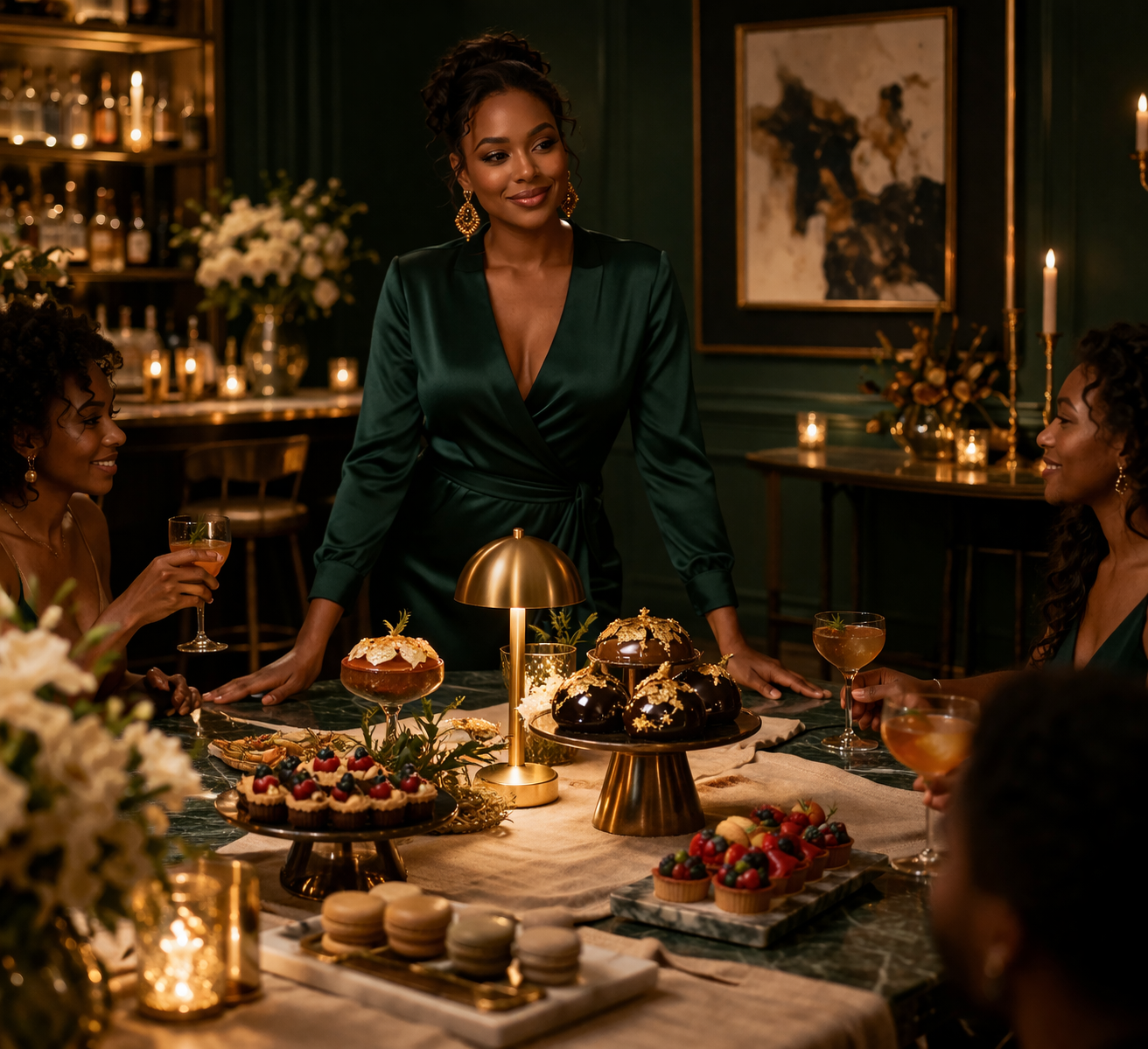
A Sweet Escape: The Art of Cannabis-Infused Pastries'
Cannabis-infused pastries are entering a new era, one defined by elegance, intention, and cultural richness. A Sweet Escape explores how elevated desserts, refined hosting, and thoughtful dosing can transform edibles into a fine dining experience rooted in beauty, community, and care.
A Sweet
Escape
The art of cannabis-infused pastries is rewriting the rules of indulgence — one elevated bite at a time.

Baby, let's talk about what happens when the kitchen becomes sacred ground. When flour-dusted hands, the warm perfume of brown butter, and the quiet hum of intention meet something ancient, green, and gloriously misunderstood — that's where the magic lives. Cannabis-infused pastries aren't a trend. They're a movement. They're culture. They're your grandmother's recipe book meeting the future with her head held high, saying, yes, honey — there's always been a little something extra in these family recipes.
Food has always been our love language. Cannabis just adds the dialect that says: slow down, feel everything, and savor every last crumb.
— Your good sis with a spliffFrom Brownie to Brilliance
Let's be real — for decades, the "cannabis edible" lived exactly one life: the battered, mystery-dosed brownie wrapped in plastic at the back of somebody's locker. Dense. Suspicious. Tasted like regret and hay. We deserve better, sis. And sis, we have finally arrived somewhere better.
The new era of cannabis-infused pastry is intentional. It's artisan cheesecake swirled with lavender-infused cannabutter. It's tiramisu — the real kind, made with mascarpone from scratch — dusted with precision-dosed cocoa and a whisper of sativa. It's pound cake so buttery, so golden, so deeply Southern in its spirit, that one slice should come with a family reunion invite attached. This is Black alchemy at work in the kitchen, and it is absolutely everything.
- Precision dosing — Start low (2.5–5mg THC per serving), go slow, and know your potency before you pour. No guessing. No chaos. Just consistency.
- Quality ingredients — Premium cannabis deserves premium partners: real butter, Madagascar vanilla, single-origin chocolate, fresh citrus. The plant is only as good as the plate it lands on.
- Intentional experience — What feeling are you creating? Uplifted creativity? Deep relaxation? Elevated edibles work best when you decide the vibe before you bake it in.
How Cannabutter Becomes Culture
Cannabutter, cannabis-infused coconut oil, and MCT oil tinctures are the three queens of pastry infusion. Each brings a different fat profile, flavor, and potency window. Coconut oil loves delicate, light pastries — think macarons and shortbread. Brown butter? She was born for rich cakes and custards. MCT tinctures are the chameleons: precise, nearly flavorless, and easy to portion control.
Here's the thing nobody told you in school: cannabis and fat are soulmates. THC and CBD are fat-soluble compounds, which means they bind beautifully to butter, oil, and cream. That's science. But when you slow-cook that infusion with care — low heat, patience, a little prayer to your ancestors — that's where the soul comes in. The kitchen becomes a lab and a sanctuary at the same time.
And it all starts with one thing: cannabutter. This is the foundation of every elevated pastry in our lineup. Once you've got it made, the whole kitchen opens up. Here's how we do it — two ways, so you can work with what you've got.
Decarboxylation — Don't Skip This, Beloved
Before you touch a single stick of butter, you need to wake the cannabis up. Decarboxylation is the process of applying heat to activate the THC and CBD compounds — raw flower alone won't get the job done. Think of it as the mise en place of the elevated kitchen. You can't build a masterpiece on a sleeping ingredient.
- Preheat your oven to 240°F. Low and slow is the law. High heat destroys the very compounds you're trying to activate.
- Break up your cannabis by hand or with a grinder — not too fine. Spread it in a single even layer on a parchment-lined baking sheet.
- Bake for 40 minutes, stirring gently halfway through. Your flower will shift from bright green to a deeper, toasty olive color. That's the glow-up you're looking for.
- Let it cool completely before using. The smell will be strong — open a window, light a candle, put on a good playlist. This is a ritual, not a rush.
- 1 cup (2 sticks) unsalted butter
- 1 cup water
- 7–10g decarboxylated cannabis, finely ground
- Fine mesh strainer or cheesecloth
- Mason jar for storing
- Patience (non-negotiable, queen)
- Always use unsalted butter — you control the flavor, not the other way around
- Adding water prevents scorching and is strained out at the end
- The lower the heat, the better the infusion — never let it boil
- Label your finished butter clearly and store separately from regular butter
- Melt butter in a medium saucepan over the lowest heat setting your stove allows. Add the water once butter is melted — this is your insurance against burning.
- Add your decarbed, ground cannabis. Stir gently to fully combine. The mixture should look like a golden-green pond. Beautiful, honestly.
- Maintain a very low simmer — you want to see tiny lazy bubbles, not a rolling boil. Cook for 2 to 3 hours, stirring every 20–30 minutes. Set a timer. Put on a show. This part takes patience.
- Watch for a thick, shiny surface on the butter — that's your sign it's done. The color will be a deep, rich gold-green. Trust it.
- Remove from heat and let cool for 10 minutes. Then pour through a fine mesh strainer or cheesecloth-lined bowl into a mason jar. Press the plant material to get every last drop — don't waste the good stuff.
- Refrigerate for at least 1 hour. The butter will solidify at the top and any remaining water will separate at the bottom — pour it off. Your cannabutter is ready.
Storage: Cannabutter keeps for up to 2 weeks in the fridge and up to 6 months in the freezer. Store in a sealed, clearly labeled container — away from your regular butter, always.
new-to-edibles guests
for infused edibles
don't go higher
The Recipes That Started a Revolution
Every movement needs its flagship dish. For 125 Broadstreet, it was the peach biscuit that changed everything — pillowy, honey-kissed, and studded with the kind of memory that makes you call your grandmother just to say thank you. But as the brand grew, so did the menu. Let us walk you through three of the pastries that are rewriting what elevated edibles look and taste like.
- 2 cups graham cracker crumbs
- 6 tbsp cannabutter (5mg/tbsp), melted
- 32 oz cream cheese, room temp
- 1 cup granulated sugar
- 4 large eggs
- 1 tsp Madagascar vanilla extract
- ¼ cup sour cream
- 3 fresh peaches, sliced & caramelized
- 2 tbsp brown butter (non-infused), for drizzle
- Pinch of cardamom & sea salt
- Press graham crumb + cannabutter mixture into a 9-inch springform pan. Chill 20 minutes.
- Beat cream cheese and sugar until silky smooth, about 4 minutes. No lumps allowed, beloved.
- Add eggs one at a time, then vanilla and sour cream. Mix gently — overmixing cracks dreams (and cheesecakes).
- Pour into crust. Bake at 325°F in a water bath for 55–65 minutes until just set at the edges.
- Cool completely, then refrigerate overnight. Crown with caramelized peaches and that brown butter drizzle.
This Is About More Than the Bite
The cannabis culinary space is growing — fast. But for too long, it's been built on aesthetics that didn't speak to us, branding that didn't see us, and edibles that tasted like an afterthought. The 125 Broadstreet vision is different. It's a café and social house where the atmosphere is warm, the menu is intentional, and the community at the table looks like us. From Atlanta to Las Vegas to California, the mission is the same: food as connection, cannabis as culture, and every seat at that table for somebody who was told there wasn't room.
Think about what a consumption lounge could look like when it's built by someone who's been a bartender, a bar manager, an HR professional, a mother, and a self-taught pastry artist. It doesn't look like a dispensary with chairs. It looks like the most beautiful living room you've ever been in — playlists curated by someone who knows Phyllis Hyman and Kendrick both belong in the same set. Mocktails that taste like liquid art. Pastries that taste like your highest self made them on a Sunday afternoon when everything was right.
We're not just baking pastries. We're building the spaces we always deserved to exist in — and we're doing it with butter, flower, and intention.
— Your good sis with a spliffAnd right now, you can bring that same energy directly to your door. 125 Broadstreet has two curated box experiences built exactly for this — and both of them put the power in your hands.
- The Trifecta — For the one who knows what she wants. Choose any 3 items from the menu, select your mg, and let the elevation begin. Focused. Intentional. Perfectly curated.
- The Cipher — For when you're feeding the table. Choose any 4 items, pick your mg, and build a spread worthy of the people around you. Because the best conversations happen over the best bites.
- Dealer's Choice — Available for both boxes. Not sure where to start? Tell us the vibe — the occasion, the feeling, the energy you're chasing — and we'll curate it for you. We know what we're doing, and we will absolutely do right by you.
Whether you're gifting, gathering, or simply treating yourself like the main character you absolutely are — The Trifecta, The Cipher, or a Dealer's Choice is waiting on you.
And between us? There may even be a cookbook in the future — a literary love letter to everyone who ever stood in a kitchen wondering if their creativity, their heritage, and their relationship with cannabis could coexist on one gorgeous page. The dream is very much alive. But right now, it lives in every box we pack, every pastry we craft, and every bite that shifts something in you.
How to Host Your Own Elevated Moment
You don't need a consumption lounge to create an elevated experience. You need intention, a good playlist, and the willingness to show out for yourself and your people. Here's how to set the scene:
- Set the table right: Linen napkins, real plates, tea candles. Your infused tiramisu deserves better than a paper plate. Period.
- Label everything clearly: Infused vs. non-infused items should always be clearly distinguished. Create beautiful tent cards — make it cute and conscious.
- Know your guests: Not everyone is a cannabis consumer, and that's perfectly fine. Non-infused mocktails and regular pastries mean everyone's included at your table.
- Build a vibe playlist: Think Erykah Badu into Summer Walker into Tems into vintage Sade. Let the music do half the work.
- Give your guests time: Remind people that edibles take 45–90 minutes to hit. Encourage patience. Nobody needs to go back for a second slice ten minutes in, okay?
- Make it a moment: Take photos. Light that good candle. Put on the good china. The elevated life isn't reserved for special occasions — it IS the occasion.
The Sweet Life Is Not a Fantasy.
It's a 2 a.m. baking session that turns into a movement. It's a peach biscuit that became a brand. It's the belief that our culture, our community, and our creativity deserve a premium seat at every table — cannabis infused or otherwise. This is the art of the sweet escape. And baby, we are just getting started.
Cannabis & The Endocannabinoid System: The Wellness Secret Your Body Always Knew
Your body was ready for cannabis before culture ever caught up. Long before dispensaries, CBD trends, or wellness branding, the endocannabinoid system was already working behind the scenes, helping regulate mood, sleep, appetite, pain, and balance throughout the body. This hidden network is one of the most fascinating systems we have, and understanding it changes the way we talk about cannabis, wellness, and the body itself.
Listen!! Before the dispensaries, before the legislation, before your auntie started putting CBD oil in everything — your body already had a whole system in place for this. The endocannabinoid system (ECS) is one of the most sophisticated, complex, and frankly underrated networks in the human body. And it’s high time — no pun intended — we gave it the conversation it deserves.
What’s the Endocannabinoid System, Really?
Discovered in the early 1990s — yes, that recently — the endocannabinoid system is a stunning network of receptors, molecules, and enzymes laced through your brain, immune system, organs, skin, and nervous system. Think of it as your body’s own executive producer — mixing, blending, and balancing every beat. Scientists call it homeostasis. We call it keeping your vibe immaculate.
From mood swings to memory, pain to appetite, sleep to immunity — the ECS is the behind-the-scenes maestro keeping everything in check. And it does this through three main players:
CB1 Receptors — The brain’s VIP section. These are in charge of mood, memory, pain perception, and that iconic cannabis euphoria everyone’s buzzing about.
CB2 Receptors — Concentrated in the immune system and peripheral tissues. These handle inflammation and immune response, making them a major focus of therapeutic research.
Endocannabinoids — Here’s the headline: your body is its own plug, producing cannabis-like molecules on the daily. Anandamide, the star player, is literally named after bliss. Your body’s been crafting its own joy formula since day one — no prescription required.
So, Where Does Cannabis Come In?
Cannabis plants produce compounds called phytocannabinoids — and the most famous ones, THC and CBD, just so happen to mirror the endocannabinoids your body already makes. THC fits like a key into your CB1 receptors. CBD works differently — it’s more like a conductor, modulating the whole orchestra rather than playing a single note.
This is why cannabis affects us the way it does. It’s not a foreign invasion. It’s more like a reunion. Your receptors recognize these compounds because your biology was already tuned to receive them. The plant and the body evolved in conversation with each other. That’s not a marketing line. That’s ecology.
“Anandamide — your body’s own bliss molecule. Named after the Sanskrit word for joy. Your ancestors knew something science is just now catching up to”
The Cultural Weight of This Knowledge
Let’s get real: you can’t talk about cannabis and wellness without naming the erasure and injustice. For decades, Black and Brown communities took the brunt of criminalization, while today’s wellness industry profits from the same plant. That tension? It’s real, and the conversation can’t move forward without it.
But the knowledge? That’s always been ours, too. Traditional healers across Africa, the Caribbean, Latin America, and Asia used cannabis medicinally for centuries. Science is finally catching up to what culture already carries. We are not late to this party. We built the house.
What Supports Your ECS — With or Without Cannabis
Whether you partake or not, your endocannabinoid system needs tending. Here’s what the research — and your grandmother — would both co-sign:
Omega-3 fatty acids — Found in fatty fish, flaxseed, and walnuts. Your ECS literally needs these fats to produce endocannabinoids properly.
Exercise — That runner’s high? That’s anandamide flooding your system. Your body rewards movement with its own bliss molecules.
Quality sleep — The ECS regulates your sleep cycles. Deprivation disrupts everything. Protect your rest like the luxury it is.
Stress management — Chronic stress depletes endocannabinoid tone. Therapy, community, laughter, meditation — these are biochemical maintenance, not soft suggestions.
Dark chocolate & black pepper — Both contain compounds (theobromine and beta-caryophyllene) that interact with ECS receptors. Your ancestors’ spice cabinet was ahead of its time.
CBD products — For those who want cannabis-derived support without the psychoactive effects, full-spectrum CBD engages the ECS in ways increasingly backed by clinical research.
A Word on Intentionality
Whether you’re approaching cannabis as medicine, ritual, relaxation, or recreation — bring the same energy you give to everything else that matters: intention, information, and self-knowledge.
Dosage matters. Method of consumption matters. Your mental health history, your medications, your individual biology — all of it matters. Talk to a healthcare provider who takes the conversation seriously. Do your research. And know that curiosity about your own body is never something to be ashamed of.
Your endocannabinoid system has been working for you since before you drew your first breath. The least you can do is learn its name.
Remember: before trying any new cannabis wellness ritual, consult a healthcare professional who sees your whole story — not just your symptoms.
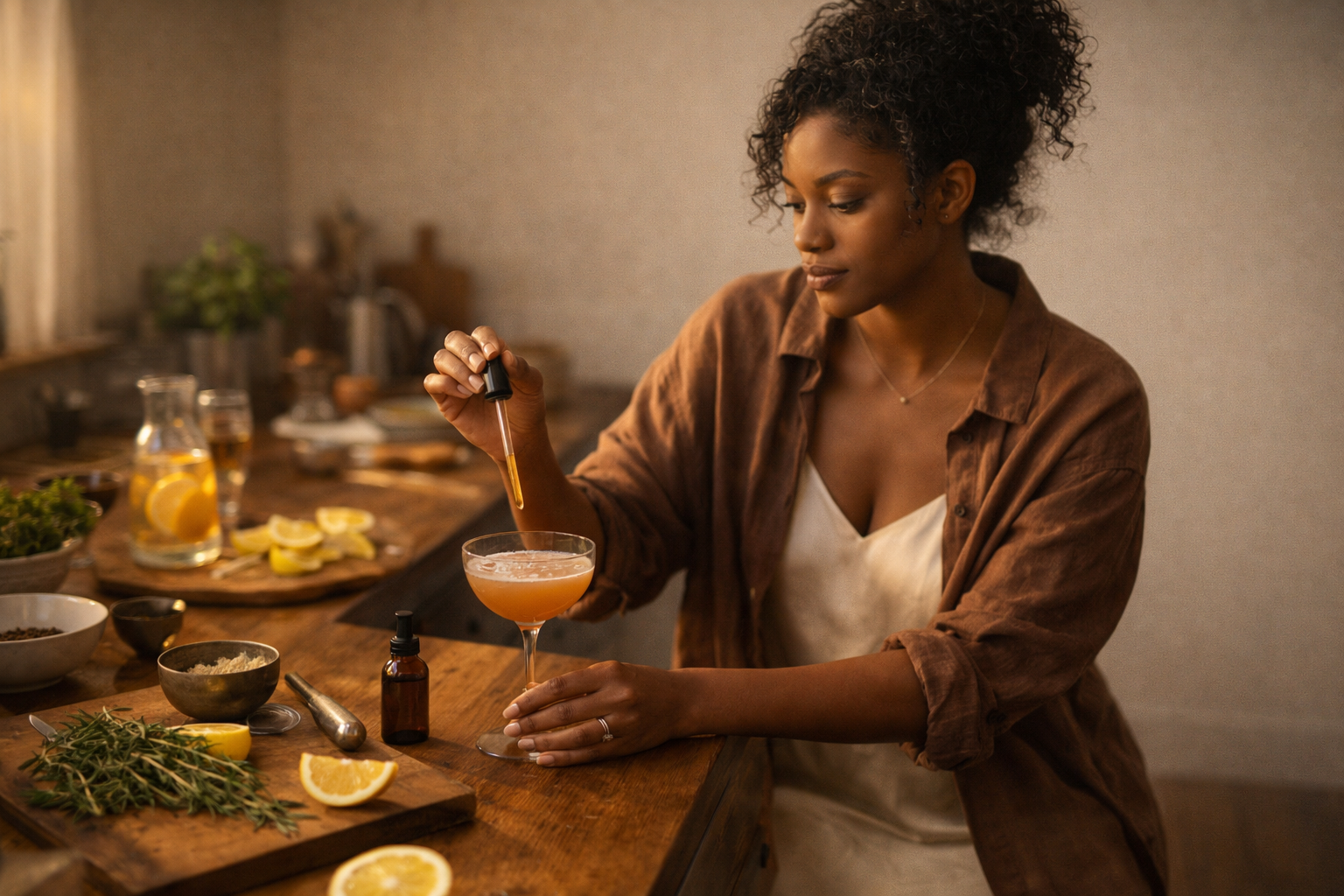
Shrooms & Cannabis: Let's Talk Microdosing
Shrooms or cannabis — which is right for you? We're breaking down microdosing for beginners. Benefits, how-tos, and no judgment. Come get informed. 🖤
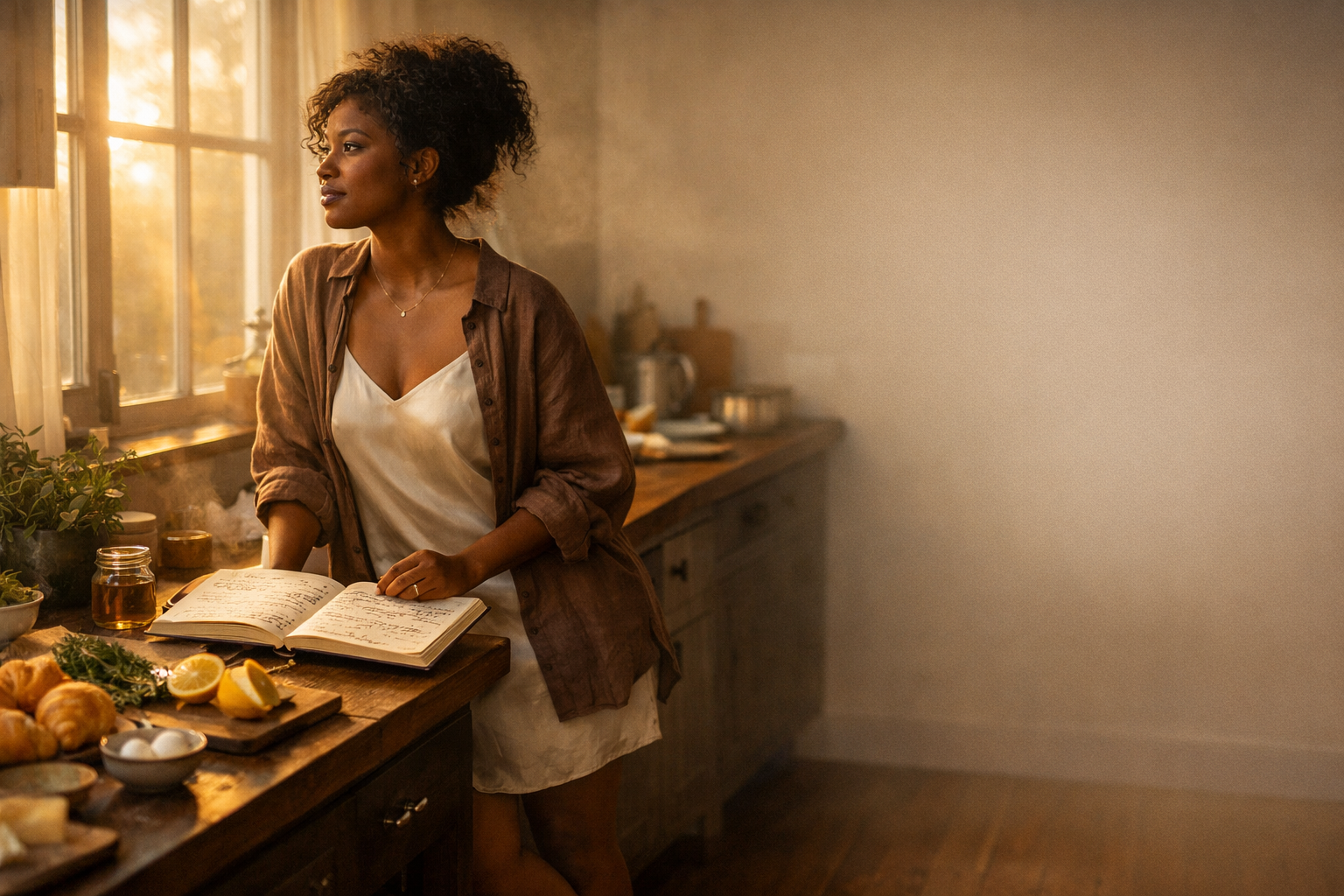
Okay, let's be honest. You've seen it in the comments, heard it in the podcast you pretend you don't listen to at 2am, and maybe even had a whole group chat conversation about it. Microdosing is everywhere right now — and if your curiosity brought you here, good. Pull up a chair. We're about to get into it.
No judgment. No lectures. Just real information so you can make the best decisions for your body and your life.
First Things First — What Even Is Microdosing?
Here's the simple version: microdosing is when you take a very small, almost undetectable amount of a substance on a regular basis — so small that you don't feel high, you don't see anything weird, and you can absolutely still go about your day like a functioning adult.
The goal is not the trip. The goal is the shift — that quiet, subtle "wait, why do I feel so good today?" energy that builds over time.
The two naturals getting the most attention right now? Psilocybin mushrooms and cannabis. Both have been around for centuries. Both are having a serious wellness glow-up. And both deserve a real conversation.
One thing we have to say before we go further — psilocybin mushrooms are still illegal in most U.S. states and many countries. Cannabis laws depend entirely on where you live. So before anything else, know your local laws, babe. We're here for information, not legal trouble.
Let's Talk Shrooms 🍄
Yes, those mushrooms. No, we're not talking about the kind on your pizza.
Psilocybin is the naturally occurring compound in "magic mushrooms" — and at a full dose, they'll take you on a whole journey. But microdosing is the complete opposite of that. We're talking such a tiny amount that you won't feel anything dramatic. What people do report though? That's where it gets interesting.
What the people are saying:
🍄 You might actually deal with your feelings — and not even realize it's happening. Many people describe a quiet emotional softening, like things that used to feel heavy just... don't anymore.
🧠 Brain fog? What brain fog? Mental clarity is one of the most commonly reported benefits. Your thoughts actually connect. You finish what you start. Revolutionary.
✨ Your creative side shows up and shows out. Writers, artists, entrepreneurs — the creative community has been on this quietly for years. There's a reason why.
😌 Mood gets a glow up. Not in a fake, forced way. More like waking up and genuinely feeling okay. Consistently. For a lot of people, that's everything.
How do you actually do it? A popular starting point is something called the Fadiman Protocol — one day on, two days off. This keeps your body from building a tolerance and makes sure the doses stay genuinely tiny. Most beginners start around 0.1 grams and adjust slowly from there. Slowly. Like, really slowly.
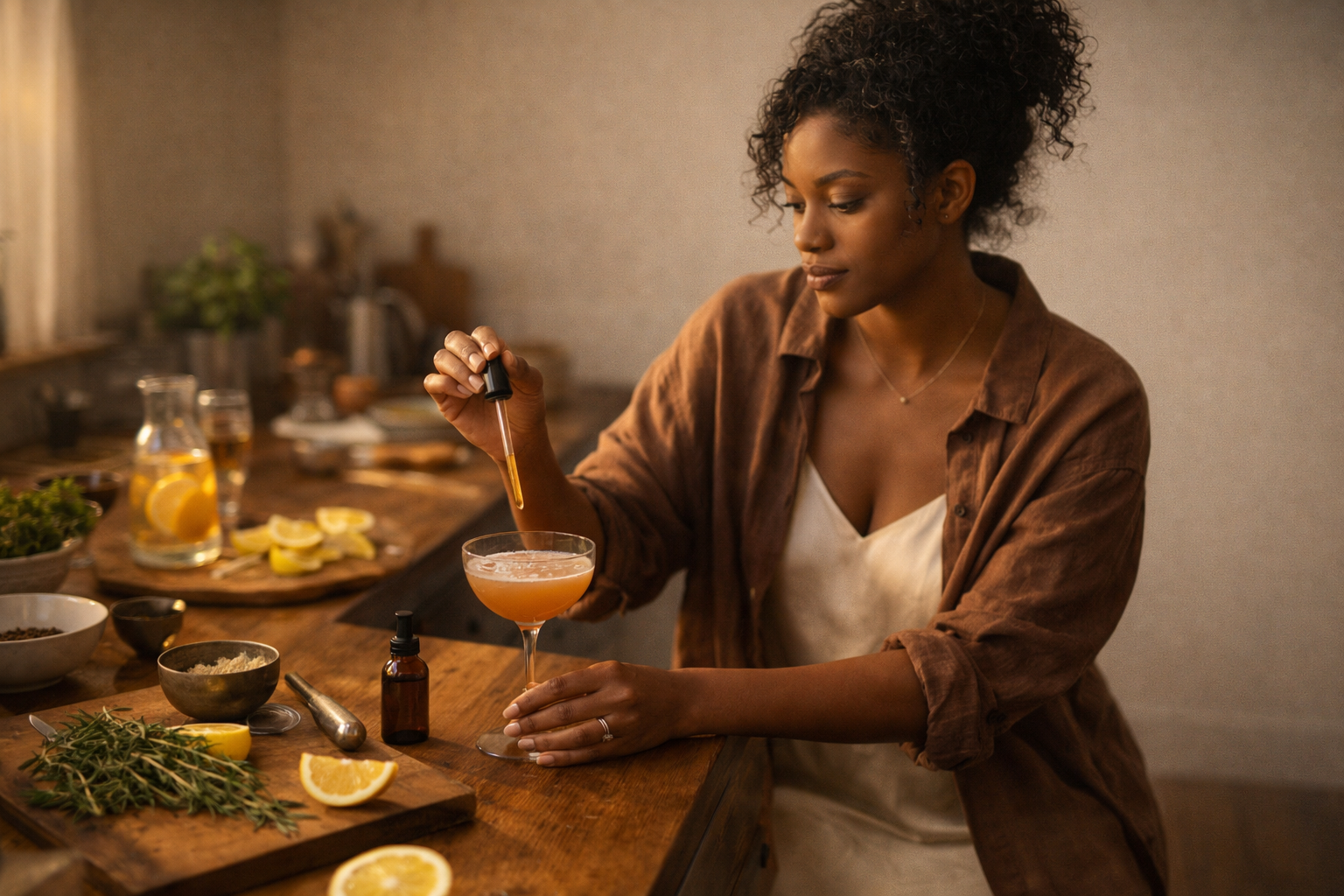
Now Let's Talk Cannabis 🌿
Cannabis microdosing is a little more accessible depending on where you live — and honestly, it's a great entry point if you're newer to this whole conversation.
Forget everything you think you know about edibles sending someone to another dimension (we've all seen that video). Microdosing cannabis is the opposite of that. It's taking just enough to take the edge off — without the paranoia, the couch lock, or the three-hour snack spiral.
What people are loving about it:
💆🏾♀️ Anxiety relief that doesn't make you useless. Low-dose cannabis — especially CBD-dominant or balanced THC/CBD products — can calm your nervous system without turning your brain off. You can still function, sis.
😴 Sleep like you actually deserve rest. A small evening dose can help your body wind down naturally. No more staring at the ceiling replaying conversations from 2019.
🔥 Your body gets a little relief too. Less physical tension, better body awareness, and some relief from that chronic discomfort you've just been living with. You don't have to do that.
🎯 Focused. Present. Actually here. At very low doses, some people find they're more locked in — not spacey, not foggy. Just present.
How do you start? The magic number for cannabis beginners is 2.5mg of THC. That's it. That's the whole starting point. If you're using edibles, wait a full 90 minutes before deciding you need more — edibles are sneaky and we will not be repeating that lesson the hard way. A 1:1 THC to CBD ratio is a solid, balanced place to begin.
Shrooms vs. Cannabis — The Quick Breakdown
| 🍄 Psilocybin Mushrooms | 🌿 Cannabis | |
|---|---|---|
| ⚖️ Legal Status | Illegal in most places | Depends on your state/country |
| ✨ Vibe | Emotional & creative shift | Calm, relaxed, present |
| ⏱️ How Fast? | Builds gradually over weeks | More immediate |
| 🎯 Best For | Deep creativity & emotional processing | Daily anxiety, sleep & tension |
| 🌱 Beginner Friendly? | Do your research first | Great starting point |
Okay But Real Talk For a Second
We love a good wellness conversation, but we also love you — so here's what you actually need to know:
⚠️ Know your laws. Psilocybin is federally illegal. Cannabis is complicated by location. Look it up for your specific area.
⚠️ Your mental health history matters. If you have a history of psychosis or are currently on psychiatric medication, please talk to a doctor before exploring any of this.
⚠️ Start smaller than you think you need to. The whole point is that you barely feel it. Less is genuinely more here.
⚠️ Write it down. Keep a little journal — mood, sleep, energy, focus. You'll start to see patterns and find what works for you specifically.
⚠️ This is not a replacement for therapy or medical care. It's a supplement to taking care of yourself, not a shortcut around it.
Everything in this post is opinion-based and for informational purposes only. Not medical advice. Not legal advice. Just real information from one curious mind to another.
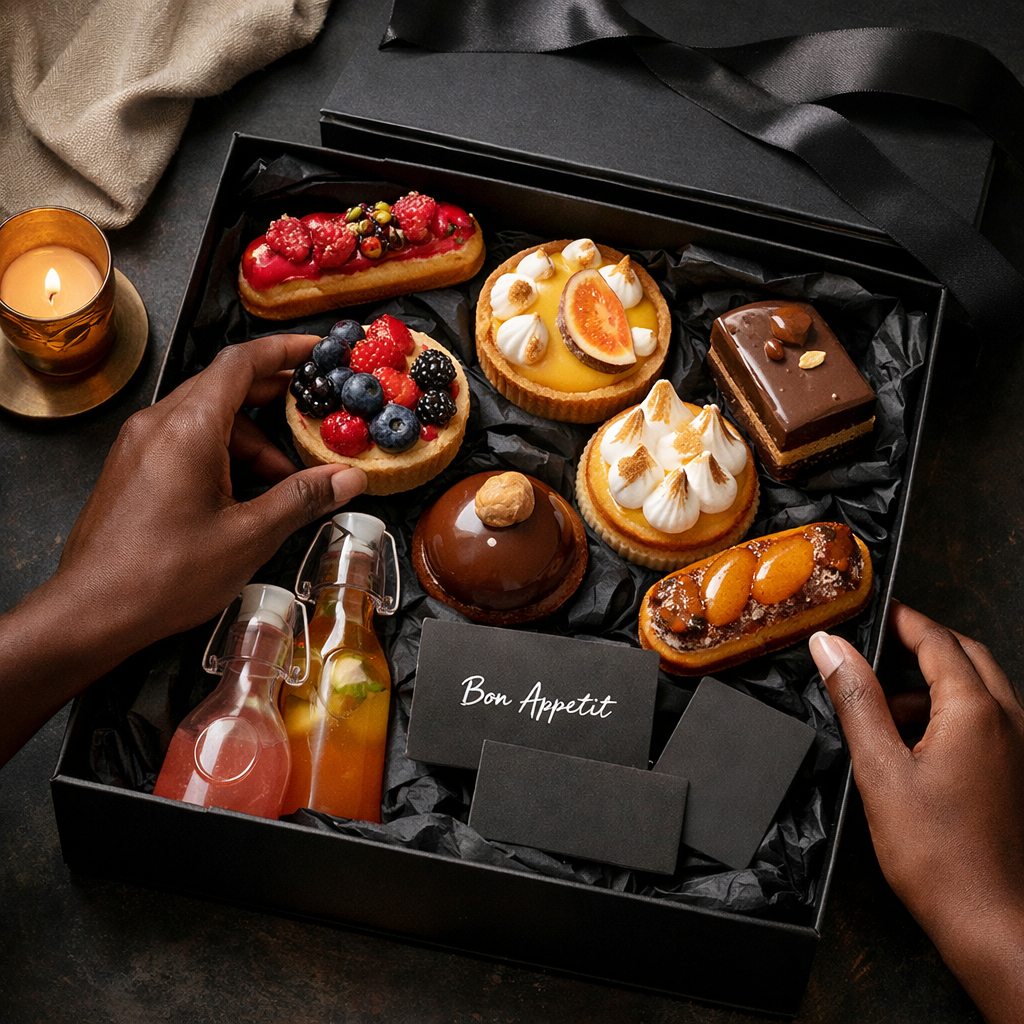
You Did The Research. Now Treat Yourself, Babe. 🎁
We heard you, and we built something for exactly this moment. Introducing our new curated pastry box — where you get to be in control of your experience from start to finish.
Pick 3 to 4 of your favorite treats, then choose your dose — because yes, we do things intentionally around here:
🟢 0mg — all the flavor, none of the extras 🟡 5mg — just a little something 🟠 10mg — the sweet spot for beginners 🔴 20mg — you know what you're doing 💜 50mg — for the experienced ones ⚫ 100mg — you've been here before, sis
Not sure where to start? Say less. Choose Dealer's Choice — just tell us your flavor personality and we'll build your perfect box from scratch, dosed just right for you.
This is wellness that actually tastes good.
The waitlist is open and filling fast. 👉 [Join thJoin the waitlist heree waitlist here] — Your perfect box is waiting to be built.
So where are you at with all of this? Curious? Skeptical? Already a convert? Drop it in the comments — this is a no-judgment zone and we genuinely want to hear from you. 👇🏾
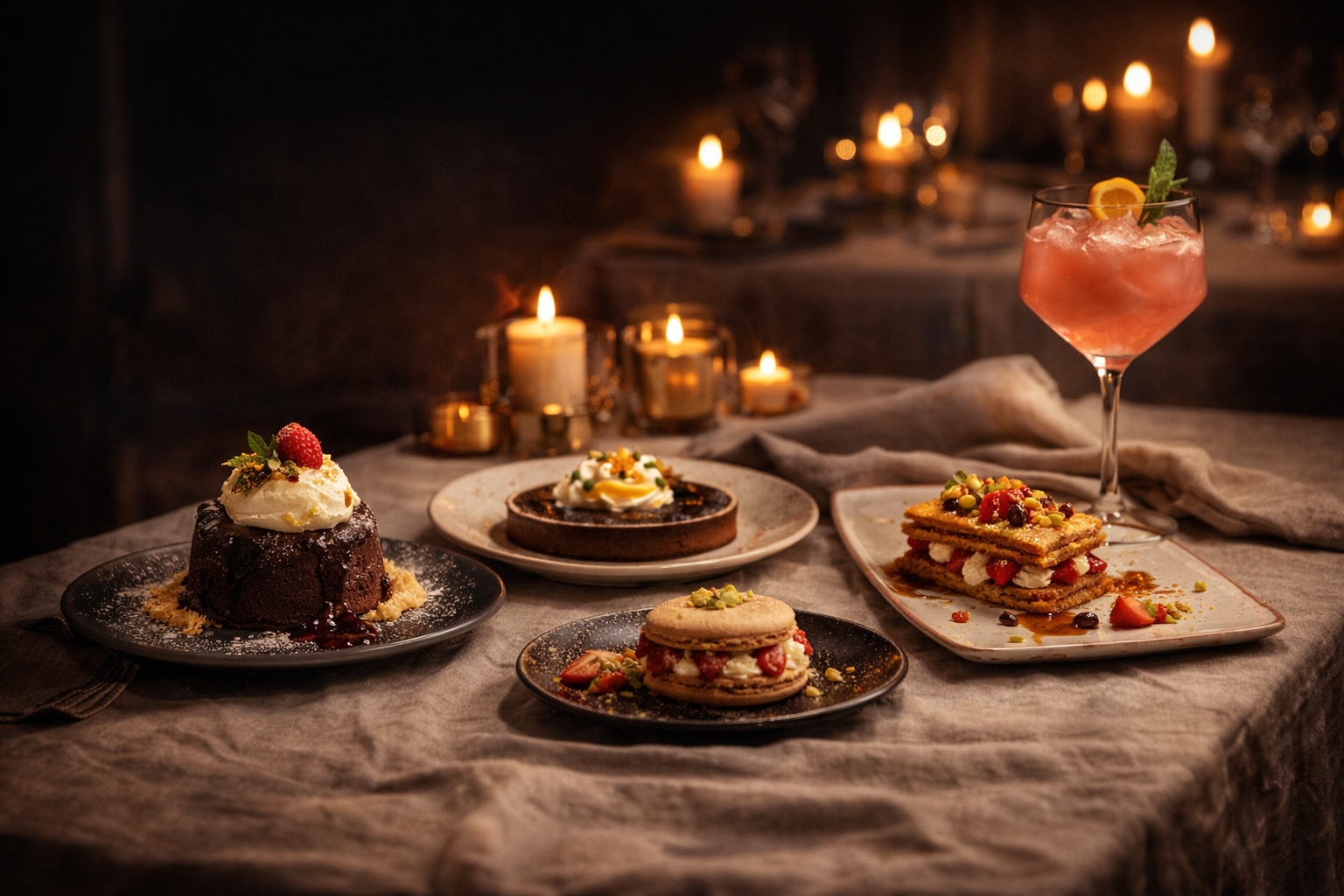
Gourmet Delights: Elevating Your Edibles Experience
Listen. We need to talk about edibles. Not the ones you remember from back in the day — that dry, crumbly brownie your homie pulled out of a ziplock at a kickback, the one that tasted like stems and regret. Not that. We are so far past that. What we're doing now is luxurious, intentional, and the kind of decadent that makes you close your eyes on the first bite and just be for a second.
Cannabis has always deserved a seat at the fine dining table. We're just finally setting the place — and baby, the spread is everything.
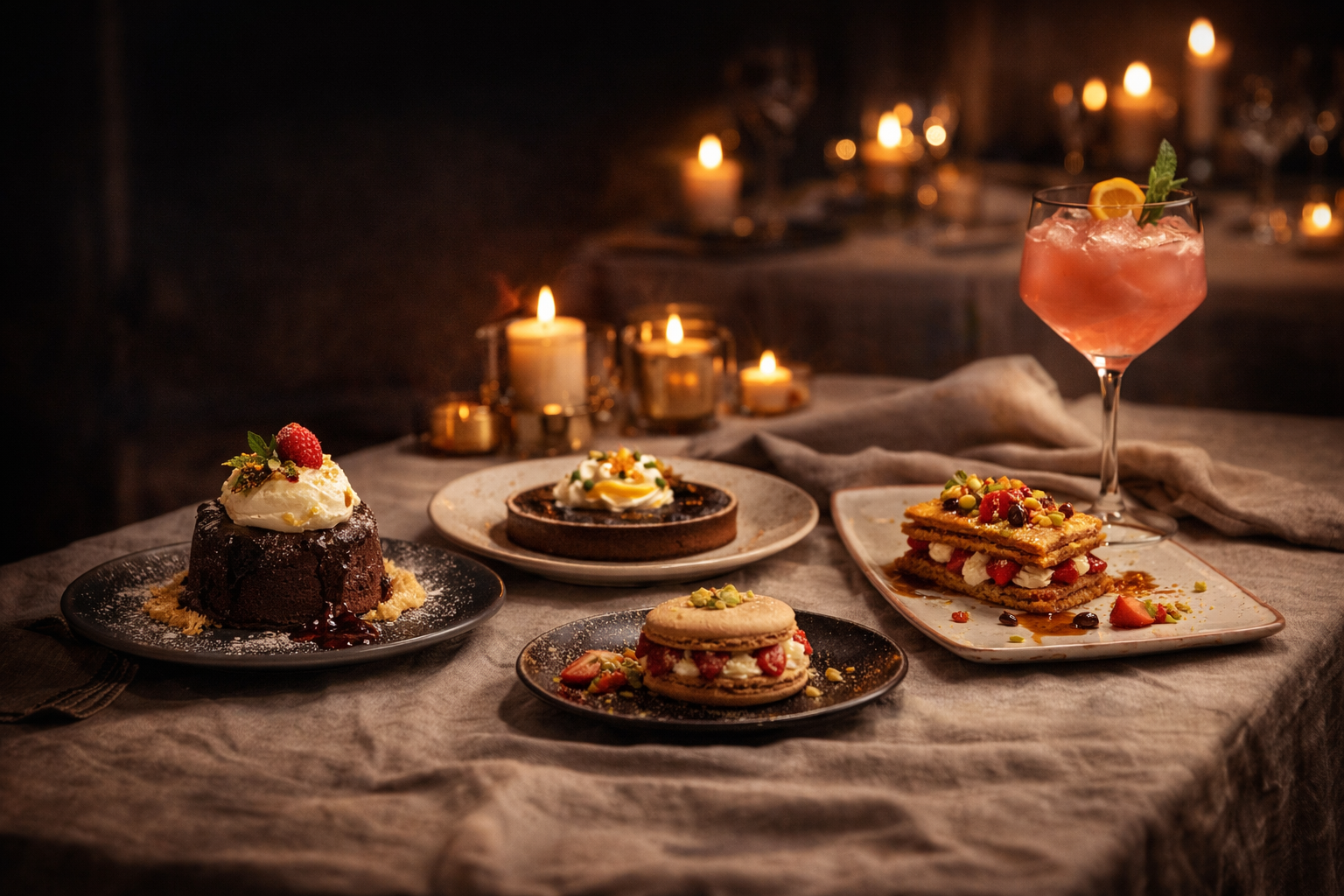
Listen. We need to talk about edibles. Not the ones you remember from back in the day — that dry, crumbly brownie your homie pulled out of a ziplock at a kickback, the one that tasted like stems and regret. Not that. We are so far past that. What are we doing now? It's luxurious. It's intentional. It's the kind of decadence that makes you close your eyes on the first bite and just be for a second. Cannabis has always deserved a seat at the fine dining table. We're just finally setting the place.
Girl, Let Me Tell You Something About Patience
Before we go any further, we have to address the thing nobody wants to talk about but everybody has experienced. You eat the edible. Thirty minutes pass. You feel nothing. So what do you do? You eat another one. Maybe two. And then an hour later life as you know it is completely rearranged.
The number one rule of edibles — gourmet or otherwise — is that you wait. Not ten minutes. Not twenty. A minimum of thirty, and sometimes up to two full hours depending on your body, your metabolism, and what you had for dinner. And just because something is beautifully plated and tastes like it came out of a patisserie in Paris does not mean it is playing games with you. The craft is serious. Respect it and it will give you the most incredible experience. Rush it and baby, it will humble you in ways you were not prepared for.
But First, How Did We Even Get Here
There was a time when cannabis edibles existed purely in the shadows. You got what you got and you didn't ask questions. The potency was inconsistent, the flavor was an afterthought, and the presentation was not even a conversation anyone was having. Fast forward to now and chefs — actual classically trained, technically gifted chefs — are treating cannabis the way they treat every other premium ingredient in their kitchen. With curiosity. With intention. With respect.
Legalization opened the door but creativity walked through it. The question used to be how do I hide the weed taste. The question now is how does this strain make my dish better. That shift changed everything. And honestly? We are just getting started.
The Dish Is Always the Star, Babe
Here is something I need you to understand about how gourmet edibles actually work. Cannabis is an ingredient. That's it. It is not the main character. It is not the headline. Whatever is on that plate — that dessert, that small bite, that popsicle that is about to change your life — that is the star of the show. The cannabis is there to enhance what is already happening, the same way a pinch of salt or a squeeze of lemon makes everything else pop.
So when I'm building a new recipe, I start with the dish. I think about the flavor, the texture, the balance, the way it finishes on your tongue. I nail all of that down first. Then I think about cannabis and ask myself — what does this bring to what I've already built? A strain with bright citrus notes behind a tropical dessert. Something earthy and piney alongside a rich, indulgent bite. It has to make sense. It has to belong there.
And then there's the WasiPi. Wasabi and pineapple. A popsicle. I know what you're thinking and I need you to trust me on this one because it is hitting the menu this summer and it is going to be one of those things you taste and immediately want to call somebody. Sweet, sharp, unexpected, and completely intentional. That's what happens when you stop being afraid of flavor and just go for it.
Infusion Is Where the Magic Actually Lives
People hear the word infusion and they think it's one thing — one method, one ingredient, one process. It's not. Not even close. The WasiPi gets made with infused milk or infused sugar depending on the day and how much time we're working with. A rich chocolate creation might call for infused butter. Something lighter wants infused oil or a botanical simple syrup. The infusion has to serve the dish. You build around the recipe, not the other way around.
But here is the part that matters more than which infusion you choose — precision. A dosing calculator is not optional, it is essential. The difference between a 5mg experience and a 50mg experience can come down to a small mistake in the kitchen and that is not a conversation you want to have with your guests at hour two of a dinner party. Every single time I step into the kitchen I am researching and developing. Testing something I thought about, something I dreamed, something I literally tasted on my tongue out of nowhere at two in the morning. Every infusion is a discovery. Every batch is a breakthrough. That part never gets old.
The Table Is Set, Come As You Are
We don't have a brick and mortar location yet — but do not think for a second that means the presentation isn't fine dining. We show the process in real time. We let the finished product speak through every photo, every post, every moment captured before the first bite. People eat with their eyes first and we take that seriously.
Now when it comes to hosting — because this is a lifestyle, not just a product — the setup is everything. If I'm putting together an experience where some guests are consuming and some are not, I build a grazing table. Small plates. Tapas. Everything is clearly labeled so every single person at that table knows exactly what they are reaching for and can make the choice that's right for them. The vibe looks like any other elevated gathering — good music, intentional lighting, food that makes people stop mid-conversation to look at the plate before they eat off it — just with a few very deliberate tweaks.
Your Dose, Your Experience
Every edible, every pastry, every mocktail we make sits somewhere between 5mg and 100mg. That range is not an accident. That is a design decision. We are not here to decide your experience for you. We are here to give you the options and the knowledge to choose it for yourself. We always walk people through how to eat and how long to wait because that context is part of the experience.
For first timers? I start them with a mocktail at 5mg. It's social, it's approachable, it meets you exactly where you are without throwing you into the deep end before you even know you're in the pool. From there the philosophy stays the same no matter where you are in your journey — start low and slow. This is not a race. This is a meal. A vibe. An experience worth savoring from the very first sip to the very last bite.
So Here's What We're Saying
Gourmet edibles are not a moment. They are not a trend you catch up to and then watch pass. This is the evolution of two things human beings have always done — cook with love and intention, and seek out experiences that make them feel something real. Whether you've been in this world for years or you are just now getting curious, there is a place for you at this table. Come hungry. Come open. Come ready to experience cannabis the way it was always supposed to feel.
And whatever you do — wait the full thirty minutes. Trust the process.

She Sparked Up and Unlocked Her Genius
What if creativity is not something you have to chase, but something you create space to receive? This piece explores how cannabis can support flow, inspiration, and deeper creative access for Black women through ritual, reflection, and intentional living.
For Black creatives, cannabis has long been a sacred key to imagination, flow, and freedom. Here's the real conversation we need to be having.

Close your eyes for a second. Picture this: it's late, you're high, and your senses are doing the absolute most. You want something spicy — but subtle. Sweet. Creamy. Something that doesn't exist yet but should. You drift off to sleep elevated and somewhere between this world and the next, the idea finds you. Pineapple. Wasabi. Ice cream.
That's not a fever dream. That's how WasiPi was born — my pineapple wasabi ice cream creation that came to me in a full-on cannabis-inspired vision. And sis, it slaps.
But more than the recipe, that moment taught me something that I've been sitting with ever since: cannabis doesn't give you creativity. It gives you permission to access what was already inside you all along.
Cannabis doesn't give you creativity. It gives you permission to access what was already inside you all along.
Sis, The Creativity Was Already IN You
Here's the real: we've been conditioned — especially as Black women — to treat creativity like a luxury. Something you do after the bills are paid, the kids are fed, and everybody else's needs are handled. The 9-to-5 world doesn't have a column in the budget for "visionary ideas" and "artistic flow." So we shrink it. We silence it. We put it on the back burner so long it goes cold.
Cannabis, for me, melts all of that away. It doesn't manufacture magic — it removes the block. It quiets that loud, practical voice that says "but is this realistic though?" and lets the other voice — the one that's been waiting patiently — finally speak.
Think about the legacy. From jazz musicians in Harlem to hip-hop producers in Compton to the Afrofuturist artists redefining what Black imagination looks like — cannabis has been woven into Black creative culture for generations. It's not a trend. It's a tradition.
That Inner Critic? She Gets a Whole New Attitude
Let me be honest about my inner critic. She's always there. Always. But she's not a hater — she just has standards. She expects greatness. When I'm sober, she can get loud and lean a little hard on the judgment. But when I'm elevated?
She becomes my collaborator. We sit down together like two friends researching a rabbit hole at 2am. We follow our senses. We let the ideas breathe before we start editing them to death. We allow the download.
That shift — from judge to co-creator — is everything. Because so many of our best ideas die in the draft. They never make it out of our heads because we already decided they weren't good enough before they had a chance to grow.
“So many of our best ideas die in the draft. Cannabis gives them a fighting chance.”
Discovering vs. Inventing: What the High Actually Does
People always ask: does cannabis make you more creative, or does it just make you think you are? And my answer is — both, and neither, and it depends.
Sometimes I'm discovering something that's already living inside me, an idea that's been marinating but couldn't find its way out. Cannabis flushes it out like a detox for the imagination. Other times it feels like a full download — something arriving from somewhere outside of me entirely, like a signal I finally had the antenna to receive.
Either way, the ideas are real. WasiPi is real. The songs people wrote. The paintings people made. The stories that got told. None of that is imaginary.
My Creative Ritual (And How to Build Yours)
I used to be a night owl. Late nights, candles, vibes. Then I had kids and my whole creative clock got rearranged. Now? My most powerful creative moments happen in the early morning — after I've worked out, smoked, and let the world wake up without me. The house is quiet. My body is awake. My mind is soft and open.
My ritual: spark a joint, turn on music, start moving. Dance, stretch, let my body go where it wants. That physical freedom unlocks mental freedom every single time.
For me, cannabis pairs best with writing, cooking, and movement. Your combination might be totally different. That's the point — it's personal. Here's what I've learned about building a ritual that actually works:
Know your terpenes, boo. Not all cannabis is going to send you into your creative bag. I learned the hard way that strains high in myrcene — that sedative, earthy terpene — make me foggy and anxious instead of flowing. I've sat down ready to create and ended up paralyzed on the couch. Pay attention to what strains do for your specific body and mind.
Capture everything immediately. When the idea hits, write it down. Voice memo it. Text yourself something chaotic and figure it out later. Ideas that feel permanently tattooed on your brain at 11pm have a way of completely disappearing by morning. Don't trust the high to be your memory.
Start slow, especially if you're new. There is nothing to be afraid of — but rushing the experience is how you end up anxious instead of inspired. Micro-dose if you're curious. Let your body find its rhythm before you find your flow.
Set the environment like you're setting the scene. Your surroundings tell your nervous system whether it's safe to play. Create a space that feels expansive, joyful, and free of obligation. Candles, good speakers, snacks you love — all of it matters.
On the Stigma — Sis, I Don't Have Time
Let's talk about it, because we have to.
Yes, there is a stigma. Yes, people — including people in our own community — will have opinions. And I want to be clear: I have made my peace. This is mine. My creative process, my ritual, my joy. I don't let anyone make me feel small or irresponsible for something that has genuinely elevated my life — literally and figuratively.
Some of the greatest artists in Black history — musicians, writers, painters, poets — have openly credited cannabis as part of their creative process. We're not talking about people who couldn't handle their lives. We're talking about people who built entire worlds with their imaginations and needed tools to access them fully.
I smoke and I create. That's the whole story.
- I smoke and I create. That's the whole story.
It's Bigger Than the Art
Beyond every song, dish, and piece of writing cannabis has helped me unlock, there's something even more valuable it's given me: myself.
It's made me more present. More relaxed in my own skin. Less anxious about all the ways I'm "not enough." For Black women especially — who carry so much, who are expected to perform wellness and strength and perfection at all times — permission to just be is revolutionary.
Cannabis gave me that permission. And I think that might be the most creative thing of all.
The Bottom Line
I can't give you a clean definition of creativity. I don't think one exists. But I can tell you this: the ideas are in you. The vision is in you. The art, the flavors, the music, the stories — all of it is already there, waiting.
Sometimes the most radical thing you can do is give yourself permission to access it.
Start slow. Let it flow. And don't you dare apologize for what you create.
-Your good sis with a spliff
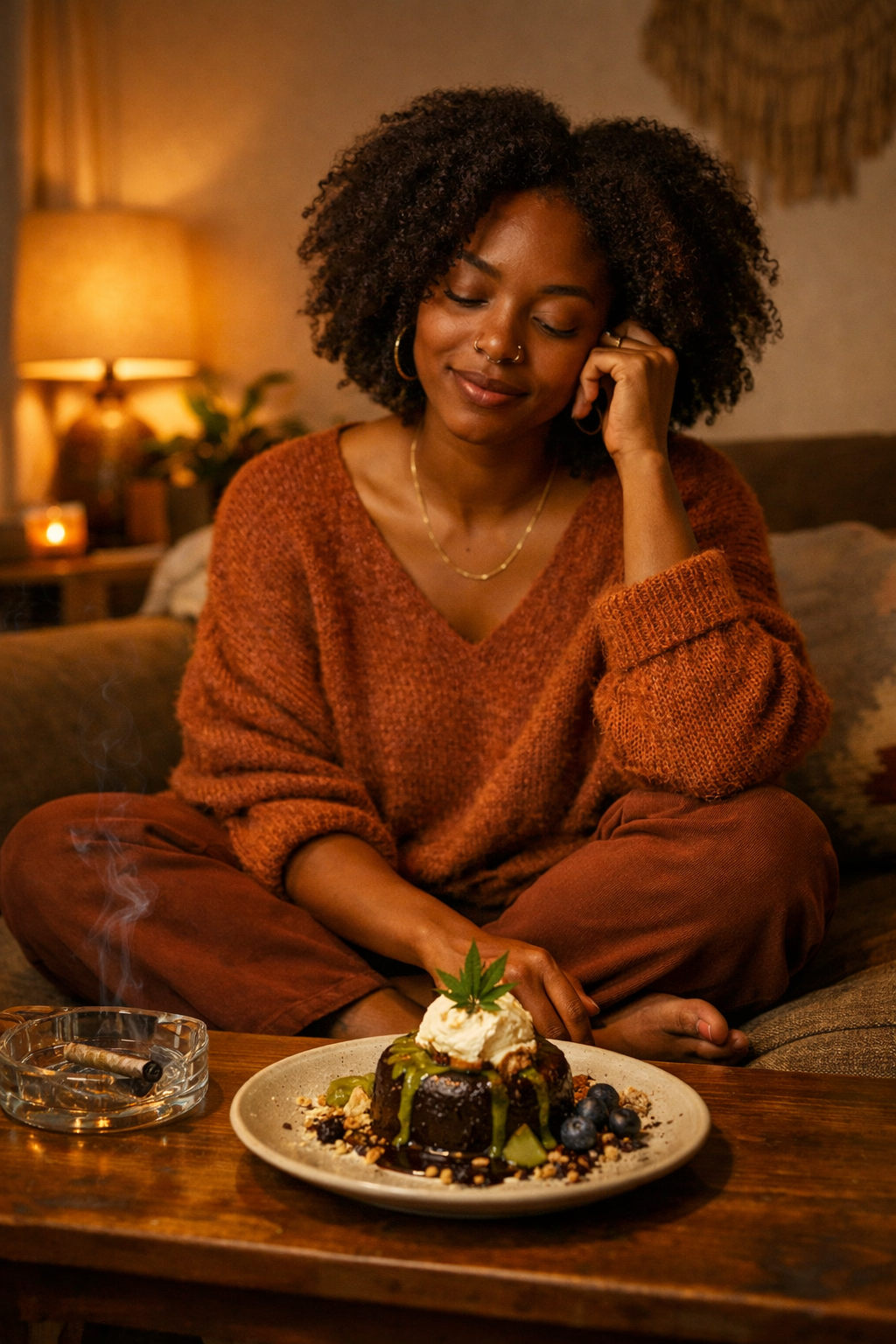
Cannabis Terpenes: The Aromas and Effects Explained
You already know the feeling. You open a jar and something in your body responds before your brain catches up. That citrusy, earthy, piney hit that makes you lean in a little closer? That's terpenes — and they've been shaping your cannabis experience this whole time, without ever getting the credit.
Most of us were taught to chase the THC number on the label. But if you've ever smoked two strains with the exact same percentage and felt completely different — one had you glued to the couch, the other had you rearranging the kitchen at midnight — terpenes are why. They're the aromatic compounds that give every strain its personality, and once you understand them, you'll never shop for cannabis the same way again.
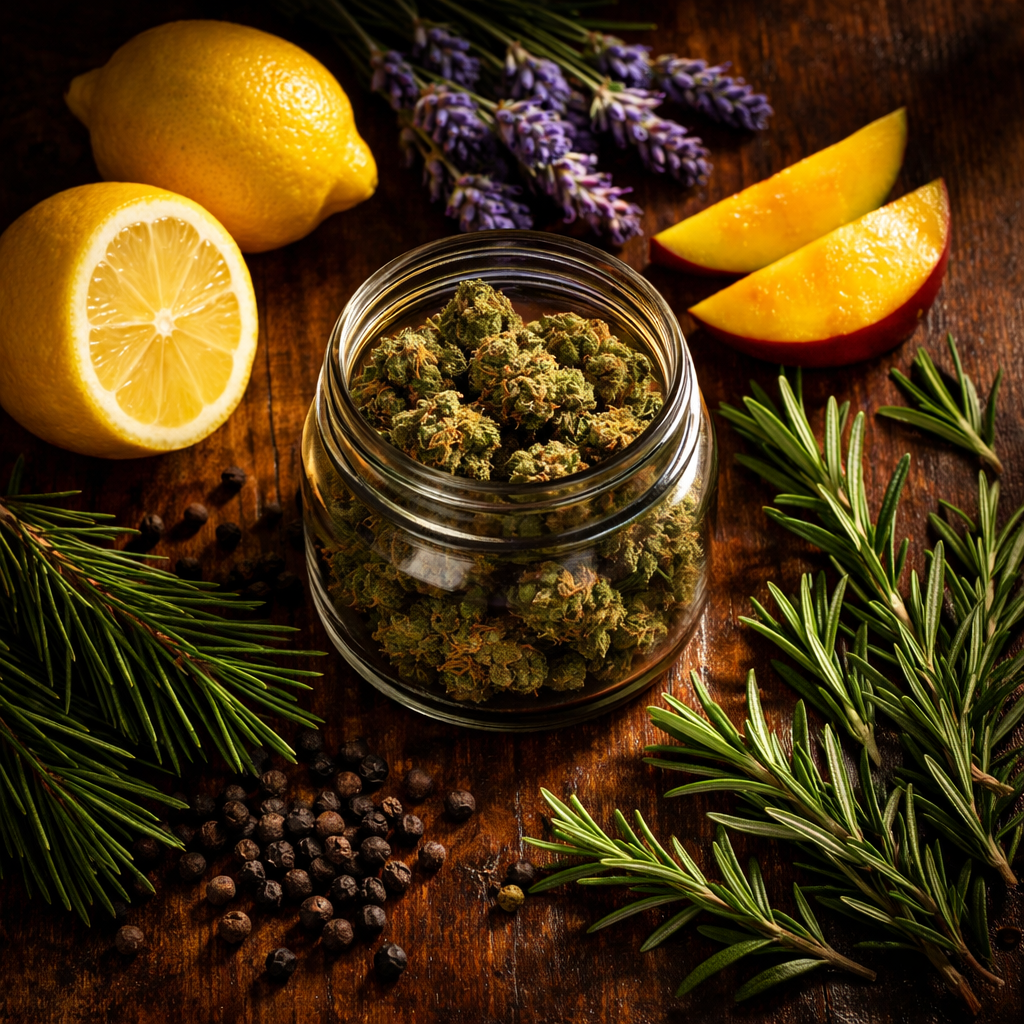
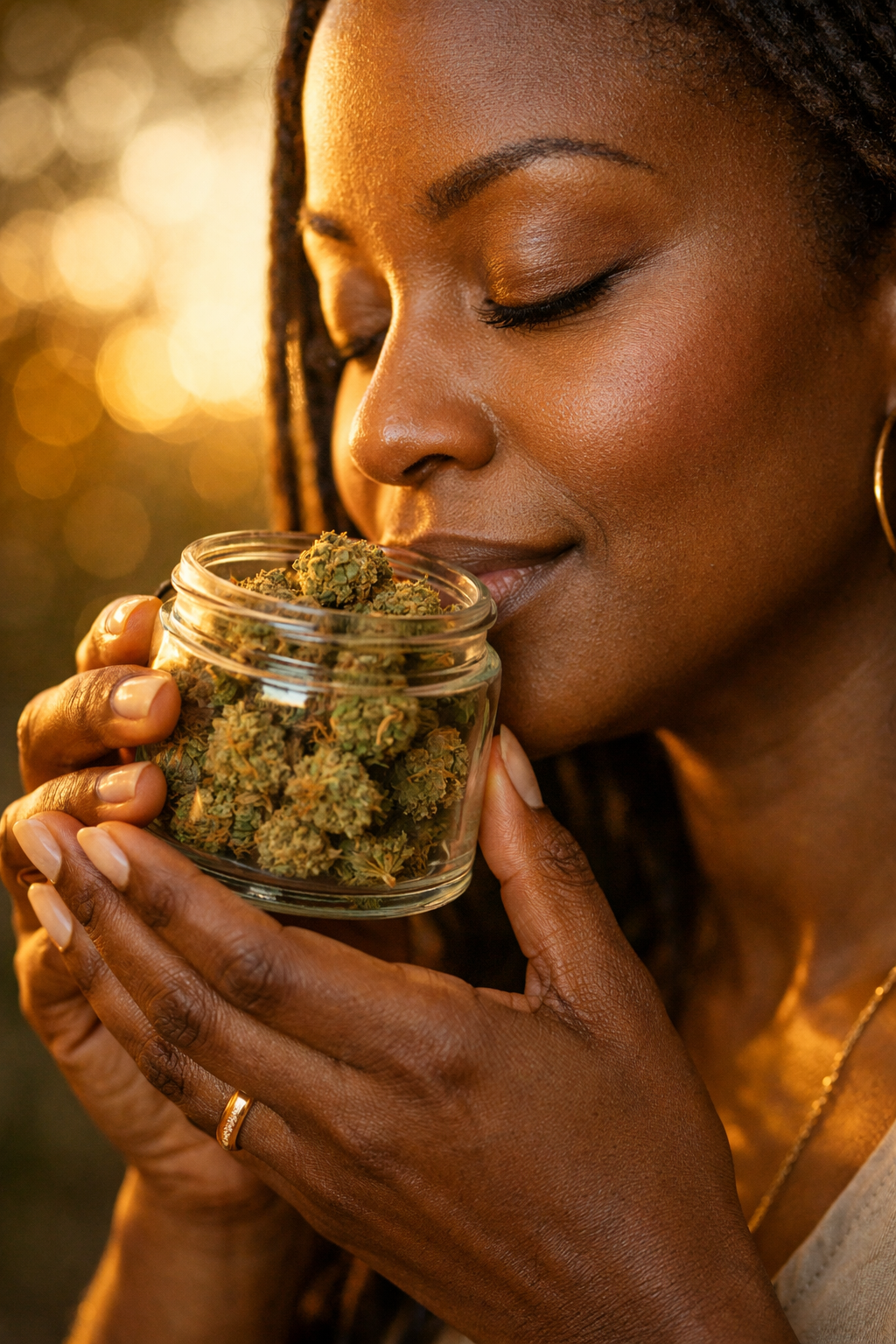
Your nose already knows. You just didn't have the language for it…..
You ever pick up a jar of flower and just… stop? Like something in your body responds before your brain catches up? That citrusy, piney, earthy hit that makes you lean in a little closer — that's not random. That's terpenes doing what they've always done, and girl, they've been working overtime with zero credit.
We talk a lot about THC. We chase percentages like they're the only number that matters. But if you've ever smoked two strains with identical THC levels and felt completely different — one had you locked to the couch, the other had you reorganizing your pantry at midnight — terpenes are why.
Let me break it down.
So What Are Terpenes, Really?
Terpenes are aromatic compounds found in almost every plant. They're what makes lavender smell like calm, lemons smell like clean, and pine trees smell like a deep breath. They're not exclusive to cannabis — they're in your kitchen herbs, your fruit bowl, your favorite candle.
But cannabis? Cannabis produces them in a way that's almost unfair. Rich, layered, complex — and every strain has its own signature blend.
The plant makes terpenes in the same tiny glands that produce THC and CBD, called trichomes — those little sparkly crystals you see on flower. Terpenes evolved as a survival tool: keep the bugs away, attract pollinators, protect against heat and UV. For us, they translate into flavor, aroma, and a whole lot of nuance in how a session feels.
Terpenes vs. Cannabinoids — What's the Difference?
Think of it this way: cannabinoids like THC and CBD are the main event. They bind to receptors in your endocannabinoid system and produce the core effects — the high, the calm, the relief.
Terpenes are the context. They shape the environment around those effects, nudging the experience in one direction or another. They don't get you high on their own, but they absolutely influence how your high feels.
That's why I've always said: stop chasing the highest number and start paying attention to the full profile. The number tells you the volume. The terpenes tell you the song.
The Entourage Effect: The Whole Band, Not Just the Lead
There's a concept in cannabis science called the entourage effect, and it basically says this: all the compounds in cannabis — cannabinoids, terpenes, flavonoids — work better together than any single one does alone.
You know how a dish can have the right protein but still taste flat without the seasoning? Same idea. THC is the protein. Terpenes are the seasoning that makes the whole thing make sense.
This is actually the reason I built the dessert menu the way I did. The full experience matters. One note is never enough.
The Terpenes Worth Knowing
Here's your cheat sheet — the most common terpenes you'll find in cannabis, what they smell like, where else you've encountered them, and how they tend to feel.
Myrcene Smells like: Ripe mango, earthy musk, cloves. Also in: Mangoes, hops, lemongrass, thyme. The vibe: This is the most abundant terpene in most commercial strains, and it's the one most associated with that classic body-heavy, couch-settling feeling. If a strain makes you want to sink into the cushions and not move — that's probably myrcene doing its thing. It's also thought to help cannabinoids absorb more efficiently, which means the effects may hit faster and deeper. Best for: Evening. Rest. Letting go of the day.
Limonene Smells like: Lemon peel, fresh orange, citrus zest. Also in: Citrus rinds, juniper, peppermint. The vibe: Bright, lifted, mood-boosting. Limonene is the one that makes a session feel less like you're slowing down and more like you just opened a window. It's associated with stress relief, elevated mood, and mental clarity. Strains high in limonene tend to lean social and creative. Best for: Daytime. Good company. Getting something done.
Caryophyllene Smells like: Black pepper, cloves, a little warmth. Also in: Black pepper, cinnamon, basil, cloves. The vibe: Here's the interesting one — caryophyllene is the only terpene that can directly bind to cannabinoid receptors (specifically CB2, which lives in the immune system). That means it may have real anti-inflammatory potential on its own. It's often associated with stress relief and calm without sedation. Deep, quiet, grounding. Best for: Unwinding without shutting down. Stress, tension, inflammation.
Linalool: Smells like: Lavender, soft florals, a hint of spice. Also in: Lavender, coriander, birch trees. The vibe: You already know this one from aromatherapy. Linalool is calming, anxiety-reducing, and gently sedating without feeling heavy. It's the terpene that makes you exhale slowly and actually mean it. Best for: Anxiety, sleep, the hour before bed when your brain won't stop.
Pinene: Smells like: Pine forest, fresh rosemary, clean air. Also in: Pine needles, rosemary, basil, dill. The vibe: Alert, clear, focused. Pinene is the terpene that keeps things sharp. There's also some research suggesting it may counteract short-term memory effects from THC — which is interesting if you want the calm without the fog. Best for: Focus. Creative work. Daytime use when you need to stay present.
Terpinolene: Smells like: Floral, herbal, piney, a little citrusy — complex in the best way. Also in: Apples, cumin, lilacs, tea tree. The vibe: Terpinolene is less common but worth knowing. It tends to feel uplifting and cerebral — the kind of high that gets you thinking, talking, and moving. Strains with high terpinolene are often described as "heady." Best for: Social settings, creative projects, anything that benefits from a little spark.
Humulene: Smells like: Earthy, woody, slightly hoppy. Also in: Hops, ginseng, coriander. The vibe: Humulene is being studied for its anti-inflammatory properties, and it's one of the few terpenes associated with appetite suppression — which, yes, is a bit of a wild card in cannabis. Low-key, grounding, functional. Best for: Relaxation, inflammation, days when you want the benefit without the munchies situation.
Trust Your Nose
Here's my actual advice: smell it before you buy it.`m
If you walk past something and your body responds — not just "oh that's interesting" but something more instinctive, something that makes you stop — pay attention to that. There's growing evidence that we may be drawn to terpenes our bodies need, which is honestly just the plant doing what it was designed to do.
I've said it before and I'll keep saying it: stop looking only at the THC number on the label. The number tells you how loud it is. The terpene profile tells you what it sounds like. And if you've ever had a strain that felt completely different from another strain with the same percentage, now you know why.
Keep a little notes app log if you're the type. Strain name, how it smelled, how it felt. Over time, you'll start to see your own patterns emerge.
Terpenes in the Kitchen
This is the part that excites me most, and it's literally the foundation of everything I'm building at 125 Broadstreet.
Terpenes aren't just a cannabis thing. They're everywhere — in every herb, every fruit, every spice that makes food worth eating. When I'm developing a new dessert, I'm thinking about terpene profiles the same way a perfumer thinks about fragrance notes. What does limonene pair with? (Lemon curd, citrus glaze, anything bright.) What does linalool open up next to? (Lavender, honey, floral cream.) What does myrcene ask for? (Something warm, rich, slow.)
The cannabis in our edibles isn't just an add-on. It's an ingredient. And like any good ingredient, it has to belon
How to Keep Your Terpenes Intact
Terpenes are fragile. Heat, light, and oxygen break them down fast, which is why a lot of pre-packaged products smell like almost nothing by the time you open them.
To protect them: store your flower in an airtight, opaque container, somewhere cool and dark. Avoid leaving it in a hot car or on a sunny shelf. If you're vaporizing, lower temperatures preserve more terpenes than higher ones — you'll get more flavor and a fuller experience.
And if you're making infusions? Low and slow is always the move. A rushed infusion at too-high a temperature is how you lose everything interesting about the plant.
Quick Answers
Do terpenes get you high? No — not on their own. But they shape the quality of the experience significantly through the entourage effect.
Are they safe? Yes. Terpenes are in foods, cosmetics, and essential oils. They're well-tolerated. Highly concentrated isolated terpenes can cause irritation, which is why whole-plant consumption is generally preferable.
Can terpenes be added to products? They can, and often are — especially in vape cartridges and extracts. Look for "cannabis-derived terpenes" for the most authentic profile. Botanically-derived terpenes (from other plants) are also used and aren't necessarily inferior, just different.
Why does the same strain sometimes feel different? Growing conditions affect everything. Light, temperature, soil, harvest timing, and how the flower was cured all influence the final terpene profile. Two plants from the same genetics can smell and feel noticeably different depending on how they were grown.
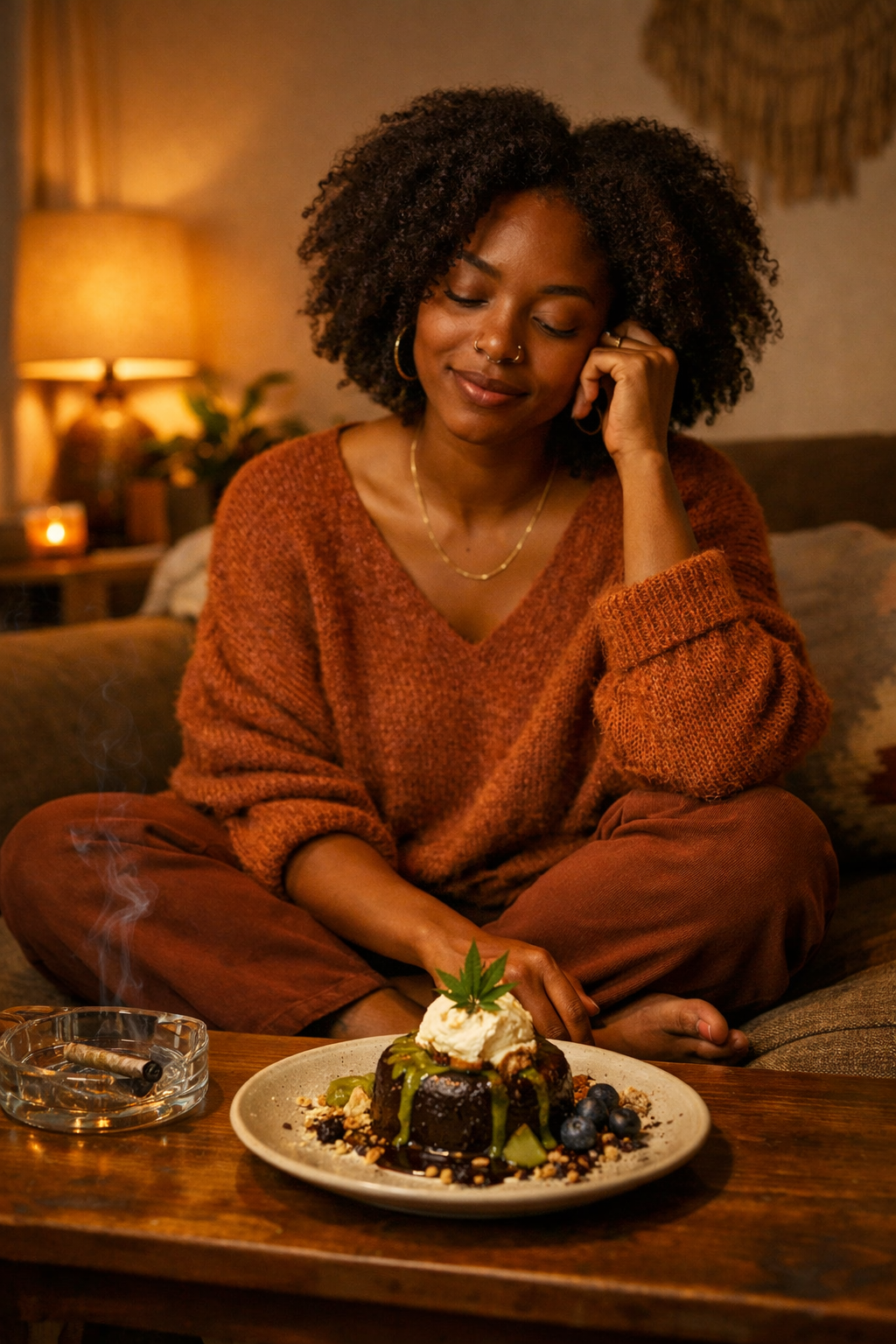
The Bottom Line….
Cannabis is a complex plant, and terpenes are a big part of what makes every strain its own thing. They're why the same THC percentage can feel completely different depending on what it's paired with. They're why aroma is actually useful information, not just a fun bonus.
At 125 Broadstreet, we think about this every single time we develop something new. What does it smell like? What does it pair with? What terpene conversation is the cannabis having with the other ingredients? Because flavor and effect aren't two separate things. They're the same experience, working together.
That's the whole philosophy. And now you have the language to go with it.
— Cheasleauen Your fav sis with a spliff & R&D Culinary Director / Founder
Curious about what terpene matches your favorite song or dessert mood? Drop it in the comments. You already know I'm going to have thoughts.
Curious? Careful? Somewhere in between?
Drop your thoughts in the comments — no judgment here, just the conversation we've all needed to have.