Cannabis Trivia: 10 Surprising Facts'
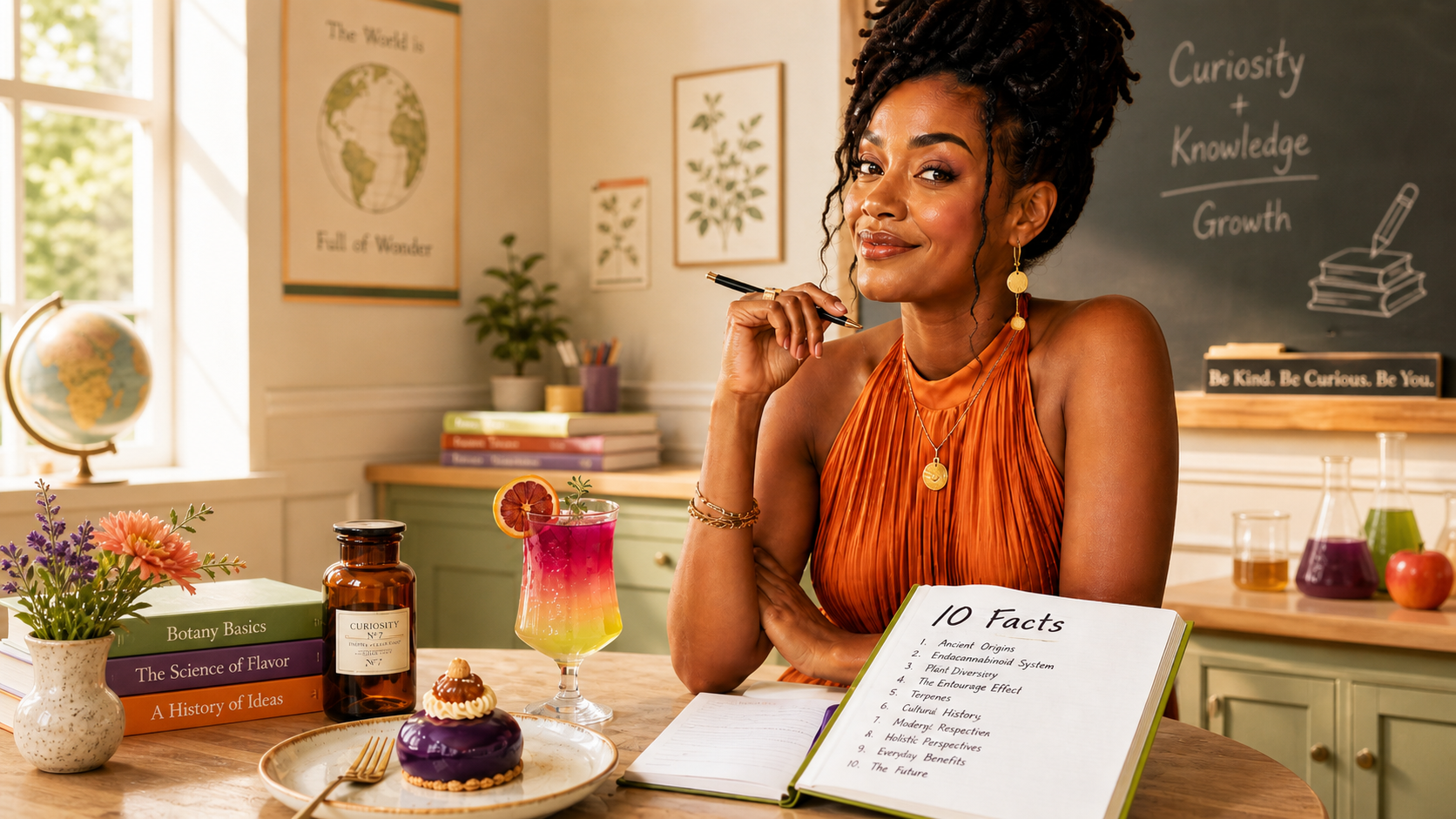
You think you know this plant. Let's revisit that.
We talk about cannabis a lot around here. The flavors, the effects, the culture, the people building something real inside this industry. But every now and then, it's fun to just stop and appreciate how genuinely wild and wonderful this plant actually is.
Because cannabis isn't just a product. It's a living, layered, historically rich organism that humans have been in relationship with for thousands of years — long before dispensary menus and curated product boxes existed. Some of what you're about to read might confirm what you already knew. Some of it might genuinely stop you mid-scroll.
Either way — grab your drink, get comfortable, and let's get into it.
Cannabis Has Been Here for Thousands of Years
The oldest recorded use of cannabis dates back over 12,000 years — making it one of the earliest cultivated plants in human history. Ancient China used it for food, fiber, and medicine. Ancient India wove it into spiritual practice. Egypt, Greece, the Arab world — they all had their relationship with this plant long before prohibition invented a reason to fear it.
The "war on drugs" wasn't the beginning of this story. It was an interruption.
Science Finally Decoded the Plant
Cannabis is one of the few plants to have its full genome sequenced — and what scientists found was genuinely humbling. The cannabis genome is massive and complex, containing roughly 800 megabases of DNA with thousands of genes responsible for producing cannabinoids, terpenes, and flavonoids. Researchers identified the specific gene clusters responsible for THC and CBD production, which opened the door to understanding why different strains express so differently.
For a plant that's been used by humans for over 12,000 years, we only just started reading its full blueprint in the last decade. The science is still catching up to what the plant has always known about itself.
There Are Over 700 Strains — and Counting
We're not exaggerating. Cannabis breeders have developed hundreds upon hundreds of unique strains, each with its own terpene profile, cannabinoid ratio, and effect experience. And new cultivars are being developed constantly.
This is why two people can both consume cannabis and have completely different experiences. It's not just about THC percentage — it's the whole chemical orchestra. Myrcene, limonene, linalool… the terpenes are doing serious work behind the scenes.
"Cannabis isn't one thing. It's a language — and every strain, every terpene, every method of consumption is a different dialect."
The Word "Cannabis" Isn't the Original Name
In ancient Sanskrit, the plant was called ganjika. In Persian — qannab. Across different languages and cultures, cannabis has carried dozens of names, each rooted in its local use and meaning. The Latin classification Cannabis sativa was assigned by Carl Linnaeus in 1753 — but the plant had been named, celebrated, and used for millennia before European botany put a label on it.
What we call it matters. It carries history.
Edibles Hit Differently — and Here's the Science Why
When you smoke or vape cannabis, THC enters your bloodstream through your lungs and reaches your brain quickly. But when you eat it? Your liver processes it first, converting THC into 11-hydroxy-THC — a more potent compound that crosses the blood-brain barrier more effectively.
That's why edibles feel more intense and last longer. It's not your imagination, and it's not a tolerance issue. It's chemistry. And it's exactly why intentional dosing matters — start low, go slow, and give it time.
Hemp and Cannabis Are the Same Plant
Plot twist — hemp is not a separate species. Both hemp and cannabis come from Cannabis sativa L. The difference is legal, not botanical: hemp is defined as cannabis that contains 0.3% THC or less by dry weight. Same genus, same plant family.
Hemp has been used for rope, clothing, paper, and building materials for centuries. Your CBD tincture and your denim might have more in common than you thought.
The "Munchies" Are a Real, Documented Phenomenon
It's not just a joke. THC binds to receptors in the brain's hypothalamus — the region that regulates hunger — and can actually make food smell and taste more intense, triggering appetite even when you're not truly hungry. Research has also shown that cannabis can cause the brain to switch hunger-suppressing neurons into hunger-promoting ones.
This is why medical cannabis has been a meaningful tool for patients experiencing appetite loss. And also why snack curation at 125 Broadstreet is basically an art form. You're welcome.
Cannabis Has No Recorded Lethal Overdose — Ever
No, really. There is no documented case in human history of a fatal cannabis overdose. To achieve a lethal dose, a person would theoretically need to consume an amount so physically impossible in such a short window of time that it is — practically speaking — not achievable.
This is not an invitation to go overboard. Overconsumption is real, uncomfortable, and should be avoided. But the fear-based narrative comparing cannabis to substances with documented overdose deaths deserves context.
Cannabis Was Once Required by U.S. Law
In 1619, the Virginia Assembly passed legislation requiring farmers to grow hemp. By the 1700s, multiple colonies followed suit. Hemp was so essential — for rope, sails, clothing, paper — that some colonies allowed farmers to pay taxes with it.
The same government that mandated its growth would eventually criminalize the plant entirely — and target the communities associated with it most aggressively. The history is complicated, contradictory, and worth knowing.
Cannabis Can Actually Help the Environment
Hemp is one of the most sustainable crops on the planet. It grows fast, requires minimal water, absorbs CO₂ at a higher rate than most trees, and can be used to remediate contaminated soil — a process called phytoremediation. Hemp was actually planted near Chernobyl to help absorb radioactive material from the soil.
A plant that heals humans, communities, and the earth? She's doing the work on every level.
Cannabis is genuinely one of the most complex, historically rich, and scientifically fascinating plants we know. And yet the conversation around it has been flattened — reduced to stereotypes, policy debates, and a lot of noise that drowns out the actual wonder of what this plant is and what it can do.
At 125 Broadstreet, we believe that knowledge is part of the experience. The more you understand what you're consuming, why it works the way it does, and where it comes from — the more intentional, elevated, and genuinely enjoyable the whole thing becomes.
That's what we're here for. The flavor, the science, the culture, the community — all of it, together, at the table.
"The plant has always been smarter than the conversation around it."
— Your good sis with a spliffThe Good Stuff Is in the Box
Zero-proof and cannabis-infused pastries, mocktails, and curated product experiences — built for the culture, made with intention.
Shop the Collection