The $750K Question: How We're Funding 125 Broadstreet Before It Opens
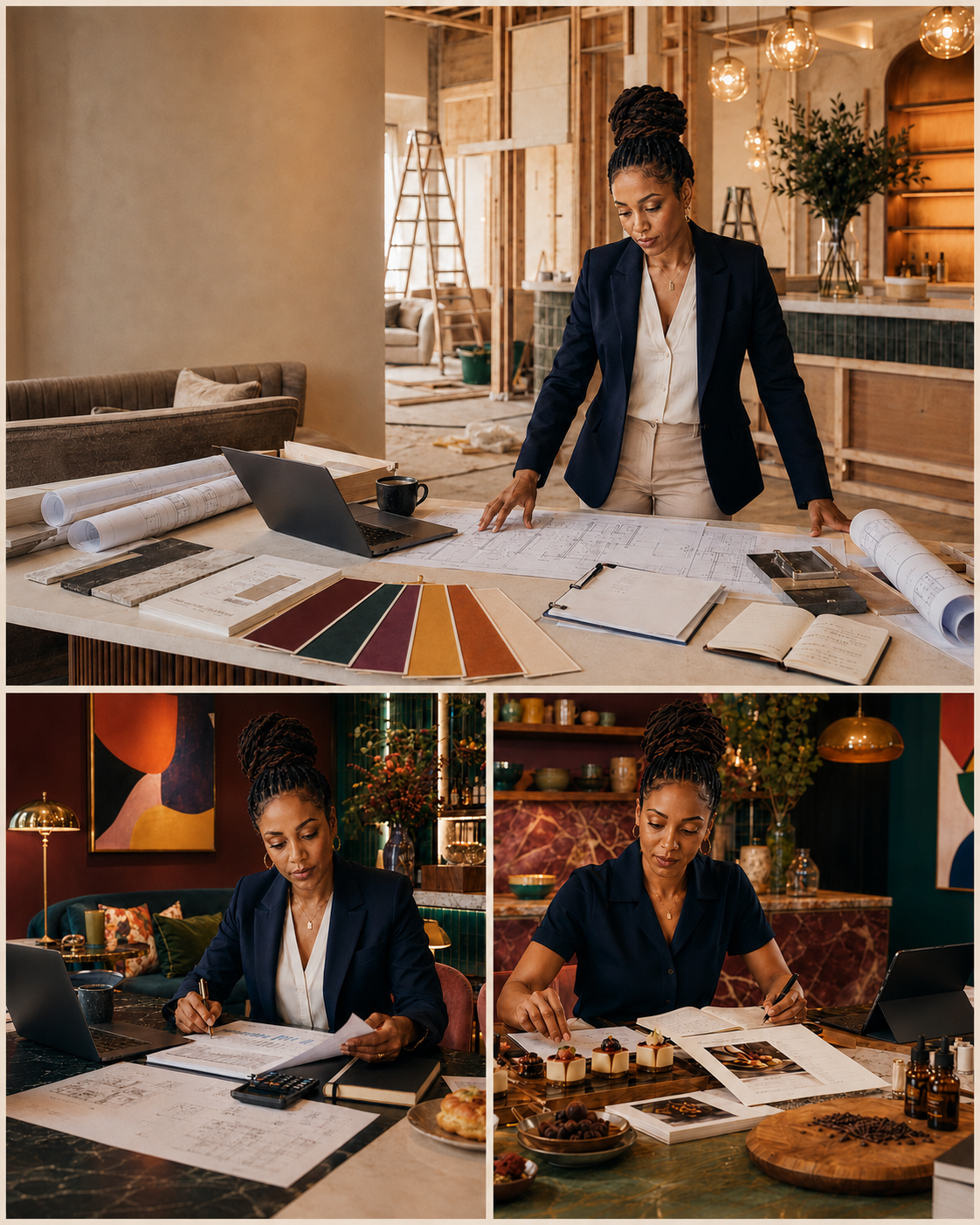
People often ask me, "So how are you actually paying for this?" when it comes to the California lounge. Some think there's a silent investor, or, as I sometimes hear, that I'm "just going to figure it out." That's not the case. I created a real pro forma with actual numbers, and I'm going to explain it just as I would to an investor. No vague answers, no "TBD." Just real numbers.
The Total: $1,523,892
That's what it takes to open a 1,200–2,000-square-foot cannabis consumption lounge and infused café in Hawthorne or unincorporated LA County, fully built out, fully licensed, fully staffed, and cushioned by a real operating reserve instead of hope. That number isn't padded and it isn't guessed — it's built bottom-up across build-out, licensing, an 18-person team, and nine months of runway, because I watched what happened to operators who skipped that last part.
| Use of Funds | Amount |
|---|---|
| Capital assets — kitchen, FOH, FF&E, IT, security, tenant improvements, ADA, deposits | $390,500 |
| Working capital, pre-opening, marketing launch, licensing & legal | $215,000 |
| 9-month operating reserve (fixed costs + labor) | $719,623 |
| 15% contingency | $198,768 |
| Total | $1,523,892 |
I won't apologize for being careful with the reserve line. Take the Original Cannabis Café in West Hollywood, for example. It was the first cannabis restaurant in the country, had a chef-driven menu, and real buzz, but it still closed less than a year after opening during the pandemic. I don't know everything that happened behind the scenes, and I won't pretend I do. But I've seen this pattern in the industry: even great concepts can fail after one bad quarter if there's no financial cushion. Having nine months of reserve means that delays in licensing, slow banking, or a slow first quarter won't put us out of business.
My Half of the Question: $750,000
Most founders don't talk about this part. I'm not asking investors to cover the full $1.52 million. I'm taking on $750,000 of it myself, using my own bootstrapping, cannabis-focused loans, and grant programs like Los Angeles Social Equity and CA CORE, which are designed for operators like me. This is the part I control and don't need anyone else's approval for.
That leaves a real, fundable, much smaller ask for outside capital:
| Source | Amount |
|---|---|
| Founder-raised (bootstrapping, cannabis-specialty lending, social equity & CORE grants) | $750,000 |
| Angel investor equity (the open ask) | $773,892 |
| Total Capital Raise | $1,523,892 |
The real amount I'm asking from investors is $773,892, not the full $1.5 million. In return, investors get 35% equity at a $2.83 million pre-money valuation, so I keep 65% of the company I started from a peach biscuit and a friend's reaction to it. Simply put, if the business is ever sold, investors get their money back first before profit-sharing starts, but they don't get extra upside beyond their ownership share. After 36 months, I have the option to buy back their shares if I want to bring full ownership back.
Why I'm Putting My Own Money In First
For me, having skin in the game isn't just a phrase — it's how this raise is set up. Every dollar of the $750,000 I'm responsible for shows investors something a pitch deck can't: I believe in the numbers enough to risk my own money and credit before asking anyone else to join in. It also means the angel round is smaller, quicker to close, and easier to underwrite, since no one is being asked to fund a first-time brick-and-mortar business alone.
Here's why I'm comfortable putting my own money in first. We expect about 140 guests a day, each spending around $48. To break even and cover all our costs, we only need 113 guests daily. That gives us a cushion — we can be almost 20% below our target and still not lose money. By the end of our first year, we expect about $3 million in revenue, with about 24 cents of every dollar left as profit after expenses. This isn't just wishful thinking. It's math that any investor can check and trust.
What This Doesn't Change
The two-entity structure that protects us from 280E is staying as planned: one entity handles the THC and CBD-infused menu, and a separate hospitality entity covers the café, lease, and brand. We're already talking with North Bay Credit Union, Safe Harbor Financial, and Herring Bank about banking, and with Mosaic, MFE, and Dynamic Underwriters about insurance. The $750,000 doesn't change the business itself — it just changes how much I'm asking others to believe in before I've proven it.
This is the side of building a cannabis hospitality brand that no one glamorizes: the spreadsheets, the use-of-funds tables, and the line items that never make it into a highlight reel. But this is what decides whether 125 Broadstreet opens as a fully funded, well-prepared business or just becomes another lounge that almost made it. I'd rather show you the real number than a nicer-looking one.
Your good sis with a spliff